The AI and Digital Development (AI/DD) Research Initiative asks, What is the impact of AI and the digital transformation on development, growth, and inclusion in Low- and Middle-Income Country (LMIC) economies?
AI/DD is particularly focused on creating and disseminating high-quality, independent evidence on AI’s effects both on the global economy and on individual outcomes. AI could vastly expand access to knowledge—for students and teachers, health providers and patients, entrepreneurs and farmers—but implications for equity of access, market concentration, and labor demand need to be understood to ensure that AI offers a path to prosperity for all.
Key questions include whether AI solutions can improve health and education for the poor; how AI will change the markets for skills; and what the impacts of AI are on firm composition, competitiveness, and growth in LMICs. Governments working with the World Bank are particularly interested in learning how to use AI to achieve more efficient and equitable outcomes in domains such as taxation, regulation, and public service provision – without compromising privacy, transparency, or accountability – and how AI solutions can be adapted to contexts with limited data.
Another focus of our work is how mobile money and other fintech innovations affect financial behavior. This includes their impact on resilience, food security, educational attainment, and women’s economic empowerment. This workstream leverages the Global Findex data on the growing use of digital financial services worldwide. Questions include how increasing women’s use of a digital financial service can enhance their financial control and agency; how digital payments can improve business accounting, cash management, and access to credit; and what the roles of appropriate regulations and consumer protection measures are in mitigating fraud and financial abuse.
News and Events
An AI Method to Cut Paperwork among School Principals and Boost Learning
School principals spend about 76% of their time on administrative work instead of on teaching and learning. El Director Libre (The Liberated Principal) introduces a practical method that uses artificial intelligence ethically and responsibly to help school leaders reduce paperwork and improve instructional leadership. The method translates decades of research into simple tools that free up time to lead learning and improve student outcomes. This is a joint collaboration between LAC EDU (Ezequiel Molina) and DECRG (Carolina Lopez) that combines the World Bank's experience in educational transformation and rigorous research. Read more.
AI & The Future of Human Capital in the Global South: A World Bank-George Washington University Symposium
The World Bank and George Washington University are hosting a one-day conference "AI and the Future of Human Capital in the Global South", showcasing the latest research on how AI-driven innovations might help addres LMIC challenges in health, education, social protection, and labor markets. Deadline for registration: September 17, 2025.Read more.
What are the impacts of AI & Machine Learning in Development? A "Research Matchmaking" session
Jointly with the Center for Global Development's AI for Development Initiative and in collaboration with Milind Tambe, the AI/DD initiative is hosting a "research matchmaking" event on September 30. The event will bring academic AI/ML experts, World Bank economists, and 11 policy partners and World Bank project teams together to build research projects that can demonstrate the positive impacts of AI/ML applications in development, centered on the use cases health and telemedicine, e-revenue systems, and e-extension and sustainable agriculture. The purpose is to develop new ideas on how AI can be used to tackle important policy problems in LMIC, to integrate innovative AI and machine learning into policy delivery through existing systems, and to test the impact of deployed AI/ML innovations rigorously. For more information on the event please contact Anja Sautmann.
Joint initiative between LAC Education and DECRG featured at Microsoft Build 2025 conference
May 27, 2025 -- A World Bank initiative exploring how artificial intelligence can enhance teaching practices and improve student learning in low- and middle-income contexts was highlighted at the Microsoft Build 2025 conference. The initiative, La IA en el Aula, implemented jointly with Lima’s Regional Directorate of Education (DRELM), involves a randomized controlled trial across 390 schools where Grade 6 teachers receive training on how to integrate Large Language Models into their classroom practices. Early feedback shows varied levels of engagement, with many educators using AI tools for lesson planning, material development, and student assessment design. To measure AI’s impact on learning in this initiative, the study uses multiple data collection methods including classroom observations, teacher surveys, and standardized student tests. Full results from the impact evaluation will be available in Spring 2026. Read more.
Blog: Challenges with digital technology adoption by SMEs: A case study from Viet Nam
May 20, 2025 -- As digital tools reshape global industries, firms often struggle to sustain adoption. In Viet Nam, Miriam Bruhn and co-authors studied how small and medium-sized enterprises (SMEs) adopt a cloud-based enterprise resource planning (ERP) platform. Despite initial enthusiasm and free access, long-term use declined sharply, revealing barriers like time constraints, lack of internal champions, and competing priorities during COVID-19. Findings suggest that even motivated firms face hurdles in embracing digital solutions. Read more.
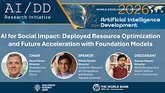
AI for Social Impact: Deployed Resource Optimization and Future Acceleration with Foundation Models
May 1, 2025 -- As part of the WDR 2026 and AI for Digital Development Research Initiative joint event, Professor Milind Tambe shared key insights from over two decades of pioneering work on AI for social impact. His presentation highlighted real-world deployments of end-to-end AI systems in public health, conservation, and public safety—demonstrating how AI-driven resource optimization can generate meaningful and measurable improvements in these critical sectors. Watch the recording here.
AI and Digital Development (AI/DD) Brown Bag Lunch: "From Chalkboards to Chatbots: Evaluating the Impact of Generative AI on Learning Outcomes in Nigeria"
February 18, 2025 -- World Bank experts Martin De Simone, María Barron, and Federico Tiberti gave a brown bag talk for the AI and Digital Development research initiative, presenting the main findings of their study 'From Chalkboards to Chatbots: Evaluating the Impact of Generative AI on Learning Outcomes in Nigeria.' Access the recording here.
Global Findex Database (DECRG/World Bank and Gallup) receives the “Best Financial Services Research" award
December 2, 2024 -- The Market Research Society (MRS) announced the MRS Awards 2023, where the Global Findex Database (Development Research Group/World Bank and Gallup) received the “Best Financial Services Research” award and was also “Highly Commended” for the Liz Nelson Award for Social Impact, the event’s flagship honor.
Joint initiative between LAC Education and DECRG to support the Regional Directorate of Education in Lima, Peru
November 2024 -- Meeting with government officials from the Dirección Regional de Educación Lima Metropolitana (DRELM) to discuss the implementation and evaluation of an AI training program for teachers. This is a joint initiative between Ezequiel Molina (LAC Education) and Carolina Lopez (Development Research Group).
Resources on Financial Inclusion in Sub-Saharan Africa
For over a decade, the Global Findex Database, led by Leora Klapper, has been the definitive source for data on global digital financial services usage. A series of “Findex Notes” highlights trends in Sub-Saharan Africa, including the growth of mobile money products, the adoption of digital identification, and the digitization of payments for agricultural sellers. Explore and download the full series on the Global Findex Africa page.
Generative AI: A Technical Tutorial for Economists
November 26, 2024 -- Robert Pless (George Washington University Computer Science) gave a brown bag talk for AI/DD with an introduction to the technical underpinnings of modern (generative) AI models.
New Forthcoming Research: Evaluating the Impacts of Access to a Digital Jobs Platform and Skills Training on Female Domestic Workers
January 6, 2024 --S Anukriti's impact evaluation on a digital employment matching app à la Uber for domestic workers in Bangladesh was accepted by the Journal of Development Economics in the pre-results review track.
Worldwide, account ownership increased by 50 percent in the 10 years spanning 2011 to 2021, to reach 76 percent of the global adult population. The goal of financial inclusion is not just for more adults to have accounts but for account owners to benefit from using them, such as for digital payments, which provide a range of positive benefits that extend far beyond convenience. This paper reviews the evidence demonstrating how digital payments can expand financial inclusion among recipients and encourage the use of additional formal financial services, such as savings, credit, and insurance, and it explores how digital transactions offer greater security and privacy, especially for women, as well as opportunities to build a digital credit history for credit risk assessments.
An online platform—entitled NaijaCare—offered digital ordering, business development, peer exchange and business skills training to informal medicine vendors in Lagos, Nigeria. Outcomes of these vendors (known as PPMVs—patent and proprietary medicine vendors) who had participated in an earlier round of NaijaCare programming are compared with those of other PPMVs operating in the same local markets. Program impacts are estimated using a difference-in-differences estimator, with inverse propensity weighting to balance possible differences in baseline characteristics between intervention and control PPMVs. NaijaCare’s full range of features did not lead to significant improvements in most of the main outcomes of interest.
This paper develops an economic evaluation framework to assist in establishing the economic value of Digital Health Interventions(DHIs) to inform policy, programming and appropriate scale-up in resource-constrained settings. It is intended for country governments and those providing technical assistance in global development related to digital health.
IEEE International Conference on Healthcare Informatics (ICHI) | June 2024
We explore prompt designs for a lightweight integration of a large language model (LLM) into clinical decision support in primary care in Nigeria. The LLM integration is designed to give immediate, actionable "second opinions" to frontline healthworkers on their patient interaction notes. The assessment of a physician serves as a benchmark for the quality of the LLM feedback. A particular challenge was to counter the LLM's tendency to over-recommend laboratory testing, which is more in line with medical practice in high-income countries. We evaluate the ability of a range of prompt engineering approaches to better align the LLM's medical test recommendations with locally appropriate standards of clinical care.
Digital technologies offer the possibility of a new era in development. The April 2024 edition of the World Bank research newsletter makes the case that investing in digital infrastructure and skills will be critical for countries that hope to realize the benefits. The newsletter highlights topics such as building digital skills, AI-powered development, finance and digital payments, and emerging challenges in digital development.
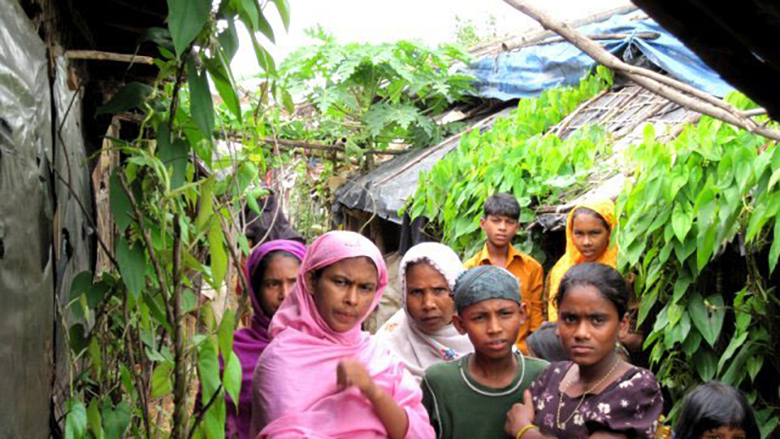
Large Language Models (LLMs) are quickly becoming ubiquitous, but the implications for social science research are not yet well understood. This paper asks whether LLMs can help us analyse large-N qualitative data from open-ended interviews, with an application to transcripts of interviews with displaced Rohingya people in Cox’s Bazaar, Bangladesh. The analysis finds that a great deal of caution is needed in using LLMs to annotate text as there is a risk of introducing biases that can lead to misleading inferences.
Pierre's research focuses on public finance. His work leverages large administrative datasets to inform on the design of taxes and transfers. In current work he used ML to assist tax administrations in designing risk-based audits
Miriam's research focuses on access to finance and MSMEs. Her current work explores credit information viewing through an app, mobile money for rural households, digital screening tools for loan applicants, and the role of small-scale digital credit in supporting entrepreneurs in underserved communities.
Lelys Dinarte-Diaz works on research projects that aim to evaluate the potential of using AI applications to target and provide mental health assistance to population affected by displacement, conflict, and violence.
Toan’s research asks whether AI applications in English education can reduce learning poverty and inequality among middle-schoolers in Viet Nam. In mental health, he evaluates the potential of using AI to provide assistance to populations affected by displacement, conflict, and violence.
Jed’s research investigates how digital tools can improve the quality of care offered by informal health providers, as well as, more generally, the distinct challenges of evaluating digital and AI-related health interventions in low- and middle-income settings.
Devaki's research leverages artificial intelligence to analyze trade patterns among private firms, state-owned enterprises, and governments, as well as to examine the impacts of geopolitical fragmentation and shocks—such as the COVID-19 pandemic and trade war —on trade rerouting and technology adoption.
Xavi's research focuses on digital payments, exploring the quality of financial services provided by agent networks, the impact of taxation of digital transactions, fraud and changes in KYC rules.
Leora leads the Global Findex database, which measures the adoption and use of digital financial services and connectivity. Her research focuses on fintech innovations and their impact on household welfare and business resilience.
Carolina studies the impact of an adaptive learning platform on student learning in the Dominican Rep. She also works with the Regional Directorate of Education in Lima to explore how AI-driven tools can enhance teaching practices and student outcomes
Biju's projects include using AI and visualizations tools to develop systems for citizen engagement for local municipal governance in India and Nepal and developing new AI/NLP tools to analyze qualitative interviews with large representative samples.
Claudia’s research examines the impact of credit on firms and individuals. Her current work explores digital screening tools for loan applicants and the role of small-scale digital credit in supporting entrepreneurs in underserved communities.
Anja's research explores the use of generative AI to support frontline health workers in Nigeria. She also works with the Kenyan Judiciary on how a dynamic learning algorithm can help match mediators to court cases.
Mahvish’s projects in AI and machine learning include (i) understanding the integration of artificial intelligence tools within large organizations such as the World Bank; and (ii) testing whether computer vision algorithms can improve property tax assessment and collection in Pakistan.
Ruozi’s research leverages big data and machine learning to pinpoint climate-vulnerable regions in Africa with limited local data. She works with African farmers to test AI tools for tailored technical assistance and improved climate resilience.
Ravi is the chief innovation officer at EHA Clinics, a startup in Nigeria that blends technology solutions with skilled clinicians to deliver high-quality primary care in the private sector. EHA Clinics is collaborating with Anja Sautmann on an AI project in Nigeria.
Since 2011, the Global Findex Database has been the definitive source of data on global access to financial services from payments to savings and borrowing.
DRELM ensures the provision of quality education with equity; it oversees and supervises the implementation of educational policies and regulations, promoting the holistic development of students.
If you are interested in exploring opportunities to collaborate with us, please contact us at the following email address: asautmann@worldbank.org.
If you would like to receive occasional email updates from AI/DD about upcoming events and other announcements, please sign up for the email list.
Business Dynamism in Middle-Income Countries
Overview
Middle-income countries (MICs) are home to three-fourths of the global population, account for over two-thirds of the global GDP, and cover more than 60% of the population living in extreme poverty. Given their global significance and development challenges, sustaining high economic growth rates is of critical importance. However, history shows that MICs get trapped in mediocre economic growth rates.
The Business Dynamics in MICs program aims to develop and implement diagnostic tools to identify the policies and distortions undermining creative destruction and the business dynamism underlying any fast-growing economy. The program follows a micro-to-micro approach, acknowledging that macroeconomic outcomes reflect firm-level and individual-level distortions that can only be identified at the micro level. Grounded in the latest economics research, it leverages increasingly available firm- and household-level databases to characterize business dynamism in middle-income countries and deliver policy implications.
Key questions:
Concretely, this program seeks to address the following questions:
What is the strength of business dynamism in middle-income countries? How do firm-size distributions, entry and exit rates, and job reallocation rates differ relative to advanced economies?
What barriers and distortions hinder technology infusion, innovation, and allocative efficiency?
What policy principles are most important for fostering creative destruction at the middle-income stage?
News and Events
World Bank and University of Chicago Growth Academy
July 22 - August 1, 2024 -- The program is divided between the University of Chicago and World Bank Headquarters in Washington, D.C. This unique setup allows participants to spend one week at each venue, providing the opportunity to directly engage with distinguished academics, including Nobel laureates and prominent World Bank researchers. Participants attended from over twenty middle-income countries, most of them policymakers and researchers at central banks, ministries of finance, and think tanks. Agenda:
Week 1: Chicago, July 22nd to 26th Week 2: World Bank headquarters, Washington DC, July 29th-August 1st
Events with a similar structure are expected to be held on the premises of middle-income countries. Events in Egypt and Romania are scheduled for April and May 2025 and others in South America are also being organized.
November 2023 -- In this World Development Report 2024 Seminar Roberto N. Fattal Jaef (Senior Economist, Development Research Group, Macroeconomics and Growth, World Bank) discusses "Distortions and Firm Dynamics in Developing Countries."
February 2021 -- Differences in living standards around the world are substantial, with income per worker in the richest countries up to 60 times higher than in the poorest. Even as measures of the stock of physical and human capital have become more reliable over time, aggregate productivity still remains the biggest contributor to these striking income gaps. What, then, could explain these vast productivity differences across countries? In this Policy Research Talk on February 23, 2021, World Bank economist Roberto N. Fattal Jaef discussed the role of distortions in firms’ business environment that reduce competition, innovation, and allocative efficiency.
Drawing on the development experience and advances in economic analysis since the 1950s, World Development Report 2024 identifies what developing economies can do to avoid the “middle-income trap.” Lower-middle-income countries must go beyond investment-driven strategies—they must also adopt modern technologies and successful business practices from abroad and infuse them across their economies. Upper-middle-income countries need to accelerate the shift to innovation by pushing the global frontiers of technology. This requires reconfiguring economic structures governing enterprises, labor, and energy use to enable greater economic freedom, social mobility, and political contestability.
Featured in Chapter 2 of “Hidden Potential: Rethinking Informality in South Asia,” World Bank’s Chief Economist Office for South Asia 2022
This chapter discusses and quantifies the role of entry barriers and productivity-constraining distortions in South Asian countries’ formal sectors to rationalize the pervasiveness of informality
The role of firm productivity in enhancing living standards and driving sustained economic growth is widely acknowledged. Extensive academic research, newspaper articles, and influential reports have highlighted the various channels through which firm productivity contributes to prosperity. However, the factors driving firm and aggregate productivity still need to be understood.
A “missing middle” is often interpreted as having too few “mid-sized firms” and sometimes raise calls for policies focusing on small and medium enterprises. While these policies can be useful, the issue of the “missing middle” should be interpreted more broadly – a preponderance of small informal firms and larger firms that fail to absorb the workforce. A “missing middle” indicates that there is scope for shifting workers from small enterprises into medium-sized and larger ones. Given that larger firms tend to be more productive due to economies of scale, this shift would imply a productivity gain.
Roberto's research focuses on macroeconomic aspects of economic development: firm dynamics, distortions, and aggregate productivity. real and financial shocks: macroeconomic and firm-level effects.
If you are interested in exploring opportunities to collaborate with us, please contact us at the following email address: rfattaljaef@worldbank.org.
Center for Research on Women and Jobs
Overview
The CRWJ is a research initiative led by the World Bank's Development Research Group in collaboration with the Bank's regional Gender Innovation Labs and other researchers in the World Bank Group.
The CRWJ’s mission is to boost the impact of policy research on women and jobs. We seek to achieve this by coordinating and amplifying research efforts and promoting the uptake of quality evidence.
The Center has three strategic goals:
Foster cross-regional and cross-sectoral collaboration, knowledge exchange, and learning on expanding women’s access to jobs, supporting job creation, and strengthening the resilience of those jobs.
Disseminate research on women and jobs to enhance its accessibility, relevance, and uptake, both inside the World Bank and externally.
Identify and promote a strategic research agenda on women and jobs, including priority areas to inform World Bank teams and external partners.
The Research and Development Center in Chile conducts research on financial development relevant to Chile and other countries and generates knowledge to inform policymakers, practitioners, and the academic community on how the financial sector can foster growth across the economy for a more prosperous and equitable society.
DaTax conducts cutting-edge analytical work with micro tax data, aimed at supporting the development of equitable and sustainable public finance systems. We work in close collaboration with tax administrations and Ministries of Finance in over 15 countries globally. Our analysis feeds directly into policy design and helps build partner countries’ analytical capacity. The innovative nature of our work also positions it prominently in leading academic conferences and journals.
Micro tax data are a huge treasure trove as they can help shed light on many important policy questions in the areas of taxation, firm dynamics, trade, and labor markets. The World Bank stands out with unparalleled access to administrative tax records, including corporate tax records, value-added tax records, property registers, firm-to-firm transaction records and transaction-level trade data, in a large set of countries with diverse income levels and institutional structures. Through a combination of micro evidence—on the behavior of taxpayers, firms, workers, and consumers—and macro evidence, DaTax studies macroeconomic outcomes and cross-country patterns across stages of development.
Key Questions:
Examples of the questions DaTax addresses include:
How does the distributional impact of tax systems change as economies develop?
How does the nature of firm dynamics change as economies grow, and what implications does this have for aggregate output?
How do labor market dynamics link to different labor market institutions?
DaTax also serves as a platform for developing skills in working with micro administrative data to improve policy design. We offer training for government officials in partner countries as well as for World Bank staff. Additionally, we contribute to knowledge sharing by developing codes and training materials as public goods.
DaTax is a collaboration between the operational and research departments of the World Bank.
Containing emissions, combatting climate change, and improving air quality are priority sustainable development goals for the World Bank. The Emissions Research Initiative is a multi-pronged research and engagement program to support knowledge generation, foster outreach, and promote actionable steps toward sustainable development.
The imperative to address climate change is obvious. Increasing heat waves, droughts, storms, and other extreme weather threaten development progress around the world. While short-term adaptation is critical, long-term solutions require reducing emissions of greenhouse gases and expanding activities to remove them from the atmosphere. This program will help drive progress on the creation and adoption of emissions trading markets to contain and reduce both greenhouse gas emissions and local air pollution. Carbon credits also serve as an important instrument to expand participation in emissions trading among and within developing countries and generate critical finance for the fight against greenhouse gas emissions. This program will help drive our understanding of carbon credits and help facilitate programs to realize their full potential.
Local air pollution and emissions of particulate pollution are closely related to climate change but are major determinants of health and productivity in their own right. Containing local air pollution will have substantial short-term welfare benefits in many low- and middle-income countries around the world. Yet many places lack information about air pollution levels or the tools to combat high levels of air pollution. This program will target both challenges. It will expand the scope of global air pollution monitoring networks and engage with policymakers to drive the adoption of tools that successfully reduce air pollution levels.
Key questions:
Where is rigorous analysis and advice most needed for designing effective and appropriate emissions trading programs in developing countries?
What are the co-benefits of reducing carbon emissions and local air pollution across countries?
How can we improve measurement of air pollution to support sound investments and cost-effective policy making in developing countries?
How does air pollution affect the formation and utilization of human capital and influence long-run economic growth?
How can carbon credits be supplied in a credible way that creates value?
How can carbon offsets and compliance markets be designed and implemented to reinforce each other?
News and Events
Macel Boiteux Lecture awarded to Research Manager, Carolyn Fisher
April 8, 2025 | France– As the first female economist in the repec Environmental ranking, and top 3 among women in Energy, Carolyn Fisher was honored with the 2025 Marcel Boiteux Lecture at CentraleSupélec. This prestigious event celebrates outstanding achievements in the field of energy economics and pays tribute to Marcel Boiteux, whose pioneering work laid the foundations for the economics of the electricity sector and for research into carbon taxes.
Harvard European Conference
January 31 - February 1, 2025 | Boston -- Carolyn Fischer participated in the panel "Pretense or Promise? Europe's Climate Ambition under Scrutiny" at the Harvard European Conference 2025. Under the theme "Leader or Dreamer? Europe’s Role in a Fragmented World Order," the conference brought together over 750 academics, students, and future leaders from around the world. Through 10 panels, 4 keynote speeches, and several working groups, participants examined key challenges shaping Europe's future, including defense, energy security, economic resilience, and transatlantic relations.
C3A Annual Symposium | Coalition for Capacity on Climate Action 1st Annual Symposium, Research and Leadership Segment
December 2-6, 2024 | Paris -- On December 2-6, 2024, C3A organizes its 1st Annual Symposium, taking place at the World Bank's Conference Center in Paris. A major event that aims to convene leading voices in global climate policy and research to jointly think through the most pressing issues facing Ministries of Finance and the whole-of-government in the face of a potentially unstable mid-transition period.
This paper develops a scalable method to estimate local greenhouse gas emission changes using satellite-based CO₂ and CH₄ data from NASA’s OCO-2 and ESA’s Sentinel-5P. By analyzing monthly anomalies and grid-level trends, the study identifies significant emission patterns across 242 countries and subnational units. Results show declining long-term CO₂ and CH₄ trends, though CO₂ increased recently, highlighting regional disparities and supporting data-driven climate mitigation strategies worldwide.
Climate modeling suggests that achieving international climate goals requires a reduction in current CO2 emissions by over 90%, with any remaining emissions to be addressed through carbon dioxide removal (CDR) solutions. Sixteen CDR strategies are evaluated by integrating technical potential, environmental, social, and governance (ESG) criteria, along with sequestration permanence. This evaluation, conducted by ENGIE’s scientific council using an interdisciplinary Delphi panel methodology, proposes a “quality” measure for each technology. This measure combines ESG scores and sequestration timescales to rank and select the most promising solutions. The findings highlight the necessity for further research to understand and mitigate ESG impacts, aiming to inform both future research and current decision-making to support the effective and legitimate use of CDR strategies.
This paper evaluates alternative options for rebating revenues from a unilateral emissions price, focusing on energy-intensive and trade-exposed industries. A theoretical model is developed to demonstrate that conditional rebating policies---which would be distortionary in a first-best world---may be welfare-improving. The findings indicate that from a domestic perspective, rebating emissions revenues proportionately to firm output is typically superior to other rebating options when the emissions price is set close to the social cost of emissions.
This paper's analytical model reveals how outcomes differ depending on the nature of the emissions trading systems (ETS) and the types of policies with which it overlaps. It highlights when overlapping policies may have counterproductive impacts with rate-based ETSs, and when they can enhance effectiveness in ways that differ from the effects with mass-based trading systems. The insights are complemented by results from a numerical general equilibrium model representing important characteristics of the recently implemented Chinese nationwide ETS context.
While countries increasingly commit to pricing greenhouse gases directly through carbon taxes or emissions trading systems, indirect forms of carbon pricing—such as fuel excise taxes and fuel subsidy reforms—remain important factors affecting the mitigation incentives in an economy. Taken together, how can policy makers think about the overall price signal for carbon emissions and the incentive it creates? We develop a methodology for calculating a total carbon price applied to carbon emissions in a sector, a fuel, or the whole economy.
Carbon-pricing policies worldwide are increasingly coupled with direct or indirect subsidies where emissions pricing revenues are rebated to the regulated entities. This study analyzes the incentives created by two novel forms of rebating that reward additional emission intensity reductions: one given in proportion to output (intensity-based output rebating) and another that rebates a share of emission payments (intensity-based emission rebating). These forms are contrasted with output-based rebating, abatement-based rebating, and lump-sum rebating. Given the same emission price, intensity-based output rebating incentivizes the most intensity reductions, while abatement-based rebating causes the most output reductions, and output-based rebating puts the least pressure on output (and emissions); intensity-based emissions rebating lies in between these, by implicitly subsidizing emissions while incentivizing intensity reductions. The study supplements partial equilibrium theoretical analysis with numerical simulations to assess the performance of different mechanisms in a multisector general equilibrium model that accounts for economy-wide market interactions.
This study investigates the impact of information provision on household behavior in connection with indoor and outdoor air pollution in Tbilisi, Georgia. The study implemented a randomized controlled trial to assess whether providing households with different levels of pollution information changes their knowledge and behavior around air pollution, and improves their health outcomes. The study evaluates three treatments: a pamphlet with general information, the pamphlet combined with daily text messages about local outdoor pollution, and the pamphlet with messages about both indoor and outdoor pollution levels, supplemented with an indoor air pollution monitor. The findings show that while the pamphlet alone did not lead to behavioral change, daily text messages significantly enhanced knowledge about pollution, led to increased avoidance behaviors, and improved health outcomes.
Air pollution is a major threat to health and the dangers are particularly acute in low- and middle-income countries where levels of exposure tend to be high and adaptation resources are often limited. However, little is known about how the burden of pollution is spread across different income groups within these countries. Understanding who is impacted by air pollution is important for designing equitable policy solutions. In this study, we used data providing high-resolution wealth estimates for more than 100 countries, combined with high-resolution estimates of air pollution, to estimate how wealth is correlated with ambient air pollution in low- and middle-income countries around the world.
This paper develops a global CO₂ emissions model using satellite data at 25 km resolution, incorporating industrial sources, fires, and population-related factors linked to household incomes and energy use. It evaluates the impact of subways in 192 cities, finding they reduce population-related CO₂ emissions by 50% in those cities and 11% globally. Future subway expansion is analyzed under varying cost assumptions, showing substantial climate benefits. Even under pessimistic scenarios, many cities achieve significant emissions reductions, justifying subway investments on both climate and traditional grounds, such as traffic and air pollution reduction.
This paper identifies high-priority areas for methane emissions reduction and assesses recent emissions changes using Sentinel-5P satellite data. It examines 775 key areas, with case studies on landfills in Madrid, rice production in India, and oil production in Iraq. Two fixed-effects models estimate monthly trends (2019–2022) and annual differences. Findings show increasing emissions outnumber decreases four to one, except in gas and oil sectors. High-income economies see more reductions, while other groups experience widespread increases. The study provides emissions trend reports and maps, serving as a template for tracking progress toward the Global Methane Pledge.
Exposure to fine particulate pollution (PM2.5) increases mortality and morbidity and reduces human capital formation and worker productivity. As a consequence, high levels of particulate pollution may adversely affect economic activity. Using a novel dataset of changes in the annual gross domestic product of Indian districts, this paper investigates the impact of changes in the level of ambient PM2.5 on district-level gross domestic product. Using daily temperature inversions as an instrument for pollution exposure, this paper finds that higher levels of particulate pollution reduce gross domestic product.
Man or Machine ? Environmental Consequences of Wage Driven Mechanization in Indian Agriculture
Policy Research Working Paper | March 2023
This paper uses an exogenous shock to wages from the world’s largest anti-poverty program to show that higher wages can lead to increased air pollution, likely by inducing farmers to shift into a labor-saving and mechanized production process. The results suggest that absent policies to correct for environmental externalities of mechanization at all stages of development, labor market shocks may lead to inefficient levels of mechanization
Scalable Tracking of CO2 Emissions: A Global Analysis with Satellite Data
Policy Research Working Paper | February 2023
This paper presents a satellite-based CO₂ tracking model that enables monitoring of local and regional concentration changes using NASA’s OCO-2 data. By comparing trend estimation models, the study finds that a simple model using pre-filtered satellite data effectively isolates local anomalies. Applications include long-term trend analysis and short-term yearly changes. The paper also estimates CO₂ emissions for thousands of cities, identifying those with unexpectedly high or low emissions. Given computational constraints, the World Bank has established an open web facility to provide pre-filtered CO₂ data, annual tracking reports, and urban-to-administrative unit linkages.
This paper highlights the critical role of methane reduction in near-term climate mitigation and the data challenges facing the Global Methane Pledge. Current emissions estimates rely on bottom-up inventories like EDGAR, which lack direct measurements. To address this, the World Bank has developed a new database using Sentinel-5P satellite data to track monthly methane concentrations at high spatial resolution. A case study on irrigated rice production demonstrates its potential for refining emissions estimates and supporting mitigation efforts. This approach could enhance monitoring and verification across other methane-emitting sectors.
This study estimates an urban CO2 emissions model using satellite-measured CO2 concentrations for 1,236 cities in 138 countries from 2014 to 2020. The model accounts for global CO2 trends, seasonal variations, industry structure, agricultural and forest fires, demographics, income effects, and geographic conditions. The study also examines regional variations, decomposes emissions sources, and explores the role of subway investments in emissions reduction. The research supports policy discussions on Pigouvian pricing and urban planning for low-carbon transitions.
Cities worldwide can now track their carbon and methane emissions from space, thanks to a new dataset from the World Bank that puts high-resolution, real-time urban data at everyone’s fingertips.
A low-emission growth path across key sectors — including agriculture, mining, forestry, manufacturing, infrastructure, and utilities — is critical for sustainable development, poverty reduction, and a livable planet. Integrating emissions mitigation into development planning is vital for long-term environmental and economic resilience.
As the world grapples with the climate crisis, subway expansions present a viable and urgent opportunity for meaningful climate action. World Bank research results to date show that rapid subway expansion provides an excellent opportunity for significant reduction of carbon emissions in our efforts to address climate change.
The lack of accurate and consistent carbon dioxide (CO₂) and methane (CH4) emissions data has hindered the efforts to rapidly reduce emissions. Recognizing the urgent need for a comprehensive and reliable GHG monitoring scheme, a multi-disciplinary team at the World Bank launched an initiative to leverage advancements in satellite based GHG measurements to fill the global information gap.
Clearly, subway systems can be beneficial in reducing congestion and improving health — but the upfront costs may be beyond the reach of most fiscally stressed city governments. But subways don’t simply reduce congestion locally, they cut carbon emissions globally.
World Bank researchers developed a new database and open data service for tracking CH4 emissions building on earlier carbon emissions work. The database responds to the SDG Decade of Action, which calls for broadening global access to policy-critical data and demonstrating their use.
To better track carbon pledges and support mitigation finance, World Bank researchers have developed a new database and web facility that place carbon data at the user’s fingertips. The database uses satellite data from NASA’s OCO (Orbiting Carbon Observatory)-2 satellite, which provides reliable information about global CO2 emissions at high levels of spatial resolution.
The World Bank’s research suggests that satellite-based CO2 measures can provide valuable support for analyzing and assessing urban emissions performance. While the study has focused on large cities, the same modeling approach can be used in geographic settings as varied as large and small cities within regions or countries, regions within countries, or specific project areas.
Recently, advances in atmospheric sensor technology have drastically improved the potential for high-resolution global GHG emissions tracking by satellite-based instruments. Leveraging these innovations, DECSI has produced new high-resolution measures for CO2 (from NASA’s OCO-2) and CH4 (from ESA’s Sentinel-5P) in collaboration with DECSC and funded by the Knowledge for Change Trust Fund. The new databases are publicly available and can be updated frequently using state-of-the-art software that processes atmospheric readings to maintain spatial and temporal comparability. They offer a major new resource for GHG problem diagnosis, program design, and performance assessment for climate action.
Illustrative applications of the new databases for policy research can be found in the following sources. These research products demonstrate the role of high-resolution global data in tracking GHG emissions for Nationally Determined Contributions and the Global Pledgeto cut methane emissions by 30% from 2020 levels by 2030. For the World Bank and its development partners, the new databases can inform development strategies by supporting Climate Change Development Reports (CCDRs) and Country Partnership Frameworks.
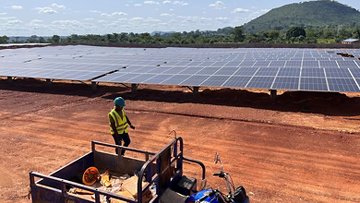
Governments and development partners are poised to invest billions of dollars in energy access in Africa in the coming decade. This mission will need a body of policy-responsive research on how to leverage policy instruments for markets and governments to achieve the outcomes of an energized, economically transformed Africa.
Energy is instrumental and necessary for modern economic growth. Universal access to reliable, clean energy is also an intrinsically valuable goal of global development. However, past experience with energy infrastructure investments and expansion of access to low-income, rural households, suggests three pitfalls. First, it has not been fiscally sustainable. Energy utilities are frequently at the heart of the region’s debt crises, with adverse consequences of macro-fiscal instability for economies. Second, expanding access as a social goal, through subsidies to end-users and to energy firms to serve remote, low-income customers, may not yield sufficient benefits to end-users to grow their incomes. Rural electrification programs may need to combine more strategically with other policies to support structural transformation of Africa’s local economies from subsistence agriculture to more productive employment. Third, domestic resources appear insufficient to achieve access goals and establish energy infrastructure. The region will need to attract long-term global capital, especially for investments in the continent’s vast renewable potential, and pay for it from growth in future incomes, savings and revenues. Whether capital flows to Africa depends upon whether the policy and regulatory environment is conducive to generating economic returns for investors.
Insufficient knowledge is available to guide policymakers on how to improve utility performance, design subsidies, and combine energy strategies with other policies for social and economic returns. This initiative aims to address these knowledge gaps in collaboration with African researchers and think-tanks, producing new research and building local capacity to use data and evidence to inform policy.
This website also aims to curate and interpret research happening across institutions on important questions for energizing Africa. It thus aims to serve as a public good for policymakers and researchers globally, to fuel constructive debates, identify open questions to motivate knowledge expansion, and apply knowledge to innovate policy ideas
Forthcoming Policy Research Working Paper by September 2025: "Electrifying Africa's Economic Transformation: What Policy-Mix Should Governments Pursue?" by World Bank Africa Chief Economist, Andrew Dabalen, and DECRG Researchers, Stuti Khemani, Megan Lang, and Govinda Timilsina.
Topics
This website curates available research on different topics relevant for the role of energy in Africa’s economic transformation. It highlights open questions to help inform ongoing and future research and enable partnerships between international academia and African researchers.
Financial inclusion is a cornerstone of development, and since 2011, the Global Findex Database has been the definitive source of data on global access to financial services from payments to savings and borrowing. The 2021 edition, based on nationally representative surveys of about 128,000 adults in 123 economies during the COVID-19 pandemic, contains updated indicators on access to and use of formal and informal financial services and digital payments, and offers insights into the behaviors that enable financial resilience. The data also identify gaps in access to and usage of financial services by women and poor adults.
January 30, 2025 -- Leora Klapper presented a summary of the evidence of how digital financial services can be a catalyst to enable sustainable development at the G20 DGI-3 Recommendation 12 Workshop on Fintech-enabled Financial Inclusion.
Global Findex Database (DECRG/World Bank and Gallup) receives the “Best Financial Services Research" award
December 2, 2024 -- The Market Research Society (MRS) announced the MRS Awards 2023, where the Global Findex Database (Development Research Group/World Bank and Gallup) received the “Best Financial Services Research” award and was also “Highly Commended” for the Liz Nelson Award for Social Impact, the event’s flagship honor.
Worldwide, account ownership increased by 50 percent in the 10 years spanning 2011 to 2021, to reach 76 percent of the global adult population. The goal of financial inclusion is not just for more adults to have accounts but for account owners to benefit from using them, such as for digital payments, which provide a range of positive benefits that extend far beyond convenience. This paper reviews the evidence demonstrating how digital payments can expand financial inclusion among recipients and encourage the use of additional formal financial services, such as savings, credit, and insurance, and it explores how digital transactions offer greater security and privacy, especially for women, as well as opportunities to build a digital credit history for credit risk assessments.
Leora leads the Global Findex database, which measures the adoption and use of digital financial services and connectivity. Her research focuses on fintech innovations and their impact on household welfare and business resilience.
The Long Term Growth Model (LTGM) is an Excel-based tool to analyze long-term growth scenarios building on the celebrated Solow-Swan Growth Model. The tool can also be used to assess the implications of growth (and changes in inequality) for poverty rates. The focus of the tool is on simplicity, transparency and ease-of-use: there are no macros, and the very low data requirements mean the tool can be applied in almost any country. The tool is useful for planning/vision documents and country reports, but is not designed for short-term forecasting. The building blocks of growth are savings, investment and productivity, but the model also analyzes human capital, demographics, the external sector (external debt, FDI, CAB) and labor force participation by gender.
Trade fragmentation is characterized by the division of global trade into distinct regional blocs, disruption of integrated supply chains due to strategic considerations, and in some cases even the reversal of globalization. It is a growing concern for developing countries as it affects global poverty, development, and the diffusion of new technologies.
The Trade Fragmentation Research Initiative offers new data sets, visualization tools, and policy modeling frameworks, as well as capacity building and partnerships with leading policy and research institutions to inform this debate.
to explore the latest findings, data visualization and simulation tools on trade.
News and Events
Latest Trade Watch Edition: Trade Remains Resilient to Trade-Policy Uncertainty
December 9, 2025 -- Global goods trade expanded in the third quarter of 2025 compared with the same period of 2024, despite higher trade-policy uncertainty. Trade in services continued to grow in the July-to-September period, albeit at a slower pace, led by digitally enabled services. Shipping costs remained low, as container fleet expansion continued to restrain shipping costs amid global supply chain pressures. Read more >
International Seminar on Trade (ISoT)
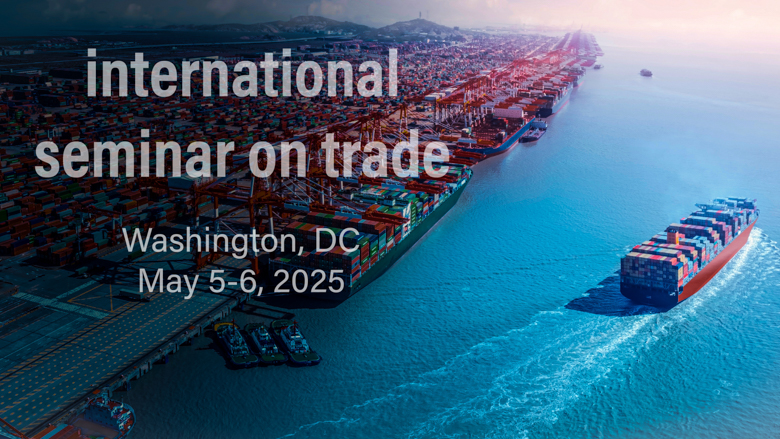
May 5-6, 2025 -- DECRG is co-organizing the inaugural International Seminar on Trade (ISoT) with the Journal of International Economics, CEPR, Banque de France, and the University of Surrey. The seminar, focusing on recent advances in empirical, theoretical, and quantitative international trade, will take place at the World Bank in Washington, D.C. Papers presented will be considered for a special issue of the Journal of International Economics, with Guest Editors Laura Alfaro (Harvard Business School and CEPR) and Stephen Redding (Princeton University and CEPR).
Blog: 'Why tariffs for green technologies should be kept low in developing countries'
January 30, 2025 -- Firms' response to tariffs are particularly adverse for products linked to green technologies relative to average imports. The negative impact of tariffs is especially pronounced for imports of products in the solar value chain and downstream segments—those closer to the consumer—of green value chains. Read more >
Industrial Policy Talks: Import Tariffs
January 28, 2025 -- After decades of liberalization, import tariffs returned to the limelight. From iron and steel in Brazil, to a mix of industries in Indonesia (from apparel to electronics, to ceramics and cosmetics), and electric vehicles in the European Union, governments increased import tariffs with multiple objectives. The presentation discussed the rationales for import tariffs, emphasizing the infant industry argument while considering a set of economic and non-economic objectives. It examined the economic costs of import tariffs, highlighted the limited evidence on their effectiveness in promoting infant industries, and warned of their associated risks. Finally, it touched on alternative policies that could achieve similar objectives.
Trade and Uneven Development Conference
September 12-13, 2024 -- The World Bank, in collaboration with the editorial team of the Journal of International Economics, hosted the Trade and Uneven Development research conference in Washington, D.C., to explore the impact of international trade on development outcomes, sustainability, and inclusivity. Papers presented at the conference are being considered for inclusion in a special issue of the journal, with Guest Editor Ben Faber (University of California, Berkeley).
Policy Research Talk: Self-Arming or Self-Harming? Assessing Trade Policies in Low- and Middle-Income Countries
March 24, 2024 -- LMICs often rely significantly on non-tariff measures (NTMs) to restrict trade. Despite their importance, the impacts of NTMs, particularly their downstream impacts, are rarely examined in economics due to poor data coverage and analytical challenges. In this session, Ana Margarida Fernandes and Devaki Ghose introduced a novel and comprehensive methodology to assess the wide-ranging economic and welfare effects of a 2021 fertilizer import ban in Sri Lanka that can be extended to multiple settings. To conclude, the researchers presented insights from these country case studies to explore how trade policy can be strategically leveraged to foster development. Watch recording >
This paper studies the welfare impacts of agricultural shocks on households with detailed heterogeneity, by taking consumption, land, and labor allocation choices into account. Using household survey data from 51 developing countries, the paper analyzes the welfare consequences of the food price hikes induced by the Russian Federation's invasion of Ukraine and future climate change. Both repress income and exacerbate inequality. War-induced food inflation reduced real household incomes across developing countries by 2.90 percent on average, while changes in yields due to climate change will reduce real incomes by 11.99 percent. The welfare impacts of both shocks vary enormously across the income distribution, with already vulnerable and poorest households bearing the brunt of the costs.
Since 2000, China has been upgrading its infrastructure, exemplified by the expansion of the high-speed railways (HSR), while simultaneously moving up the global value chains, evidenced by the rising domestic value-added ratio (DVAR) in exports. To analyze the impacts of the HSR on China’s DVAR, this paper develops a new methodology to estimate firm-level DVAR using only customs transaction data, without relying on the industry input-output tables or matching firm-level industrial census data. This paper also proposes a novel way to capture firm-level input-output linkages by matching the custom product codes of importers and exporters. The results confirm that the HSR increases the DVAR through firm linkages by connecting downstream exporters with upstream domestic suppliers. A two-sector model shows that, by improving the probability of exporters connecting with low-communication cost domestic suppliers, the HSR decreases domestic material prices and increases the variety of accessible domestic materials, hence pushing up DVAR.
Firms’ import response to tariffs is particularly adverse for products associated with green value chains relative to average imports, driven by the solar value chain and downstream segments across all green value chains. This effect is pervasive for both the values and quantities imported by firms as well as for the probability of firms importing these products. Moreover, the effect is even more negative for undiversified firms. In contrast, import regulations have a smaller and more varied impact on firms’ imports of products associated with green value chains. The findings suggest that governments in emerging markets should avoid adopting protectionist policies that are increasingly used in high-income countries, as their local firms rely on imports for the short-term diffusion of green technologies.
This study explores how multinational firms and global value chain linkages drive the cross-country diffusion of emerging technologies. Using online job posting data from 17 countries (2014–2022), combined with multinational and firm-to-firm network data, the analysis shows that emerging tech jobs are heavily concentrated within large firms and their supply chains. About one-third of these postings originate from Fortune 500 firms or their affiliates, buyers, suppliers, or innovation partners. While tech hubs initially dominate, diffusion accelerates over time in wealthier, nearby regions. Crucially, firm-to-firm linkages—especially with prior buyers or innovation partners—boost tech job growth. Cross-firm relationships beyond corporate boundaries significantly shape diffusion patterns, often more than geography alone.
This paper examines the evolution and resilience of global value chains (GVCs) in the agrifood sector, which intensified since the 1994 Uruguay Round Agreement. Using data from FactSet and Fortune 500 lists, the study analyzes 17,500 agribusiness firms and over 150,000 supplier–customer links from 2014 to 2022. Findings show that large corporations have become more central in GVCs by diversifying geographically while maintaining a concentrated supply strategy. Greater network complexity and connectivity are associated with higher resilience—firms with deeper linkages are less likely to exit the industry. The paper offers new insights into agribusiness network dynamics and underscores the importance of firm-to-firm ties in navigating disruptions such as COVID-19, extreme weather episodes, and geopolitical tensions.
Restrictive NTMs coexist with lower tariffs, particularly for high-income importing countries, low-income exporting countries, country pairs with deep trade agreements, and products with consumption externalities. Designed model is further used to shed light on the recent Sino-EU battery electric vehicle (BEV) disputes, whereby the EU imposed NTMs on top of the tariffs on China’s BEVs.
The US-China trade war created net export opportunities rather than simply shifting trade across destinations. Many "bystander" countries grew their exports of taxed products into the rest of the world (excluding the United States and China). Country-specific components of tariff elasticities, rather than specialization patterns, drove large cross-country variation in export growth of tariff-exposed products. The elasticities of exports to US-Chinese tariffs identify whether a country's exports complement or substitute the United States or China and its supply curve's slope. Countries that operate along downward-sloping supplies whose exports substitute (complement) the United States and China are among the larger (smaller) beneficiaries of the trade war.
In the face of rising geopolitical fragmentation and the rise of protectionist measures, it is becoming increasingly important to understand how easy it is for firms to switch suppliers in the short term. Fujiy et al., 2025 finds that in the short term it is very hard for buyers to switch suppliers even for the same product due to reasons as varied as long-term buyer-supplier relationships, customized products, and institutional capacities in terms of contract enforcement. The costs of disrupting supply chains, especially severing links for highly connected firms, can be large.
Geoeconomic fragmentation can also manifest through policies ostensibly enacted for environmental or health reasons, but which function as protectionist measures. Ghose et al. (2023) provide an example of such a policy in their analysis of Sri Lanka’s fertilizer import ban, a policy introduced on environmental grounds. This restriction led to a drastic decline in agricultural production and exports of fertilizer-dependent crops, resulting in a 4.35% average income reduction and concentrated welfare losses among landowners tied to agriculture. This example illustrates how policies framed for non-economic goals can act as de facto trade barriers, impacting global trade flows and domestic welfare. The findings also quantify the costs of lack of fertilizer access and the role of trade and industrial policy in determining such access.
Globalization has slowed—but not reversed—since the 2008–09 financial crisis. While trade remained resilient during COVID-19, recent shifts in policy and public sentiment mark a potential turning point. Concerns about labor market impacts from trade with low-wage countries like China set the stage, but didn’t drive the shift. The pandemic raised supply chain concerns, yet trade rebounded quickly in 2021. Russia’s invasion of Ukraine intensified fears about geopolitical risk, prompting calls to “de-risk” supply chains and restrict exports to China. These trends suggest a move toward more fragmented trade, with uncertain long-term effects. While some industries may gain, global growth, innovation, and poverty reduction could slow. Measuring resilience remains challenging without clear policy benchmarks.
Cali et al. (2024) shows that fixed costs of non-tariff measures affect a firm’s ability to respond to global shocks by changing sources of imported inputs, thereby negatively affecting their export performance. The costs of protectionism and trade fragmentation would thus be underestimated if we measure trade barriers by solely converting them into iceberg costs as reflected in import values.
This paper introduces a new approach to measuring Global Value Chain (GVC) participation, crucial for policy-making. It classifies GVC involvement into backward, forward, and two-sided linkages, incorporating production data beyond traditional trade metrics. The findings reveal that existing trade-based GVC measures underestimate global activity, misrepresent key sectors like services and manufacturing, and exaggerate risks in early trade liberalization. The study also refines backward-forward classifications, showing they overestimate backward linkages. Applying these new metrics to economic models improves predictions of trade disruptions, highlighting that while GVC participation increases exposure to external shocks, it enhances output stability. The dataset is available on the World Bank’s WITS Platform and is regularly updated for further analysis.
Erhan's research focuses on the impact of trade policy on poverty and labor markets. More recently, he worked on the changing patterns of globalization and growth
Paulo's research interests include drivers of firm-level upgrading and industrial development, multinational enterprises, links between globalization and technological change, and the distributional impacts of trade.
Anne’s research analyzes the impact of tariffs on local labor markets and the evolution of firm networks in global agricultural value chains. She also examines patterns of geopolitical fragmentation at the firm-level and assesses trends in trade-related climate policies.
Cristina’s research focuses on recent trends in international trade and policy, with an emphasis on trade responses and resilience to shocks. She also co-leads the quarterly Trade Watch publication, which monitors global trade in goods and services, along with logistics patterns.
Ana's research examines trade policy impacts on firm export and import dynamics and the role of market structure. She is also studying firm-level China delinking and how export and import diversification affect firm resilience.
Devaki's research focuses on the economic costs of geopolitical fragmentation, protectionism, and non-tariff measures (NTMs). She decomposes NTMs into fixed costs, delivery delays, and variable trade costs, revealing hidden costs not captured by standard measures. Her work also explores how protectionist domestic policies can create economic disruptions and inequalities across geographic locations and income groups.
This site uses cookies to optimize functionality and give you the best possible experience. If you continue to navigate this website beyond this page, cookies will be placed on your browser. To learn more about cookies, click here.