Sahel Adaptive Social Protection Program

Impacts on Human Capital Promotion and Protection

Focus Areas for SASPP Photos

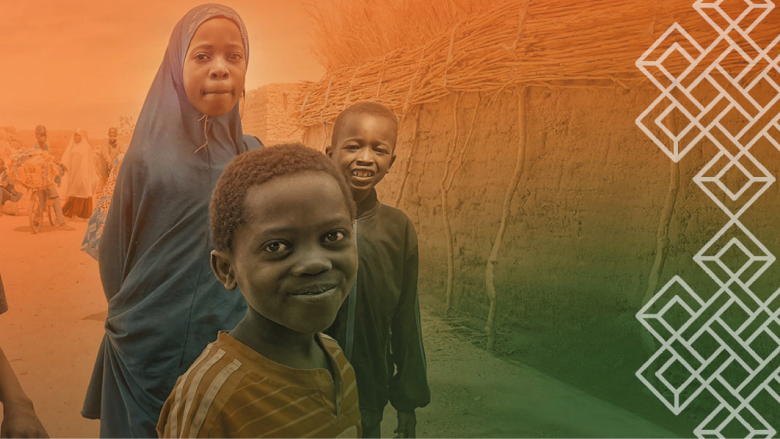
© Stephan Gladieu / World Bank

People are central to a country’s future, yet in the Sahel, human capital remains under severe pressure from poverty and vulnerability. Chronic poverty and temporary stresses restrict or disrupt nutrition, learning, health, and psychosocial wellbeing. This limits human wellbeing, dignity, future labor force participation, and economic potential.  Adaptive social protection (ASP) can help mitigate these impacts by reliably providing support to the poorest households. By promoting essential investments and supporting positive behaviors, ASP strengthens human capital and individual resilience among poor and vulnerable populations in one of the world’s most challenging environments.

  •  

    ASP empowers poor and vulnerable households to shape a better future with a healthier and more educated generation 

    Human capital—the knowledge, skills, and health of a population—is fundamental to poverty reduction and shared prosperity. In West Africa, however, human capital outcomes remain low: children born today are expected to reach only 30 to 40 percent of their potential lifetime productivity, reflecting persistent gaps in health and education. Limited investment in nutrition, schooling, and basic services has resulted in widespread learning poverty and poor health outcomes, with nearly one‑third of children under five stunted and a majority of primary‑school‑age children lacking minimum reading proficiency in sub-Saharan Africa. Among adults living in poor or vulnerable households, many lack the capacity or skills to grow and diversify their productive activities. These deprivations are further intensified by frequent and severe shocks, reinforcing multidimensional poverty and constraining long‑term growth.

    The causes of low human capital are multiple, so addressing this crisis calls for efforts from multiple sectors—and ASP has a part to play. SASPP analytical work has highlighted the core roots of undernutrition in the Sahel, including access to food, feeding and care practices, quality and reach of services, and behaviors shaped by social norms and resources. Human capital is also influenced by the environment in which children grow-up. SASPP findings on how household air pollution is strongly linked to stunting and undernutrition has helped inform pilots that combine social protection with clean-cooking interventions to reduce these exposures in Chad.

    Beyond the chronic underinvestment in human capital, shocks in the Sahel, from droughts and displacement to economic shocks, directly disrupt nutrition, health, learning, and caregiving. When resources tighten, households cut meals, postpone healthcare, and withdraw children from school, decisions that carry long-term consequences for human capital growth and learning. SASPP analytical work has shown how early-life shocks shape human capital over the life course in the Sahel.

    Evidence consistently points to one conclusion: ASP programs do more than improve welfare and promote economic inclusion, they also help build the foundations of human capital and protect these investments when people are most vulnerable. Achievements are measurable. In Mali, safety nets increased the likelihood that a teenage girl enrolled in school progressed to the next grade by 56 percent. In Burkina Faso, even 12 to 15 months after they exited the safety net program, children from supported households had school enrollment rates 14.3 percent higher than non-participants. These gains underscore how ASP helps households sustain essential investments in children’s nutrition, schooling, and care. In addition to boosting other investments in human capital, ASP also helps buffer against crises that would put these investments in peril. More evidence available in our Mapping Impact series.

    How does ASP achieve this? By providing predictable and reliable resources, which alleviate some of the financial constraints faced by the poor. But also, by providing sustained mentoring to households on key drivers of health, nutrition, and skills outcomes (see next section on Behavior Change in the menu above).

    Last Updated: Feb 28, 2026

  •  

    Using ASP to support better use of services, improved parenting, and more gender-sensitive approaches


    Because ASP engages households consistently over time, it also serves as a powerful platform to communicate and promote behaviors that build human capital. In Niger, behavioral interventions delivered through safety nets improved parenting practices and strengthened children’s socio-emotional development, even in low-resource settings (summary). And in FCV contexts, parental interventions and nutrition training boost the impact of ASP programs on early childhood development. SASPP-supported research on school readiness also concluded that efforts to improve nutrition and learning in the Sahel can effectively be channeled through safety nets, given their ability to deliver social and behavior change communication, promote access to goods and services, and reach vulnerable households through home visits or mental health support. Pathways to change are culturally sensitive and based on building consensus within households and among community leaders and members. Approaches are gender-sensitive, targeting men and women both separately and together.

    Accompanying measures provided through safety nets play a critical role in encouraging investments in human capital. Their design is  context‑specific, and informed by a careful diagnostic of the key barriers or behaviors that need to be addressed. In the Sahel, accompanying measures have frequently used social and behavior change communication around education, hygiene, clean cooking, and nutrition, but also at times covering issues related to socioemotional development (see next section Psychosocial Wellbeing on the menu above), adaptation to climate change, economic inclusion, child rights, and gender-based violence. They are delivered through community sensitization, community forums, discussion sessions, including on community radios, and at times home visits. To help countries operationalize these human-centered approaches, SASPP has produced practical guidance on developing human-capital accompanying measures tailored to the West African context. Tapping into new communication technologies could help maximize reach and impacts, by engaging with people through multiple channels.

    Understanding gender and social norms, roles, and power relations is critical, as they structure lives and opportunities, decision-making, and resource allocation. Gender determines attitudes towards women’s participation in productive activities and therefore household income. It also shapes who benefits from investments in health, nutrition, and education, and how shocks impact women and girls differently. Women also face additional risks related to pregnancy and childbirth, GBV, and their role as unpaid carers. This is why many ASP programs prioritize women as recipients, as illustrated by Mali’s Jigisimeri pilot why interventions such as Mauritania’s family dialogue focus on cooperation within households in addition to regular safety net support and accompanying measures, and why economic inclusion interventions use community mobilization to address gender norms. More broadly, recent efforts by SASPP have also focused on applying a gender lenses to ASP’s full delivery cycle to strengthen outcomes for women and girls.

    Last Updated: Feb 28, 2026

  •  

    Community-based, low-cost, solutions embedded in ASP interventions can help grow hope and reduce depression and anxiety


    Investing in human capital, developing a business, building productive assets, and coping with adversity—all these activities depend on psychosocial wellbeing. Poverty or scarcity reduces people’s “bandwidth”, that is their ability to develop and adopt solutions that are optimal in the long term. And poor mental well-being, such as depression and anxiety, can reinforce this and perpetuate poverty by preventing those affected from coping with the stresses of life, realizing their abilities, learning well, being productive, and contributing to their community. This link between psychosocial wellbeing, resilience, and human capital is especially important in Fragility, Conflict and Violence (FCV) contexts, where people might be forced to move, formal services are limited, and households face recurring instability.

    Global evidence shows that ASP programs, especially those deployed to respond to shocks, can have protective effects on beneficiaries in times of vulnerability, since mental health is shaped by whether people have enough income, access to education and employment and whether they have a say in decision-making. Conversely, unless programs improve psychological well-being, impacts on poverty, resilience and self-reliance can be undermined by beneficiaries who are not able to fully harness the transformative power of the programs.

    A SASPP-supported pilot based on WHO’s Self-Help Plus intervention adapted to the cultural and linguistic context of Senegal showed that community-based delivery through safety-net structures can reduce symptoms of depression and anxiety, demonstrating that ASP systems can bring mental health support to the most vulnerable who tend to not have access to these services in a linguistically and culturally-sensitive way. Similarly, economic inclusion interventions have systematically integrated activities to promote participants’ aspirations and confidence and to reduce their stress, with strong impacts.

    Last Updated: Feb 28, 2026


Contact Us

Sahel Adaptive Social Protection
saspp@worldbank.org