


Join us on LinkedIn and catch up on the SASPP Quarterly Digest. Subscribe here>>
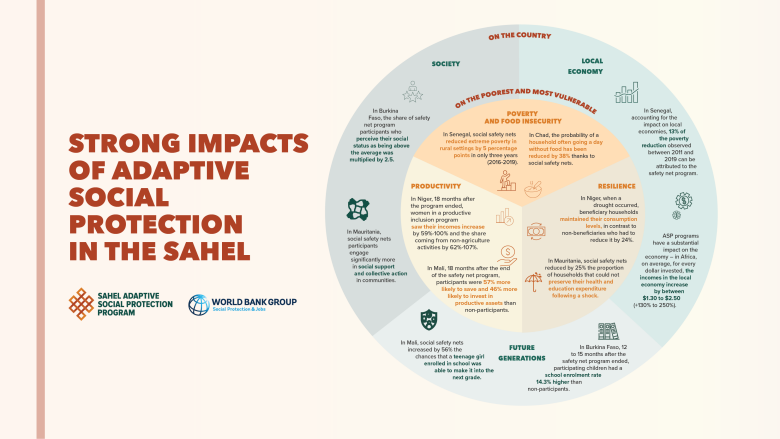
The remarkable impacts of Adaptive Social Protection (ASP) in the Sahel are shown in this new infographic. ASP is proven to have strong positive impacts on poverty, food insecurity, productivity, and resilience among the poorest and most vulnerable; combined with significant broader impacts on the economy, society, and future generations
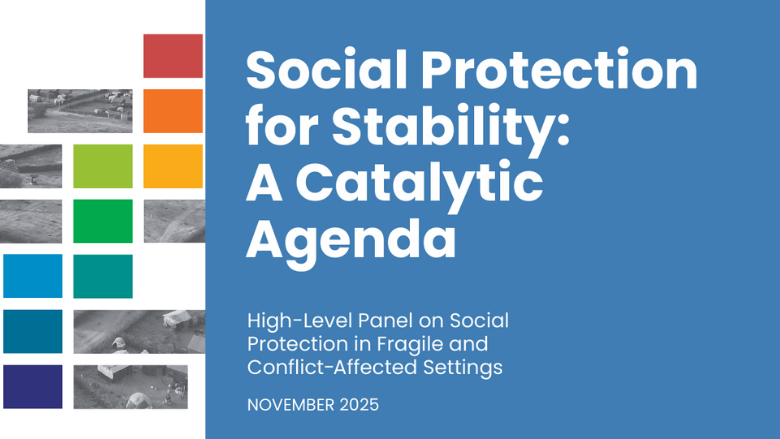
Building on sustained dialogue with governments and partners, this report assesses the ability of existing systems to respond to shocks across six countries — Burkina Faso, Chad, Mali, Mauritania, Niger, and Senegal — by applying the Social Protection Stress Test Tool, developed by the World Bank.
With productive social safety nets, Africa has a tool in the toolbox that is making a real difference in tackling the intertwined challenges of extreme poverty, vulnerability to climate change and fragility, and poor opportunities for young people.
This report provides an overview of the country and regional activities and summarizes priorities going forward.
In this press release, BMZ explores how coordinated joint solutions from various donors aimed at supporting partner countries will be pushing adaptive social protection systems forward. The initiative is based around best practices from experience in the Sahel zone, where SASPP in partnership with others such as UNICEF or WFP are pushing the envelope.
Download now this two pager overview exploring the SASPP multifaceted partnership! French version available on French site.
Delivery systems are critical in deploying a robust basis for adaptive social protection programs. This book takes a practical stance and presents concrete opportunities for coordinating efforts and moving away from a siloed approach of building parallel systems.
Which shocks matter more, and what are the implications for social protection systems in the Sahel
This study shows how a multi-faceted intervention can open pathways out of extreme poverty by relaxing capital and psychosocial constraints.
Join us on LinkedIn and catch up on the SASPP Quarterly Digest. Subscribe here>>