


Growing up as a kid in Kiribati, the ocean was our life. I feel like what I’m doing right now is helping and conserving our resources for the next generation. We have to… sustain our [ocean] resources for our next generation—our grandkids and our grand grandkids will feel the benefits of our resources.
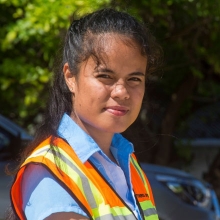
Today we see significant changes and our resources are more bountiful, especially our marine resources. …The Reimaanlok framework is a great way for our communities to protect our resources, not only for this generation but also for generations to come.
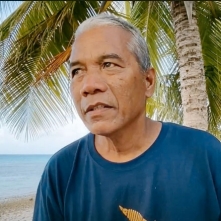
I’m very grateful and thankful that I’m involved in pearl farming, which is another option for me. Our tourism business is locked down. We’re doing nothing at the moment. But with the pearls, we do exports. Even without tourists coming, we are still able to export our products.
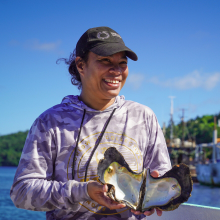
Long-term stresses such as climate change, population growth, shocks caused by the COVID-19 pandemic, cyclones, and other disasters are impacting lives across the Pacific region. These stresses drive the need for action to preserve and protect ocean resources, fisheries, coastal and marine habitats, and the people whose livelihoods depend on them.
The Western and Central Pacific Ocean is the most important region globally for tuna fisheries, accounting for around 60 percent of global catch. Across countries in this area, economic benefit from oceanic tuna license fees amounted to US$ 492.5 million per year in average in 2018-2018, representing more than 30 percent of government revenue excluding Papua New Guinea, providing around 25,000 jobs.
Coastal fisheries are an important source of income, nutrition and food for fifty percent of households in the Pacific. Coastal fisheries are critical to the cultural and fiscal value at the national level, contributing an estimated 49 percent of the overall fisheries input to GDP, highlighting the significance of these fisheries to the Pacific way of life.
Climate change is forecast to change the numbers and locations of fish which will affect the availability of target species and their catchability.
Better management of oceanic and coastal fisheries is vital for generating export earnings and public revenues from fishing license fees. Greater income improves livelihoods and food security, and leads to improved diets. PROP is supporting countries to establish national Competent Authorities to better regulate fishing activities and seafood safety and to allow export to European Union markets.
The PROP series of projects supports the CPF and RPF9 objectives in countries to;
With support from PROP, the regional body responsible for tuna fisheries management – the Forum Fisheries Agency (FFA) – has been providing essential training to regional fisheries observers, helping improve their safety – a pressing need – and building a better shoreside inspection regime.
In Marshall Islands, PROP (2015 – 2021) has:
In Tonga, PROP (2019 – current) has:
In Kiribati, PROP (2020 – now) has:
The World Bank through the International Development Association (IDA) provided US$6.75 million to Marshall Islands while US$1.83 million was provided by Global Environment Facility (GEF). Out of the full financing, US$5.45 million of IDA funding was leveraged to undertake activities for sustainable management of Marshall Islands’ oceanic fisheries, including strengthening surveillance and real-time monitoring of tuna fishing activities through upgrades to the country’s monitoring, control and surveillance and vessel monitoring systems. IDA provided funding of US$10 million for the project to Tonga; US$1.85 million to strengthen Tonga’s community-based fisheries management program, including building the capacity of communities, and funding of assets such as Fish Aggregating Devices, marker buoys, safety equipment, and support vessels. IDA project funding amounted to US$19.5 million for Kiribati; US$6.62 million has been allocated to strengthen Kiribati’s Monitoring, Control, and Surveillance system, including the construction and equipping of two new centers.
Pacific Islands Forum Fisheries Agency (FFA) provided technical knowledge and regional coordination to PROP projects relating to oceanic fisheries management.
The Pacific Community (SPC) provided technical knowledge to PROP’s coastal-focused projects.
University of Hawaii at Mānoa’s Research Team supported Marshall Islands’ Marine Resources Authority to assess ocean and human health in the country, with the report to be a key input for Marshall Islands to develop a pollution risk assessment and management plan.
PROP is now entering a second phase, called the Pacific Islands Regional Oceanscape Program Economic Resilience (PROPER), which will roll out over the next five years. The new program aims to further strengthen regional collaboration and national capacity for management and sustainable development of the oceanic and coastal fisheries. PROPER’s first project was initiated in 2022 in Solomon Islands.