The Global Smart City Partnership Program (GSCP) was established in 2018 to help World Bank Group teams and clients to make the best use of data, technologies, and available resources. Since then, GSCP has supported more than 65 engagements across over 40 countries and facilitated more than 70 knowledge activities, helping World Bank teams and client countries advance smart city development. Building on these achievements, the program transitioned in 2026 to the Livable Cities Lab, broadening its focus from "smart cities" to practical urban digital interventions that improve infrastructure, service delivery, and urban management. The program is built on the understanding that technology- and data-driven innovations can:
- Improve city planning, management, and service delivery
- Engage citizens
- Enhance governments’ accountability
Carefully advancing smart cities—while protecting privacy rights and promoting inclusion for the poor and marginalized—can contribute to achieving the Sustainable Development Goals (SDGs) and the World Bank Group’s twin goals of ending extreme poverty and boosting shard prosperity.
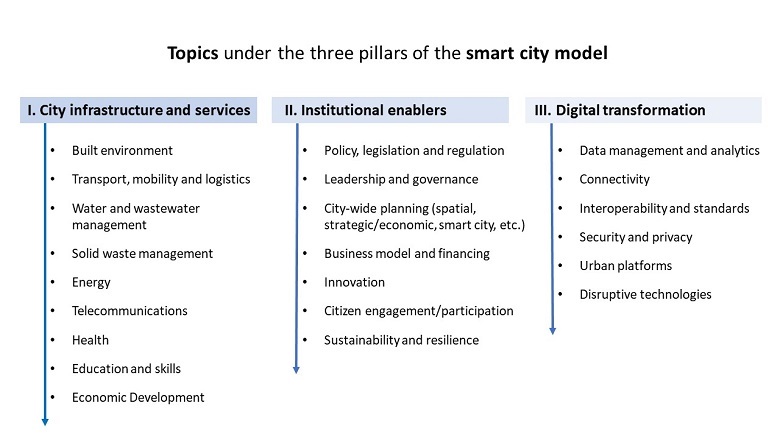
GSCP advises World Bank Group teams and clients as they learn to strengthen city functions and institutional enablers through digital transformation, as described in our Smart City model, below.
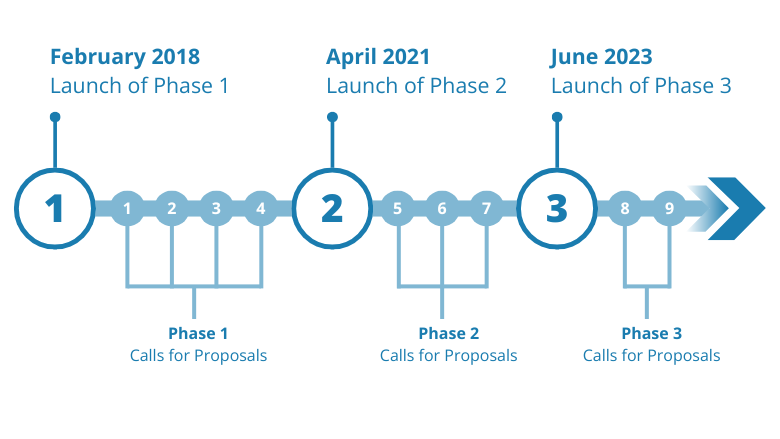
GSCP supports World Bank Group teams through calls for proposals. Since its launch in 2018, GSCP has had nine calls for proposals, as shown in the timeline below. Please note that phase 4 of the project did not announce a Call for Proposals, but selected projects based on the focused sectors (land in FY27) of the new phase.
GSCP works with prominent smart-city experts worldwide and matches them with the selected World Bank Group project teams to work closely with client cities and countries.
GSCP also develops smart city knowledge products and facilitates knowledge-sharing events to stimulate dialogue, foster partnerships, and expand the community of clients and global practitioners. By interacting with smart city experts and one another, clients and teams can learn about Korean and worldwide good practices.
GSCP works under the Urban, Subnational Finance, Tourism, and Disaster Management (USTDM) Department serves as the World Bank Group's knowledge engine for building sustainable, resilient, and inclusive cities and communities. Through its Knowledge Bank, USTDM brings together global expertise spanning urban development, subnational finance, land, disaster risk management, tourism, housing, and solid waste — curating and sharing knowledge across World Bank (IBRD) and IFC to support operations at scale. Its communities of practice, knowledge hubs, and learning resources connect practitioners across global and regional teams, enabling the exchange of cutting-edge technical solutions, policy tools, and lessons learned that help partner countries design and implement transformative programs. By bridging global knowledge with on-the-ground operational experience, USTDM empowers clients and staff alike to tackle the world's most pressing urban and development challenges.