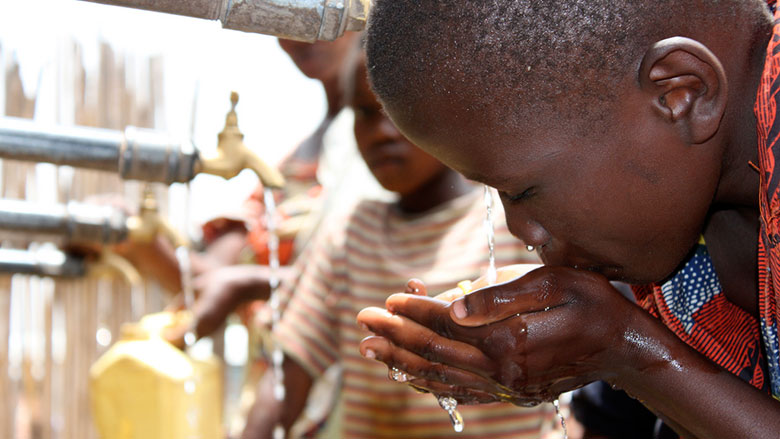
Access to water in Sub Saharan Africa (SSA) is progressing slowly: 840 million people or 68% of the population had access to at least basic improved water in 2024, up from 587 million people (59% of population) ten years prior. But the number of people with this level of access remains unacceptably low in rural areas at only 53% in 2024 (up from 44% in 2014), according to the 2025 Joint Monitoring Programme (JMP) report which tracks Water Supply, Sanitation and Hygiene data. Progress on sanitation is also slow, hovering at a third of the population in 2015 and 2024. Because progress has not kept up with demographic growth, that means more people are living without basic sanitation in 2024 than in 2015 (803 million vs. 686 million, nine years ago).
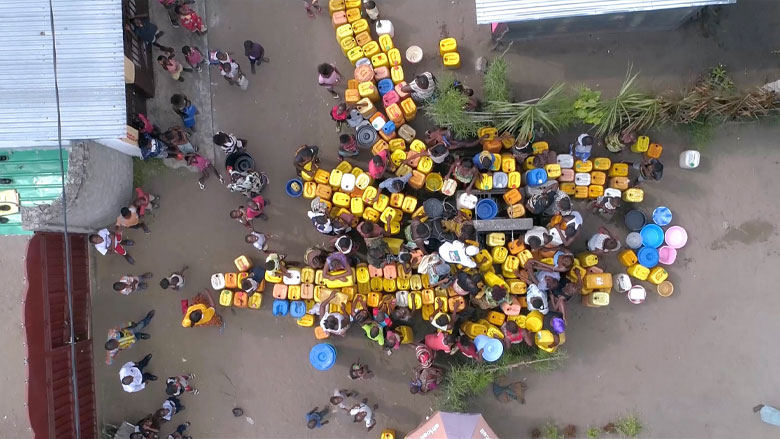
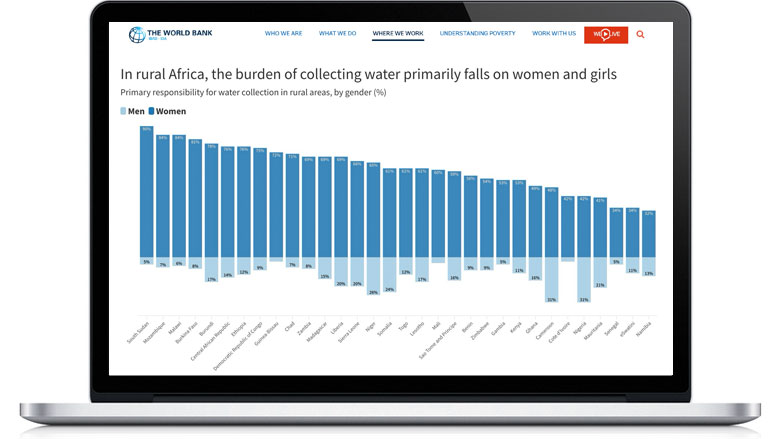
This gap is rooted in service delivery failure, lack of sector prioritization and weak governance, and results in lost productivity, stunted children, and persistent poverty, all exacerbated by climate shocks such as droughts and floods. Women and girls shoulder a disproportionate burden, often spending hours each day collecting water, which limits their opportunities for education and participation in the economy
Unmet needs in Eastern and Southern Africa
According to JMP 2025 report, 281 million people in Eastern and Southern Africa (2024 data, excluding Eritrea and Sudan) did not have access to basic drinking water services, and 476 million people lacked access to basic sanitation services. The situation is worse in rural areas than in the cities.
About 82% of the population without access to basic sanitation live in 8 countries - Ethiopia, Democratic Republic of Congo, Tanzania, Uganda, Kenya, Madagascar, Mozambique and Angola in that order. For drinking water, 82% of the underserved live in Democratic Republic of Congo, Ethiopia, Tanzania, Kenya, Uganda, Madagascar, Angola and Mozambique (in that order).
Countries urgently need to accelerate water, hygiene and sanitation action, to protect and improve lives, and reap economic rewards.
In Eastern and Southern Africa, a new regional program seeks to change the WASH landscape by taking a systems-change approach, backed by up $1.58 billion in World Bank financing. The Accelerating Access to Water, Sanitation and Hygiene (WASH) Program will be implemented in multiple phases, and benefit at least 30 million people, with special attention to women, girls, and marginalized populations. The program has four pillars: building national and regional platforms for WASH acceleration; advancing governance and regulatory reforms; improving service delivery performance; and leveraging financing—including private capital—for climate-resilient infrastructure. The Regional phases, led by AUDA-NEPAD, will provide technical assistance, knowledge sharing, and benchmarking to participating countries, while also supporting the development of transboundary water management plans—a critical need in a region where water resources often cross-national borders.
As African countries continue to rapidly urbanize and climate change wreaks havoc on rain patterns and water supplies, the need for innovative and efficient water production, storage, and delivery is stronger than ever. The challenge is to ensure that governments, private sector, and households continue to invest in water and sanitation solutions until all Africans have access to these life-saving, time-saving, and job-creating basic services.