In the 10 years since the devastating earthquake struck Haiti, the country battled a cholera epidemic, which is now under control, with no cases since January 2019. Now, with the coronavirus (COVID-19) beginning to spread, Haiti is bracing for a new pandemic.
Haiti’s first confirmed case of COVID-19 came on March 19, prompting the government to declare a state of emergency. Two months later, the transmission is still in the early stages with the number of confirmed cases just passing 1000, compared to other countries. However, with a weak health system and millions of people lacking access to clean water, urgent action, closely coordinated with the health sector, is needed to bolster water, sanitation, and hygiene (WASH) services to help prevent further spread.
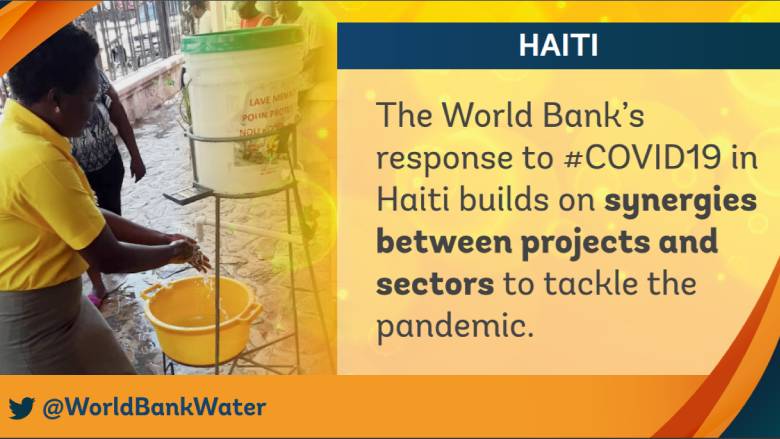
In terms of water and sanitation infrastructure, Haiti is the most underserved country in the Americas. The situation became even more critical after the 2010 earthquake destroyed much of the existing infrastructure. Between 1990 and 2015, the share of the population with access to potable water decreased from 62% to 52%. Today, more than half of the country’s rural population still lacks access to drinkable water, while only about one-third of Haitians have access to basic sanitation. Since handwashing with soap is one of the most effective weapons against the novel coronavirus, a focus on WASH is essential.
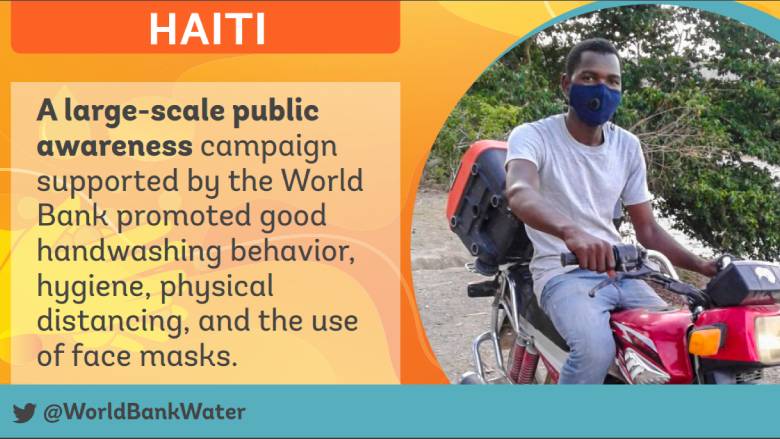
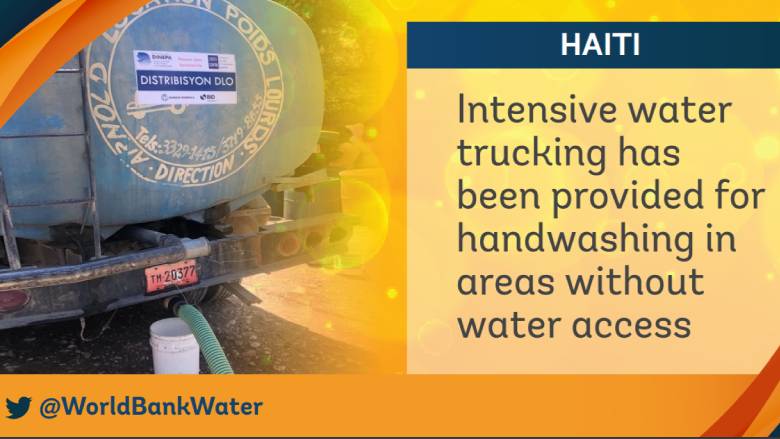
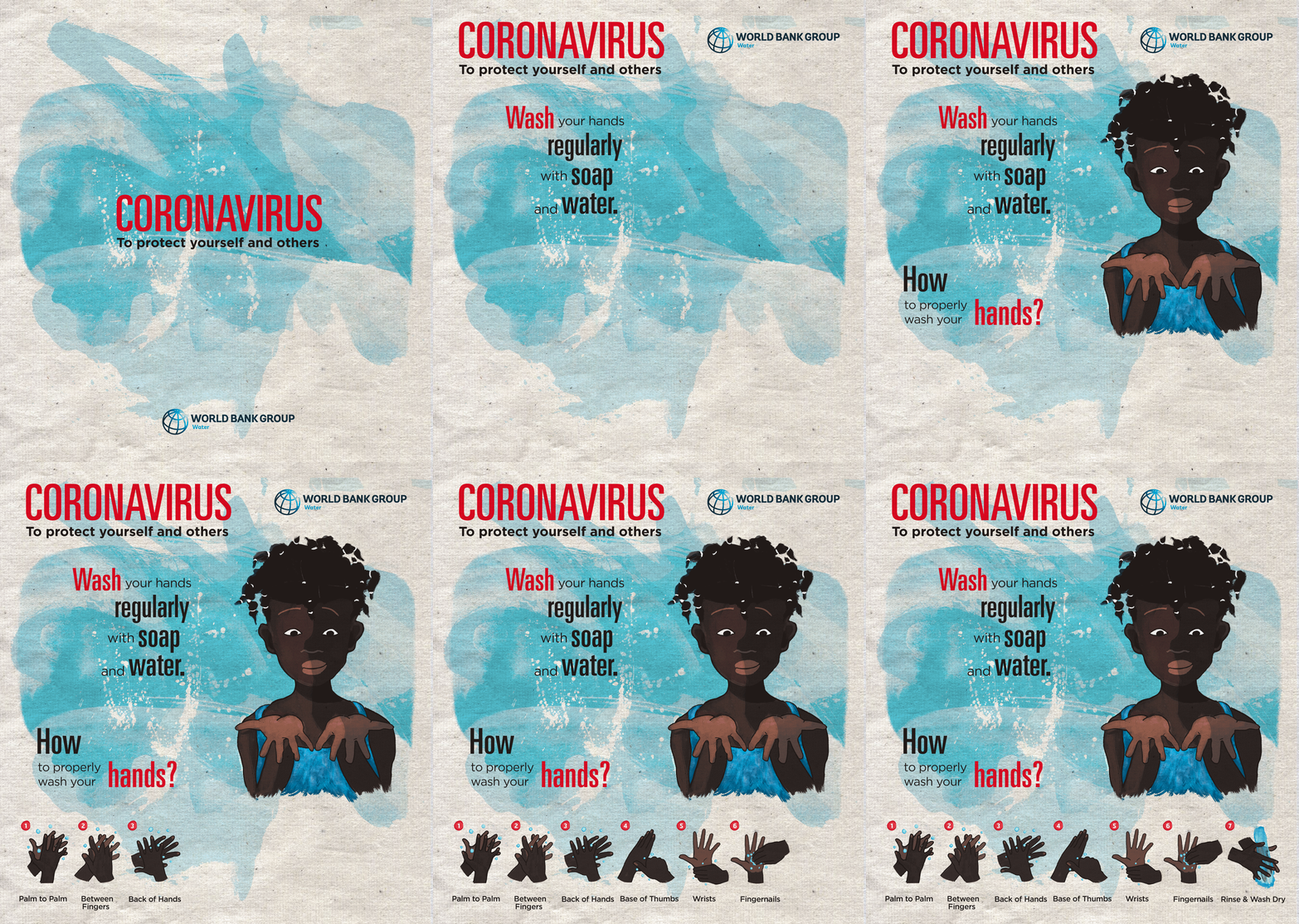
As COVID-19 began to spread across the world, on March 3, the World Bank’s water team in Haiti began to provide support to Haiti’s National Directorate of Water Supply and Sanitation (DINEPA) in preparing precautionary activities. The Regional Water Supply and Sanitation Office (OREPA), with funding from the World Bank-supported Sustainable Rural and Small Towns Water and Sanitation Project, launched a large-scale public awareness campaign, improved handwashing facilities, and provided water trucking to underserved areas. The campaign promoted good handwashing behavior, hygiene, physical distancing, and the use of face masks by deploying posters, videos, social media messages, radio announcements, and recordings broadcasted from cars and motorbikes.
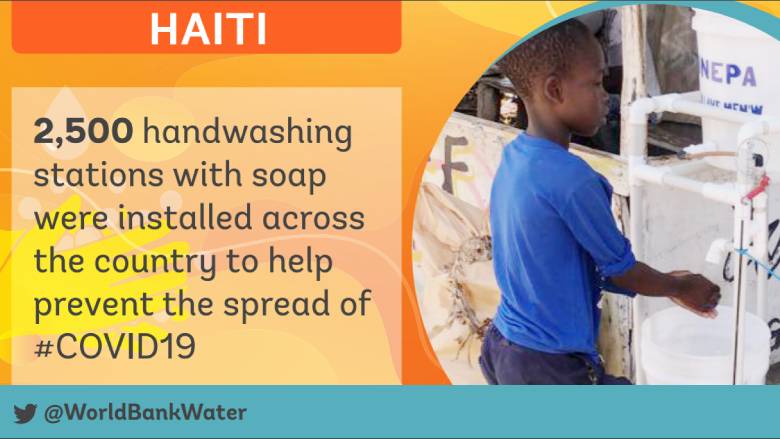
In partnership with UNICEF, on March 25, the project financed two programs to install 390 handwashing stations at critical locations, including in markets, orphanages, prisons, and health care centers. Work is ongoing to bring improved access to water, sanitation, and hygiene facilities to women, children, and vulnerable populations in three poor communes, Terre-Neuve, Anse Rouge, and Lascahobas. Over 68,000 people will gain access to sanitation facilities, while 9,250 people will benefit from safe drinking water thanks to improved infrastructure.