
- font-medium
- bg_blue_05
- lp-body-content
- first-letter
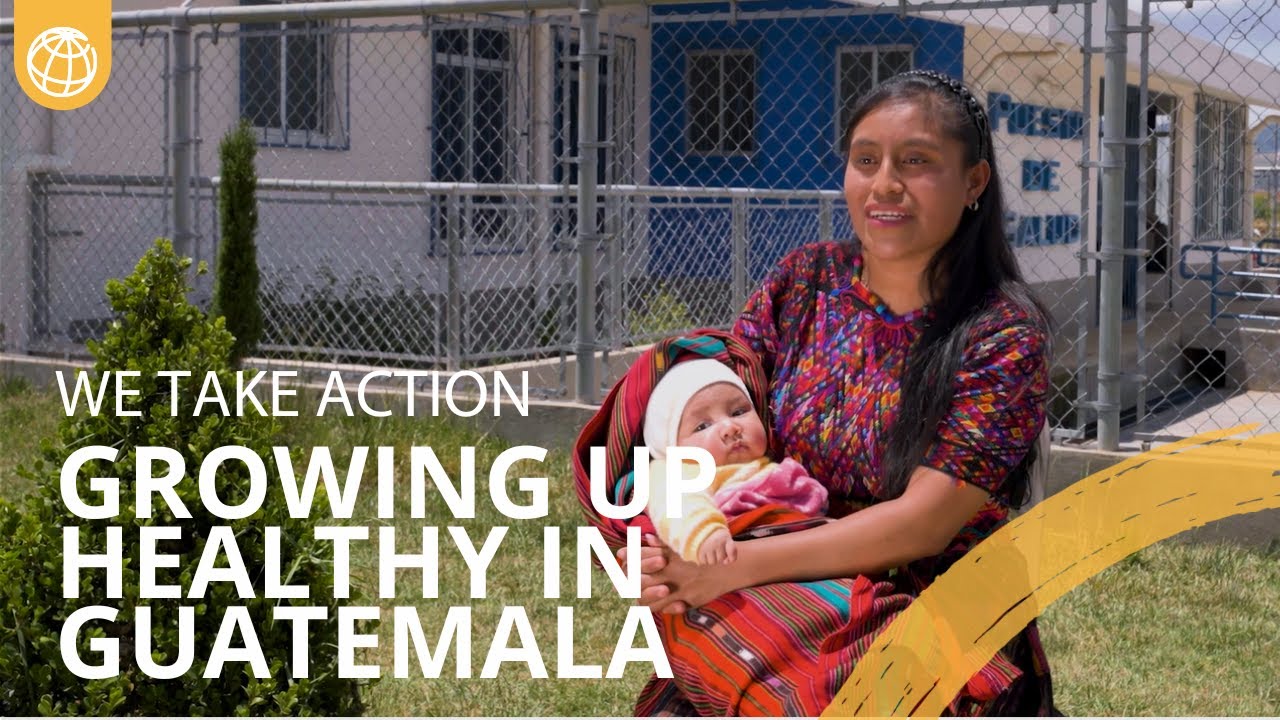
Just over a year ago, a child’s fever or a prenatal checkup meant a two-hour journey, an expense of up to 150 quetzales (about 20 dollars), and the loss of a day’s work for Laura Guarcas. Today, Laura, who lives in Semeja II, feels relieved: “The health post is so close to my house that if my child has a cough, I can just walk here, and best of all, they give me the medicine for free,” she says with joy. A mother of two, a four-year-old and a five-month-old baby, she feels, for the first time, that she can care for her family’s health without barriers.
Like her, thousands of people living in Maya communities in the Guatemalan highlands, in Quiché where 8 out of 10 people live in monetary poverty, are experiencing what it means to have accessible, preventive primary health care.
[tweetquote:[tweetText=The new health post in Semeja II is one of many centers built or renovated thanks to the Crecer Sano Project, an initiative of the Government of Guatemala with support from the World Bank,tweetData=WorldBank,tweetHash=]]. Its goal is to tackle chronic malnutrition, a condition that, according to the 2014–2015 National Maternal and Child Health Survey (ENSMI), affects over 46.5 percent of children under five in the country.
- lp-body-content
- first-letter

- lp-body-content

Health for Every Family
Dominga Velázquez, a 25-year-old woman from the K’iché Maya community, is pregnant with her third child and attends regular checkups at the health post in Potrero Viejo III. She brings her two children for checkups where they’re weighed, vaccinated, and she receives vitamins. “I used to have to go to Zacualpa and pay for transportation. Now I bring my kids here, the care is good, and I save money,” she says. “A few days ago, they had a cough, so I came right away. Before, sometimes I just wouldn’t take them because of the cost and distance.”
[tweetquote:[tweetText=This health post serves almost 9,000 people and is transforming access to primary health care in the community,tweetData=WorldBank,tweetHash=]]. Verónica Orozco, Health District Coordinator for Zacualpa, explains that previously, staff would visit communities just once a month in makeshift spaces. “Often, we couldn’t provide timely care. Today we have clinics, waiting rooms, trained staff, medicines, and above all, a dignified space for patients,” she says.

A Partner in the Fight Against Malnutrition
[tweetquote:[tweetText=Child malnutrition is more than a statistic—it is a threat that harms children’s physical and cognitive development, limits learning, and perpetuates poverty,tweetData=WorldBank,tweetHash=]]. “If a child doesn’t get adequate nutrition in the early years, their development is affected for life,” warns Orozco.
The new health posts make it possible to monitor children’s weight and height, detect cases early, and guide mothers on nutrition, breastfeeding, early stimulation, family planning, and more.
Sara Pacajoj, a nursing assistant in Semeja II, knows the challenges firsthand. “We used to work in schools without privacy and sometimes couldn’t even give out medicine. Now more people come to the post, we no longer have to go house to house looking for them, and the service is constant.” Still, she adds, one of the main challenges has been ensuring mothers attend their appointments. “We always have to remind them,” she says.
A Community That Made It Happen
The health posts in Potrero Viejo III and Semeja II were made possible thanks to collaboration between the community and the Ministry of Health. Isidro Gutiérrez, president of the Community Development Council (COCODES), proudly recalls the process: “It was everyone’s effort. That’s why we feel this post is ours.”
Each brick laid reflects the commitment, participation, and sense of ownership of the people who live there. More than infrastructure, these health posts represent hope, dignity, and the right to timely care, built from the very roots of the community.
Results You Can Measure and Feel
[tweetquote:[tweetText=According to a household survey conducted in departments that benefited from the Crecer Sano Project, more than 80 percent of women received at least four prenatal checkups during pregnancy,tweetData=WorldBank,tweetHash=]]. These checkups are crucial to protect both mother and baby, allowing for early detection of complications and safe monitoring throughout pregnancy. For many women in rural communities, accessing this kind of care has brought real improvements to their well-being and that of their families.
As of May 2025, nearly 300,000 people in some of Guatemala’s poorest communities have gained better access to basic health services thanks to the construction and renovation of 90 health posts under the Crecer Sano Project.
Each renovated or newly built health post is more than just infrastructure. It is a doorway to a healthier, fairer, and more dignified future, starting from the very first days of life.
RELATED
- lp-body-content