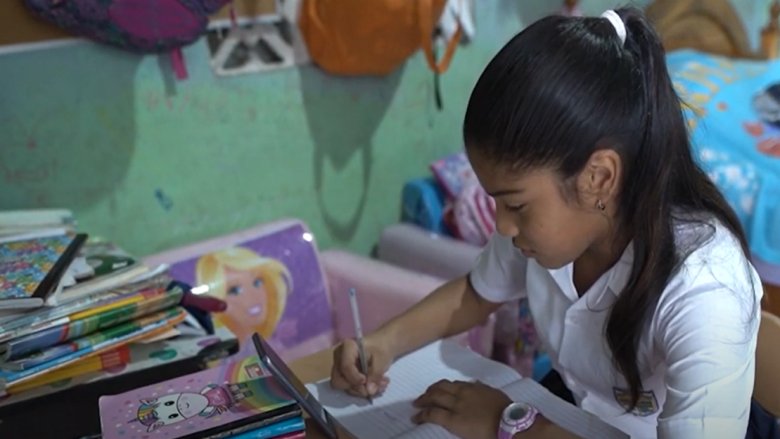
A World Bank study reveals that, since the start of the pandemic, students have partially or fully lost, on average, two thirds of the days for face-to-face classes. This amounts to an estimated loss of 1.5 years of learning and affects the youngest and the most vulnerable to a greater extent.
These impacts require urgent, coordinated, and scaled actions to drive the present and future education of the region’s children and youth, which is stated in the regional commitment made by the World Bank, UNESCO, UNICEF, and the Inter-American Dialogue, along with the governments of Chile, Honduras, Argentina, and Ecuador.
The role of connectivity in education
The recovery of education will not take place if the basic conditions for learning are not available to all students equally. This is one of the major challenges facing the countries of Latin America and the Caribbean. There is an urgent need to ensure that the tools to support, enrich, and diversify learning are available to those in remote areas with limited access.
Despite the progress made in increasing access to educational technology in recent years, connectivity, especially in vulnerable urban and rural areas, continues to be an obstacle. Thirty-two percent of the population of Latin America and the Caribbean, or
Connecting key actors to provide connectivity
Meaningful connectivity of schools, teachers, and students in remote areas is not only a priority issue but can also be the point of convergence for different actors in society, such as the private sector, the public sector, civil society, the media, multilateral organizations, and society in general.
For example, the event "Educational Connectivity in Complex Areas - A Call to Action to Solve Connectivity Gaps in Latin America" was attended by leaders in all key areas from different countries in the region.
Listen to interventions at the event (in Spanish)