World Bank – Results through the decades
1944
Rebuilding Europe
A new institution with the primary purpose of rebuilding Europe is created alongside the International Monetary Fund (IMF) by the Articles of Agreement crafted at Bretton Woods – 44 countries were represented and 28 sign as the first members.
1948
Harnessing Wild Rivers
Independent India begins its first major water project to tame the Damodar River, formerly known as the “River of Sorrows” for its devastating floods. Power generation, irrigation and sanitation projects will be established with the Bank’s financial support and technical assistance.
1950
Europe’s Steel Revival
Bank investment in the reconstruction and modernization of steel capacity in France, Belgium and Luxembourg reaches its peak. The revitalized steel industry will provide for continued post-war reconstruction throughout Europe.
1958
Easing the Suez Canal Crisis
The Bank supervises a compensation agreement that ends the Suez Canal crisis. Egypt’s nationalization of the Suez Canal triggered military intervention by UK, Israeli and French troops. They withdraw after signing the Bank agreement.
September 1960
Brokering a Lasting Water Deal
After almost a decade of dispute, Pakistan, India, and the World Bank sign Indus Waters Treaty. The water sharing deal is the longest standing agreement that has been faithfully implemented and upheld by both India and Pakistan.
September 1960
Assistance for the World’s Poorest
International Development Association (IDA) is established as part of the World Bank to reduce poverty by providing interest-free credits and grants. Today, IDA is one of the largest sources of assistance for the world’s 79 poorest countries and the largest single source of donor funds for basic social services in these countries.
1964
Japan’s Bullet Trains
The most advanced railway project of its time is developed with $80 million from the Bank. The Tokyo to Osaka line carries the famous rapid bullet trains. The expanded high-speed railway lines have since carried more than 6 billion passengers.
1966
Settling Disputes
The Bank’s Convention on the Settlement of Investment Disputes enters into force with 20 original members. The convention is a precursor to the International Center for the Settlement of Investment disputes, which will expand to 156 nations and provide a peaceful mechanism for resolving conflicts.
1971
Revving Up the Green Revolution
The Bank builds a worldwide network of agricultural research centers by establishing a scientific partner organization to replicate the success of India and Mexico. Massive agricultural production increases through technology adoption helped both countries keep pace with the nutrition needs of their rapidly growing populations.
1973 April
Early Investments in Renewable Energy
El Salvador develops new electric power generating and transmission facilities featuring the first geothermal power plant financed by the Bank in Latin America.
1973
Helping Subsistence Farmers
To boost the productivity of the rural poor, the Bank increases lending for agriculture by over 40 percent; three out of every four projects include components to help smallholder farmers. The integrated rural development project will become the prototype for assistance aimed at subsistence farmers.
1974
Wiping Out Riverblindness
An international partnership to eradicate riverblindness begins its work in 11 African countries. By 2002, it succeeds in saving millions of people from the debilitating disease. The effort also cleared the way for agriculture on 2.5 million hectares where the disease once spread. The distribution network created to eradicate riverblindness will be used to deliver other critical interventions.
1975
Investing in the Environment
The first World Bank loan specifically targeted toward improving the environment is signed with the government of Finland. The project includes investments in water pollution controls, particularly by the pulp and paper industry, and research to improve the design and implementation of national programs for water pollution control.
1983
Open Development Data
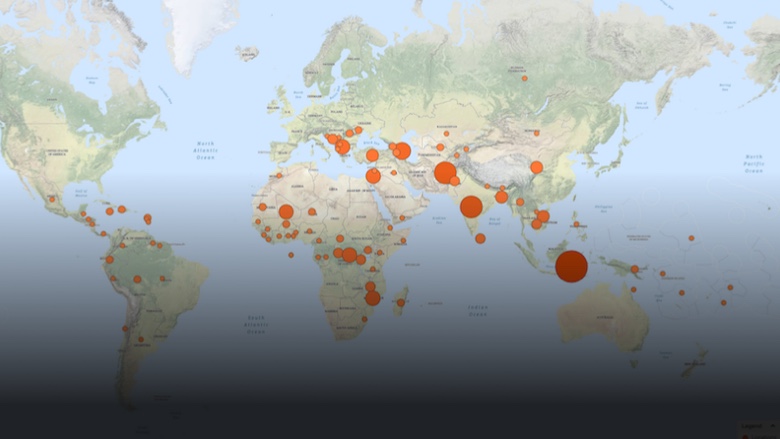
A tradition of sharing public data ramps up with the release of World Debt Tables, previously, compiled annually for internal use only. The Bank continues to disseminate free and accessible data through initiatives such as Data Finder and geomapping of projects.
1985
Food during Drought
The World Bank follows up with a second year of donations to the World Food Program for emergency food supplies to drought-stricken sub-Saharan Africa.
1988
Mitigating Risks
World Bank adds an affiliate through an international convention establishing the Multilateral Investment Guarantee Agency (MIGA). The number of members will grow from the original 29 to 175 nations. The new institution promotes foreign direct investment by insuring investors against political risks while also providing a space for dispute mediation and expert advice.
1989
Stopping Ozone Damage
The Bank is named an implementing agency in the Montreal Protocols that aim to phase out substances that deplete the ozone layer and threaten human health with UV exposure. By the end of 20062007, World Bank projects aimed at reducing ozone-depleting chemicals in 25 developing countries have resulted in 69% phase-out. The target is 95% phase-out by 2015.
1991 July
Protecting Forests
Bank announces it will not, under any circumstances, finance commercial logging in primary tropical forests, such as the Amazon. In addition, the financing of infrastructure projects that may lead to the loss of such forests will be subject to more rigorous environmental assessments.
1991 December
Empowering South Africa
President Nelson Mandela meets with World Bank leaders to discuss the institution’s role in post-apartheid South Africa. These early talks lead directly to the development of Bank-sponsored industrial competitiveness and job creation projects a few years later in South Africa.
1995
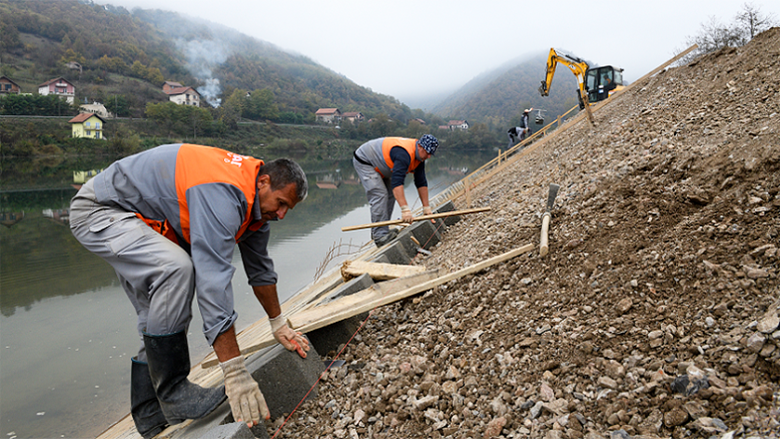
Peace through Reconstruction Bank team enters embattled former Yugoslavia to begin country’s reconstruction. The Bank’s presence as a multilateral agency helps prepare and negotiate a new Constitution, and the promise of funds contributes to historic Dayton Peace Accord.
1996
Unleaded Gasoline
The World Bank plays a catalytic role in the worldwide phase-out of leaded gasoline and conversion to unleaded fuels to reduce health problems linked to lead, such as brain damage, high blood pressure, and heart disease. Beyond a call to action, the Bank builds political awareness, works with governments to design and adopt appropriate phase-out policies and facilitates their implementation.
1997 March
Reforming Local Governments
The Bank lends directly to local governments for the first time. Four loans go to Brazilian states chosen for their leading roles in reform of state governments, to support the process of privatization in the state of Rio Grande do Sul.
1997 April
Debt Relief
Uganda receives a debt relief package, becoming the first country to benefit under the Heavily Indebted Poor Countries (HIPC) initiative. By the end of 2009, 35 countries will have debt forgiven.
1998
Fraud and Corruption Hotline
New measures to combat fraud and corruption include a hotline to receive tips from the global community. As a result, dozens of individuals and firms are banned from work within the Bank Group, or in association with Bank-financed contracts.
2000
Cutting-Edge Carbon Finance
The Prototype Carbon Fund is launched as the first market-based mechanism to address climate change and promote the transfer of finance and climate-friendly technology to developing countries.
2001
Delivering Vaccines
The first vaccines are sent through the Global Alliance for Vaccines and Immunization; the Bank is a primary member. In this decade, the Alliance’s vaccines will reach an estimated 200 million children and avert an estimated 3.4 million premature deaths.
2003
Setting Responsible Standards
10 leading commercial banks adopt the Equator Principles, choosing to follow World Bank environmental and social guidelines for all their investment work in developing countries.
2005 November
Renewing Iraq
The World Bank makes its first loan to Iraq in three decades. The loan will directly benefit 57,000 students with the construction and furnishing of about 82 new primary and secondary schools.
2005 March
Taming Scourges
To contain devastation of locust infestations and limit damage to future harvests, the Bank works with seven West and Central African countries in the Africa Emergency Locust Project.
2007
Strengthening Health Systems
The Bank adopts a new strategy emphasizes strengthening health systems through collaboration with partners, and data collection to better measure results. Over the last decade, the Bank was one of the main financiers of health and nutrition programs in the developing world by committing a total of $15 billion to 400 programs and projects.
2009
Combating Financial Crisis
Moving swiftly, the Bank Group expands and speeds up lending, assistance and advice to hard-hit developing countries. In fiscal year 2009, the Bank Group committed nearly $60 billion to support countries hit by the global crisis, a 54% increase over the previous year, and a record high.
2009
Recovering from Natural Disasters
Five years after the tsunami in Aceh, Indonesia, total reconstruction nears completion. In the first year alone, Bank and government recovery effort rebuilt more than 16,000 houses for displaced persons, constructed 335 new schools and restored 235 kilometers of roads.