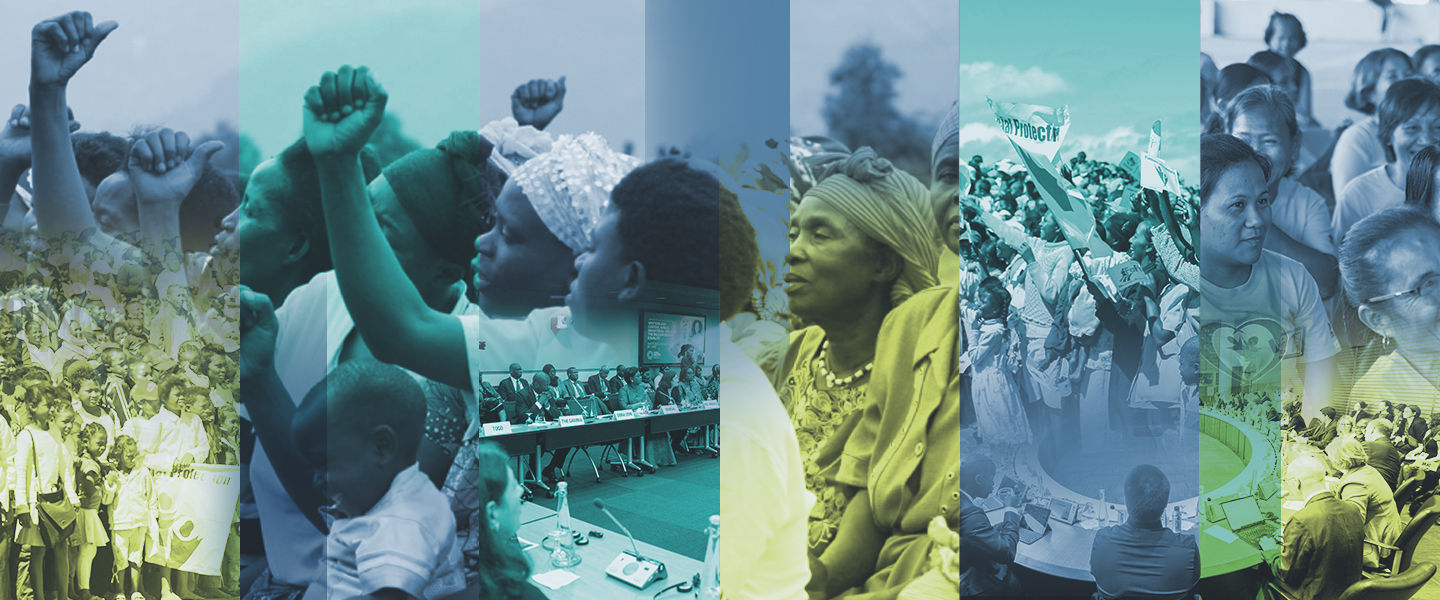
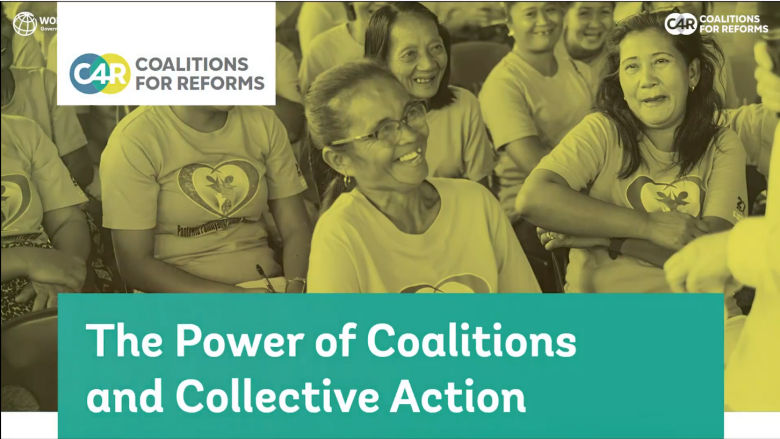
The Coalitions for Reforms (C4R) Global Program helps navigate reform and policy implementation challenges by raising awareness, building capacity, and promoting the uptake of an integrated approach on collective action. The C4R approach combines tools to build leadership skills, establish coalitions, manage change, and deploy communications strategically.
Coalitions for Reforms Global Program
-
Apr 08, 2026
Integrity by Design: Corporate Compliance and Accountability in Post-War ...
This webinar, co-hosted by the Coalitions for Reforms (C4R) Global Program, the Anticorruption for Development (AC4D) program, and Accountability Lab, explored how business integrity and corporate compliance systems can ...
-
Future of Government Dialogue
Through open exchange on what works in delivering reform, the Dialogue aims to co-create approaches that translate into stronger reform efforts and improved services and outcomes for citizens.
-
Recap Video - Global Forum on Coalitions for Reforms
Watch the highlights from the Global Forum on Coalitions for Reforms (Sept 16–17, 2025): leaders, researchers, and practitioners from governments, multilateral partners, academia, and civil society convened to share ...
-
Webinar Dec 09, 2025
Parlem de Pressupostos - Citizen Participation in Budget Policy in Catalunya
This BBL showcases Catalonia’s citizen participation process on budget policy, launched in response to PEFA findings and aligned with broader PFM reforms. The session covers the enabling environment—universities, UNICEF,...
-
Webinar Dec 01, 2025
Long-Term Impact of Layered Citizen Engagement Interventions for Coalition ...
Discover findings from an ex-post evaluation of USAID- and World Bank-funded social accountability work in the Dominican Republic. Starting with a 2011 World Bank-supported training, a growing coalition helped drive two ...
-
Oct 27, 2025
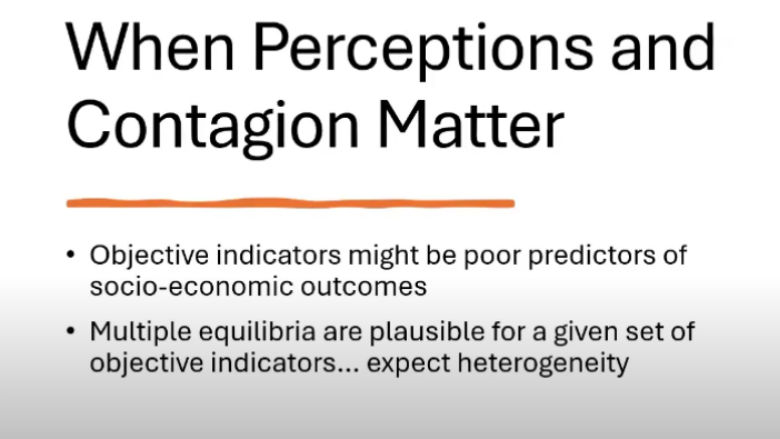
Perceptions, Contagion, and Civil Unrest
This webinar explored why political perceptions often spark protests more than economic ones—especially in high-income countries.
-
Event
Watch the Replay - Coalitions for Reforms Global Forum
The World Bank invites you to replay the Global Forum on Coalitions for Reforms plenaries and breakout sessions, hosted in September 16-17, 2025, in Washington, D.C. This event, co-hosted by FCDO, Stanford University, ...
-
WEBINAR Feb 10, 2025
How to Build Trust - The Key to Success in Public Reforms
C4R, supported by the World Bank’s Governance & Institutions Umbrella Program, organized an webinar titled "How to Build Trust – The Key to Success in Public Reforms". This webinar presented the approach developed by ...
-
WEBINAR Feb 03, 2025
Building Trust in a Complex Policy Environment
C4R organized an event in collaboration with OECD on the key topic of building trust in a complex policy environment. This was based on the 2024 results of the OECD Survey on Drivers of Trust in Public Institutions.
-
WEBINAR Nov 17, 2024
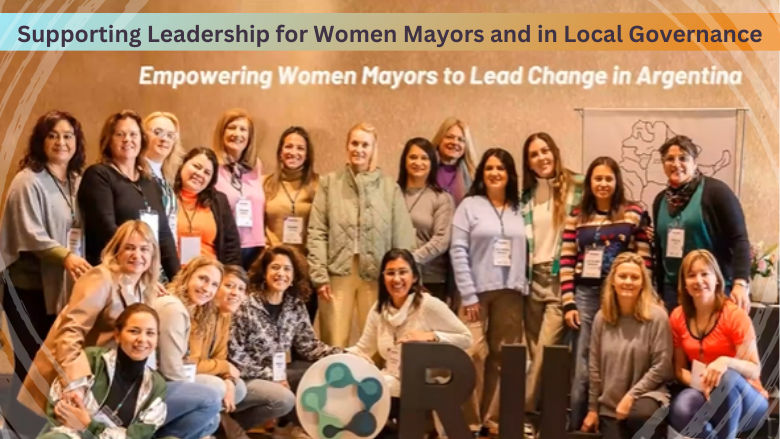
Supporting Leadership for Women Mayors and in Local Governance
C4R, supported by the World Bank’s Governance & Institutions Umbrella Program, organized an event—“Supporting Leadership for Women Mayors and in Local Governance”.
-
WEBINAR Nov 10, 2024
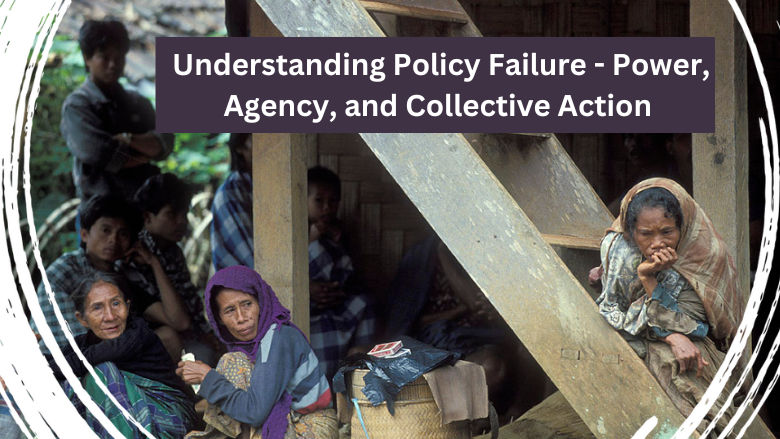
Understanding Policy Failures - Power, Agency, and Collective Action
C4R, in collaboration with GovEnable, organized an event titled, “Understanding Policy Failure: Power, Agency, and Collective-Action" to address the question - why do well-intended reforms so often fail?
-
Webinar Jun 08, 2024
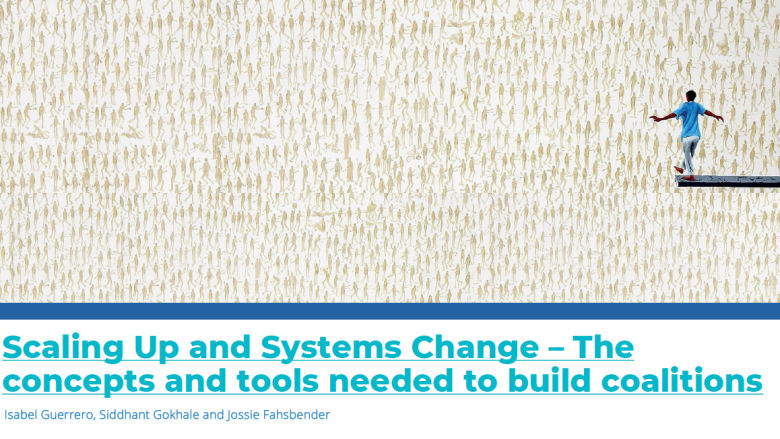
Scaling Up and Systems Change
This event delved into the concepts and tools necessary for building coalitions aimed at systems change. It included discussions on the theory behind systems thinking in the context of scaling up, supplemented by a ...
-
Event May 19, 2024
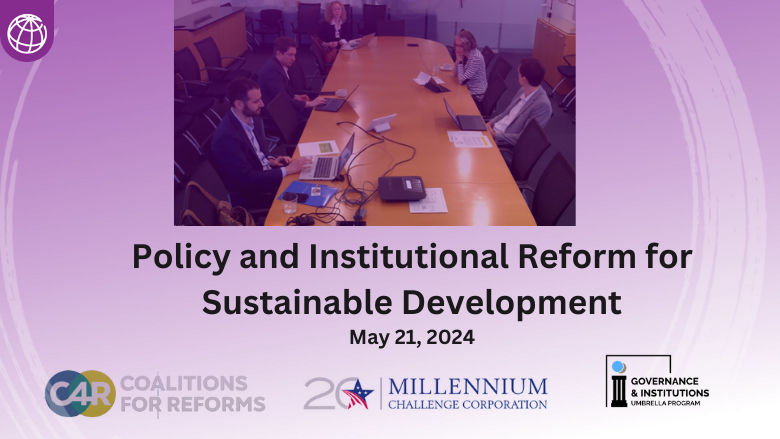
Policy and Institutional Reform for Sustainable Development
The World Bank’s Coalitions for Reforms (C4R) team, in collaboration with the Millennium Challenge Corporation (MCC), and supported by the World Bank’s Governance & Institutions Umbrella Program, organized an event ...
-
Webinar May 02, 2024
Rowing in the Same Direction: Alignment Between Environmental Champions in ...
This event discusses the need to align Champions of environmental issues in government with the work of civil society and media for impact.
-
Book Talk Apr 15, 2024
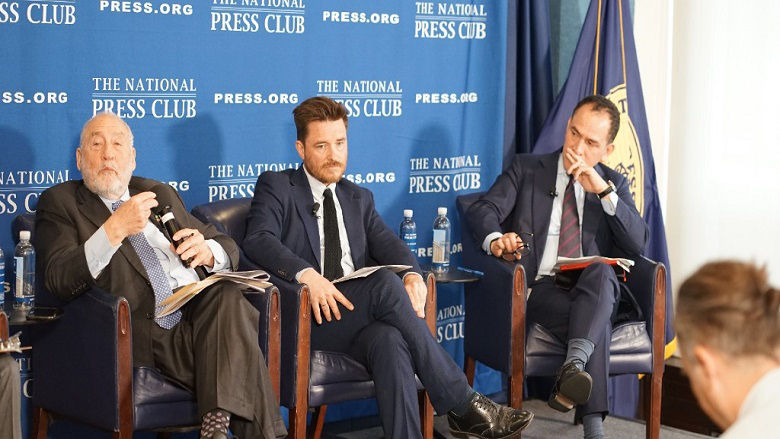
NPC Headliner: Joseph Stiglitz
A discussion with Nobel Prize-winning economist, Joseph Stiglitz on the importance of free, independent, & quality journalism for development.
-
Webinar Apr 02, 2024
Pathways Towards Power Shifts: State-Society Synergy
This event, organized jointly with the Accountability Research Center, presented findings from a study published in World Development that compares a set of 19 diverse reform initiatives that delivered tangible openings ...
-
Webinar Mar 18, 2024
Green Social Contracts for a Livable Planet
This event, organized jointly with Green Economy Coalition, emphasizes the critical role of civil society in driving reforms and fostering societal demand for a fair green deal.
-
Webinar Mar 10, 2024
Working Politically: Supporting Local Coalitions for Development
This event, hosted jointly with the Asia Foundation, discusses how the success of development operations often depend on how well organizations can engage and mobilize stakeholders to support reforms, policies, and the ...





Top News


Blogs


Leadership, Coalitions, Accountability — A conversation with Nobel Laureate James A. Robinson
Productive Politics for Reforms: A Lecture by Nobel Laureate James A. Robinson
Videos
-
Social Contracts and the Coalitions for Reforms Global Partnership
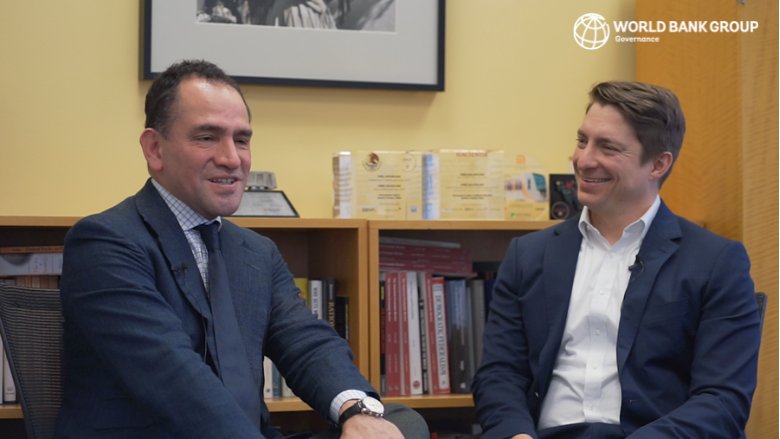
Governance Global Director, Arturo Herrera, discusses with Program Manager, Mathieu Cloutier, social contracts in analyzing development and reforms and the Coalitions for Reforms Global PartnershipWatch the video
BLOGS
-
C4R BLOG POSTS