The People Research Program in the World Bank's Development Research Group conducts research across a wide range of topics that broadly covers issues related to improving the wellbeing of people, particularly less well-off individuals, with the aim of enhancing sustainable, upward economic and social mobility. Some examples of topics covered by this team include early childhood development, education/skills, health, poverty, inequality, labor, and aging. The research agenda also focuses on related cross-cutting aspects such as gender, service delivery design, social protection, and public finance. The program includes methodological research on survey design and methods, and adaptive sampling techniques; as well as the use of improved data and existing data sources to better inform and assess the effectiveness of specific policies in enhancing human development and reducing poverty and inequality.
For most young people, secondary education is the final stage of formal schooling and the main platform from which they enter work, pursue further study, and navigate the transition to adulthood. Over the last two decades, Latin America and the Caribbean has brought millions of adolescents into secondary education. But expanding access has not been enough: only about 1 in 5 young people (19%) complete secondary education with minimum proficiency in reading and math. Among the poorest youth, only about 1 in 20 (6%) achieve this. Drawing on two decades of household survey data and standardized learning assessments, the report examines why expanded access has not translated into better learning outcomes and what governments can do to change this reality.
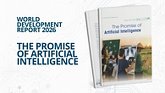
In a time when development progress has dipped to its weakest pace in 75 years, artificial intelligence (AI) offers developing economies a rare path to greater prosperity. World Development Report 2026 provides the first comprehensive assessment of what AI means for these economies—how firms and governments are already using it, what is holding them back, where the largest gains may lie, and how the risks can be managed.The Report offers a clear framework—adopt, adapt, and advance—for the road ahead to help countries capture AI’s benefits without wasting scarce resources or deepening dependence on any single supplier. WDR 2026 Team Members | Main Messages | Featured Videos
Since the outbreak of war on February 28, 2026, ship transits through the Strait of Hormuz have fallen by roughly 95 percent. The consequences are global: historic highs in energy prices, cascading cost increases in fertilizers, aluminum, and petrochemicals, and disruption of production and trade. For the World Bank Group's client countries, this shock risks undoing years of hard-won development progress. Present research from the Development Research Group points to three policy imperatives: 1) Safeguard jobs and income today, 2) Prevent serious food shortages tomorrow, and 3) Protect the vulnerable from immediate suffering and longer-term loss of human capital.
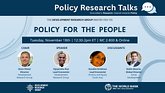
Development succeeds when people are not just beneficiaries, but partners in shaping change. Yet too often, policies are designed and evaluated from the top down. Drawing on two decades of field research and collaboration with governments, communities, and researchers, World Bank Lead Economist Vijayendra Rao discusses what it means to make policy for and with people. This lecture also marks Dr. Rao’s farewell as a member of the World Bank’s staff, concluding more than 25 years of research and collaboration within the Development Research Group.
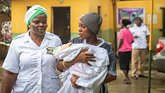
In this blog, Anja Sautmann, Senior Economist in the Development Research Group, and Mark Dean, Professor at Columbia University, outline how subsidising healthcare for children in Mali substantially increased necessary care-seeking while generating only minimal unnecessary use. A randomized trial found that families receiving subsidies were nearly three times more likely to seek care when needed. While some overuse occurred, underuse remains the bigger challenge: many serious illnesses still go untreated. The findings highlight cost as a key barrier and call for removing user fees to improve child health.
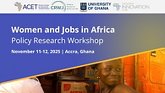
The African Center for Economic Transformation (ACET), the University of Ghana-Legon, and the World Bank announce a competitive call for papers and participation in a two-day policy research workshop to be held on November 11-12, 2025, on the campus of the University of Ghana-Legon. This event promises to be a vibrant forum for discussing the latest challenges, groundbreaking evidence, and innovative solutions that are shaping the future of women's roles in the African economy to foster economic development.
The Venezuelan Refugee Panel Study (VenRePS) follows the same migrant households over time to understand how legal status shapes lives. Focused on Colombia’s Permiso Especial de Permanencia (PEP), the study tracked 2,232 Venezuelan households between 2020-21. The study shows how regularization impacts economic stability, social integration, political participation, and well-being, offering rare long-term evidence on displacement. Explore the website to see how these insights can help policymakers, organizations, and governments to design more effective migration policies.
The World Bank and George Washington University are pleased to announce the inaugural AI & The Future of Human Capital in the Global South Symposium scheduled for Monday September 29th, 2025, in Washington, DC. This in-person event will bring together experts across disciplines to explore how AI-driven innovations can help address critical human development challenges in low- and middle-income countries.
Over 1,000 senior Cambodian officials have completed the Leadership and Innovation Program, transforming how reforms are led across government. Rooted in Building State Capability by Matt Andrews, Lant Pritchett, and Michael Woolcock, the program equips leaders with practical tools like adaptive leadership, communication, conflict management, Problem-Driven Iterative Adaptation (PDIA), and cross-sector collaboration. Designed locally with World Bank support, now the program is expanding beyond senior officials. The next phase will include school principals and health facility directors, broadening its impact on education and healthcare delivery.
Sandra Rozo, Senior Economist at the Poverty, Inequality, and Human Development team at DECRG, received the 2024 Juan Luis Londoño de la Cuesta Award for her impactful research on forced migration in Colombia and the broader region. Her work has significantly advanced the understanding of migration’s social, economic, and political effects, influencing public policy design and implementation. For an overview of her research on this topic, read Sandra’s recently published VoxDevLit on Refugees and Other Forcibly Displaced Populations.
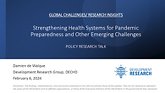
While the world appears to have transitioned out of the COVID-19 pandemic, its impact on society and health systems has been profound. In this talk, World Bank Lead Economist Damien de Walque highlights and discusses some of the lessons learned through this crisis and the response to it. Stressing how beneficial the investments in health—including vaccination—have been during the pandemic, he also places the disruption brought by COVID-19 in perspective with the current evolving burden of diseases in low- and middle-income countries.
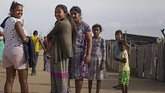
Forced displacement stands as one of the significant development challenges of our time. By the end of 2022, 110 million people had been forcibly displaced, including 62.5 million internally displaced persons (IDPs) and 47.6 million refugees (figure 22.1). This is the highest figure recorded in modern history.The consequences of forced displacement are far-reaching and unequally distributed. This book chapter from the Handbook of Social Protection, highlights the obstacles faced by refugees and the policy choices available to support them.
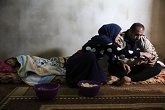
Forced displacement has reached unprecedented levels, with over 120 million individuals displaced globally as of 2024 due to conflict, violence, climate change, and human rights violations. This review underscores the importance of transitioning from humanitarian aid to self-reliance models, closing policy implementation gaps, and tailoring interventions to local contexts.
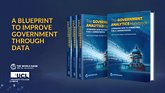
Governments across the world make thousands of personnel management decisions, procure millions of goods and services, and execute billions of processes each day. Responding effectively and with professional integrity to public administration’s many challenges requires recognizing that access to more and better quantitative data is necessary, but insufficient. This chapter, from The Government Analytics Handbook, focuses on four risks which can come from an overreliance on quantitative data.
This chapter, co-authored by Michael Woolcock, appears in the book Oxford Handbook of Social Program Design and Implementation Evaluation. The book creates a comprehensive and actionable toolbox of evaluation methodologies that can be used to examine social programs throughout their life cycle.
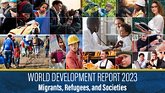
Mobility is an integral part of the development process. It is a mechanism for reallocating labor across economic sectors and geographical areas. It enables adaptation to shocks, stresses, and imbalances. Cross-border mobility inevitably comes with economic and social consequences for those who move, their communities of origin, and their destinations. The World Development Report (WDR) is taking a fresh look at these issues. It aims to shift from a narrow focus on labor markets for migrants and legal protection for refugees to a more holistic perspective — one that recognizes the humanity of migrants and the complexity of the societies of origin and destination.
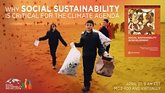
All development is about people: the transformative process to equip, link, and enable groups of people to drive change and create something new to benefit society. Social Sustainability in Development: Meeting the Challenges of the 21st Century seeks to advance the concept of social sustainability and sharpen its analytical foundations. By identifying interventions that work to promote the components of social sustainability and highlighting the evidence of their links to key development outcomes, this book provides a foundation for using social sustainability to help address the many challenges of our time.
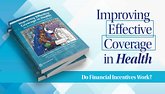
Improving Effective Coverage in Health: Do Financial Incentives Work? examines one specific policy approach to improving effective coverage: financial incentives in the form of performance-based financing (PBF), a package reform that typically includes performance pay to frontline health workers as well as facility autonomy, transparency, and community engagement.
This site uses cookies to optimize functionality and give you the best possible experience. If you continue to navigate this website beyond this page, cookies will be placed on your browser. To learn more about cookies, click here.