videoType
you-tube
videoUrl
PELz_amYt6s
keyFrameImage
https://i.ytimg.com/vi/PELz_amYt6s/maxresdefault.jpg
showAllTimestamps
no
showAllTranscripts
no
duration
139
title
Biodiversity: Putting Nature at the Core of Development Efforts
description
Biodiversity is our planet’s wealth. It is a cornerstone of development, and its loss threatens many hard-won development gains. The global decline of nature is disproportionately impacting the most vulnerable on the planet. If we do not act now, the effects will be cataclysmic. Investing in nature is important for economic prosperity, livelihoods, climate, and planet. Learn more: http://wrld.bg/pl0o50LYUOC 💬 Subtitles (CC) available in Arabic, Chinese, English, French, Spanish 00:00 Our livelihoods, well-being and economies depend on Earth's ecosystems 00:42 Nature is declining at an unprecedented rate 01:17 Changes in three important areas are needed 02:00 The World Bank Group is here to support countries ABOUT THE WORLD BANK GROUP 🌐 The World Bank Group is one of the world’s largest sources of funding and knowledge for low-income countries. Its five institutions share a commitment to reducing poverty, increasing shared prosperity, and promoting sustainable development. http://www.worldbank.org وضع الطبيعة في صميم جهود التنمية التنوع البيولوجي هو ثروة كوكبنا؛ وهو ركيزة أساسية لعملية التنمية، ويُنذِر فقدانه بضياع كثير من المكاسب الإنمائية التي حققها الإنسان بشق الأنفس. ويؤثر تدهور الطبيعة في العالم على الفئات الأكثر احتياجاً على كوكب الأرض بدرجة أكثر من غيرها. وما لم نتحرك الآن، فإن الآثار الناجمة عن ذلك ستكون كارثية. ومن هنا، فإن الاستثمار في الطبيعة يشكل عنصراً مهماً لرخائنا الاقتصادي وسبل كسب العيش ولسلامة كوكب الأرض. 将自然放在发展工作的核心位置 生物多样性是地球的财富,也是我们赖以发展的基石。生物多样性丧失,将威胁到许多来之不易的发展成果。自然衰退对全球最脆弱群体影响最大。如果我们现在不采取行动,后果将是灾难性的。 投资自然对经济繁荣、人类生计和地球健康至关重要。 Placer la nature au cœur des efforts de développement. La biodiversité, source de richesse de notre planète, occupe une place fondamentale dans le développement, et sa destruction menace de nombreuses avancées durement acquises dans ce domaine. Le déclin mondial de la nature a un impact disproportionné sur les populations les plus vulnérables. Si l’on n’agit pas maintenant, les conséquences seront catastrophiques. Investir dans la nature est vital pour la prospérité économique, les moyens de subsistance et la planète. Poner a la naturaleza en el centro de los esfuerzos de desarrollo. La biodiversidad es la riqueza del planeta, es una piedra angular del desarrollo, y su pérdida pone en peligro muchos de los logros en materia de desarrollo que tanto costó conseguir. El deterioro de la naturaleza en el mundo afecta de manera desproporcionada a los más vulnerables del planeta. Si no se actúa ahora, los efectos serán devastadores. Invertir en la naturaleza es importante para la prosperidad económica, los medios de subsistencia y el planeta.
showTimestampAndTranscript
no
lastUploadedDate
2022-12-07T15:32:26Z
col-xs-12
col-sm-12
col-md-3
col-lg-3
col-xs-12
col-sm-12
col-md-7
col-lg-7

Biodiversity is our planet’s wealth. It is a cornerstone of development, and its loss threatens many hard-won development gains. For instance, the loss of forests means the loss of carbon sinks, further accelerating climate change. The Amazon used to sink 5 percent of annual carbon emissions, but that is no longer the case. In the first six months of 2022 alone, 1,500 square miles of Amazon forest – an area more than twice the size of Beijing - was destroyed. Further, 40 percent of all conflict is caused, made worse, or financed by natural resources.

Biodiversity blunts the impact of other crises, like climate change and conflict, on development; it is also the wealth of poor nations and poor communities within nations as a producer of jobs and GDP. Take the fisheries sector, where 60 million jobs globally are tied directly to fishing and fish farming. For every one of those jobs, 2.5 more are created in the fisheries value chain. That is 200 million jobs, 60 percent of which are in the developing world. The same can be said for industries such as forestry and nature-based tourism.

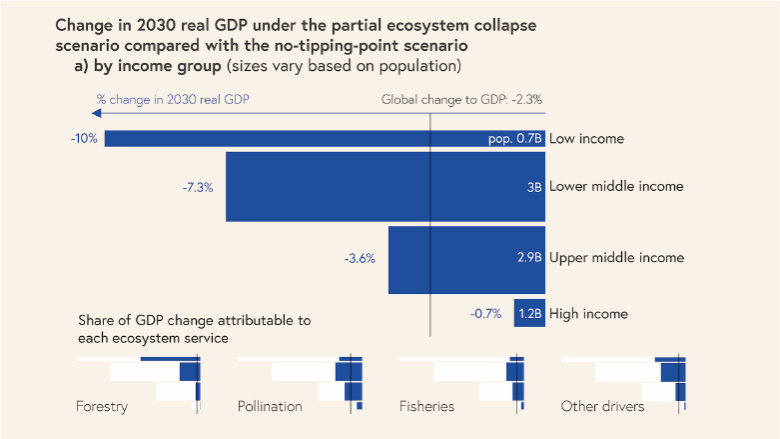
We cannot ignore that nature and biodiversity loss is a material risk to our economies, our financial sector and therefore to development. Malaysia is a good example. A recent World Bank report found that in the case of a partial ecosystem collapse, Malaysia – one of the most biodiverse countries in the world – could suffer 6 percent annual loss of its GDP by 2030. That’s a scale of loss similar to the COVID crisis of 2020. A recent study we carried out along with the Bank Negara, Malaysia's central bank, found that more than half the commercial loans made by the banking sector are to sectors which are highly dependent on ecosystem services, and almost 90 percent are to sectors which themselves have a high impact on ecosystems.
Around the world, nature -- the biodiversity of living organisms and accompanying ecosystem services they provide -- are vanishing at an unprecedented rate and scale with already catastrophic implications for economies and livelihoods. This loss and degradation of biodiversity affects the poorest economies most.

More than 50% of global GDP, $44 trillion in economic value, depends on natural resources.

Nature does not need us, but we need nature

Natural capital -- assets like forests, water, fish stocks, minerals, biodiversity, and land – is undervalued and unaccounted for. As a result, its loss is not properly recognized. Timber that is produced and sold at the expense of deforestation will have a positive impact on a country’s GDP. And yet, the country's wealth is depleted and its future jeopardized.

We do, however, have a way to understand the losses from overexploitation and the opportunities from preservation. Using natural capital accounting (NCA) to measure the contribution of natural capital to a country’s wealth and development opportunities demonstrates how shifting investments toward nature-smart actions and behaviors can simultaneously contribute to sustainable growth, fight climate change, and preserve nature.

Natural capital accounting is a systematic way to measure and report on stocks and flows of natural capital. It helps decision makers understand how the environment interacts with the economy. The World Bank’s Global Program on Sustainability provides tools and expertise for governments and the financial sector as they integrate NCA and other environmental and sustainability considerations into public and private decisions.

Consider what is at stake: more than half of global GDP is generated in industries that are highly or moderately dependent on ecosystem services, such as pollination, water filtration, and raw materials. Renewable natural capital, including land assets like agricultural soil and forests, and blue assets like fisheries and mangroves, account for 23 percent of the wealth in low-income and 10 percent in lower-middle income countries.

Across countries and markets, nature is an economic linchpin but one that is undervalued, underpriced and underinvested in.

More than 75% of food crops rely on animal pollination – but over 40% of known insect species have declined in past decades.

Conserving and restoring our planet’s nature is a critical development issue. It should not be seen as charitable, rather it is crucial in order preserve the economic well-being on which our lives and livelihoods depend. As we convene at the United Nations Biodiversity Conference (COP-15), we have the tools to actualize the economic contributions of nature and biodiversity in order to influence economic decision making so that investors and policymakers can eliminate the blind spots that are trading away our future prosperity.

https://delivery-p136806-e1377785.adobeaemcloud.com/adobe/assets/urn:aaid:aem:fd710cef-cf33-4bdd-b585-7b25eb87b1ab/as/CWON-Graph-01.png
Source: World Bank.
expert-quote
No single solution is enough. We must conserve, we must produce and consume more sustainably, we must account for the value of natural capital in development plans. MDBs, policymakers, the private sector and the public all have a role in preserving our future.
Mari Pangestu
Managing Director, Development Policy and Partnerships, The World Bank
false

Opening the Door to New Possibilities

Biodiversity Supports Job Growth

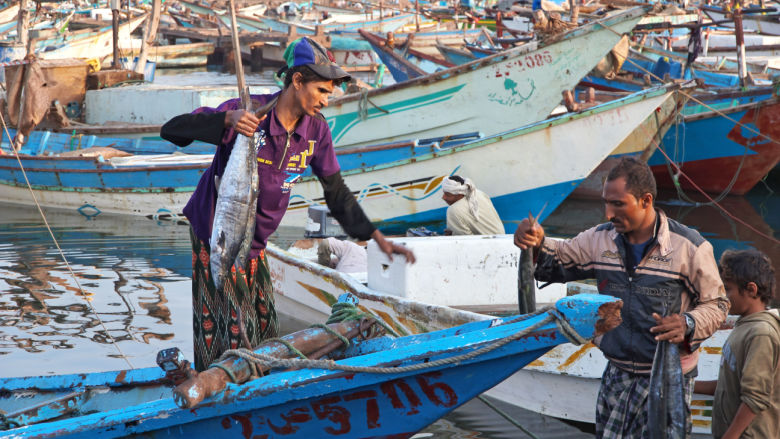
After almost a decade of conflict, the fishery value chain in Yemen has been devastated. Fish are a valued part of the local diet in a country where two thirds of the population are food insecure. It is also an important export and source of employment.

The World Bank is helping revitalize this industry through a $45 million grant that places sustainability at its core. To this end, the project works with local partners, fishery communities, and associations to make fishery management more sustainable, to increase production, and create jobs while protecting fish and their ecosystem.

By helping diversify the economy, the grant enhances economic opportunities in Yemen and improves food security. Reestablishing a sustainable fishery value chain makes these livelihoods more secure for the future.

Protecting nature does not have to be a cost, it can be a driving force for the economy.

Over 3 billion people depend on marine and coastal biodiversity for their protein intake and livelihoods, but 90% of global marine fish stocks are now fully exploited or overfished.

Protecting Biodiversity Protects Our Climate Too

Biodiversity and climate crises are critical challenges. They are intertwined, with declines in each accelerating us toward an irreversible tipping point. Rather than tackling them as separate problems, we can address them together.

The World Bank Group’s new diagnostic tool, the Country Climate and Development Report (CCDR) identifies nature-based solutions as an intervention area to strengthen climate, nature and development outcomes.

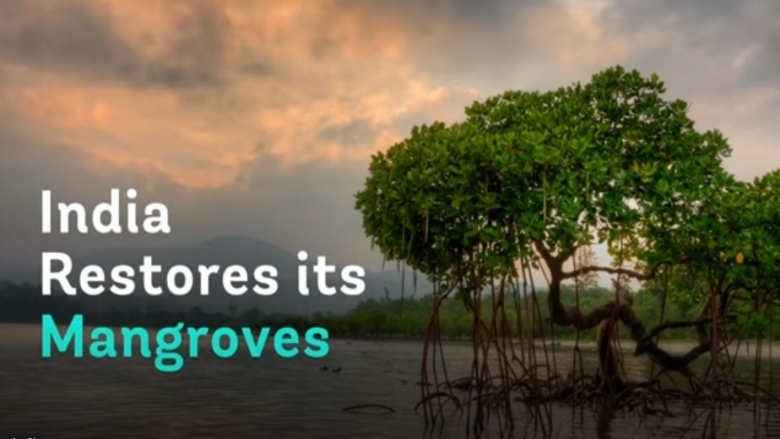
Mangroves are powerful natural infrastructure. These coastal trees act as a “bio-shield” to prevent erosion and absorb storm surges. They are an important habitat for fish and sequester four times more carbon than rainforests. When they become degraded, there are severe climate, social, and economic consequences.

That is why the World Bank invested $285 million in an Integrated Coastal Zone Management Project to plant 200 square kilometers (an area more than 3x the size of Manhattan) of mangroves along India’s coast. These revitalized forests sequester 1.5 metric tons of carbon per hectare per year. Now, during cyclones, the tidal wave forces are reduced by increased mangrove coverage.

India has focused on nature-based solutions to protect against disaster and climate challenges while increasing biodiversity. This triple win means increased productivity for marine ecosystems and the protection of coastal communities for 11.9 million residents.

Nature lies at the core of climate solutions. Aligning biodiversity and climate goals leads to sustainable societies and inclusive development.

Since 1990, it is estimated that 420 million hectares of forest have been lost through conversion to other land uses. Between 2015 and 2020, the rate of deforestation was estimated at 10 million hectares per year – an area the size of Iceland.

https://delivery-p136806-e1377785.adobeaemcloud.com/adobe/assets/urn:aaid:aem:270ac0a5-5133-45c6-9717-369cdc5c76e3/as/Shutterstock-1547369771-Hodeida-fishmarket-in-Hodeida-Red-Sea-Bab-El-Mande.jpg
The fishmarket in Hodeida, Red Sea, Bab El Mande, Yemen. Photo credit: Sergey-73/Shutterstock.com
videoType
you-tube
videoUrl
1SEg5IPWwC0
title
Restoring India’s Mangroves Is the Way Forward for Building Coastal Resilience
keyFrameImage
https://i.ytimg.com/vi/1SEg5IPWwC0/maxresdefault.jpg
description
Mangroves are nature’s wonders but they face severe pressure for a variety of reasons. India is now replanting its mangroves in one of the largest restoration programs in the world. Since 2010, the World Bank has supported the community-managed plantation of 20,000 hectares of mangroves in India. Learn more: https://blogs.worldbank.org/endpovertyinsouthasia/little-little-india-restores-its-lost-mangroves?cid=ECR_YT_Worldbank_EN_EXT ABOUT THE WORLD BANK GROUP 🌐 The World Bank Group is one of the world’s largest sources of funding and knowledge for low-income countries. Its five institutions share a commitment to reducing poverty, increasing shared prosperity, and promoting sustainable development. http://www.worldbank.org FOLLOW US ► ► ► YouTube: http://wrld.bg/x4SB50x47Lu Facebook: http://www.facebook.com/worldbank Twitter: http://www.twitter.com/worldbank Instagram: http://www.instagram.com/worldbank LinkedIn: https://www.linkedin.com/company/the-world-bank/ Events: http://live.worldbank.org Immersive Stories: https://www.worldbank.org/en/who-we-are/news/biggerpicture Newsletter: https://www.worldbank.org/en/newsletter-subscription
showTimestampAndTranscript
no
duration
103
lastUploadedDate
2021-07-26T16:36:57Z

Integrated Solutions: Capitalizing on Cross-Sector Cooperation

To endure, the global response to the biodiversity crisis must take a whole-of-economy approach. This means integrating nature considerations across sectors and policies, at all levels. This is where the Bank stands out: bringing together a variety of stakeholders to test and scale up transformative solutions.

Indonesia is home to extraordinary natural assets with global significance, including the world’s largest tropical peatland areas. These natural assets and ecosystems support Indonesia’s economic growth and sustain livelihoods for millions. They also store large amounts of carbon that mitigate climate change.

The Indonesia Sustainable Landscapes Management Program (SLMP) takes an integrated approach to protecting and enhancing these assets by promoting cooperation between the national and provincial government, the private sector, civil society, and communities. Through the SLMP, the World Bank and partners undertake analytics, support policy dialogue, and facilitate investments to combat deforestation, improve livelihoods, and build resilience to climate change. Key mechanisms used to achieve these goals include results-based payments, which support governments and communities to reduce deforestation. A central role of such programs is the Bank’s ability to bring stakeholders together around a common goal.

The SLMP also supports efforts to increase inclusion of local communities and Indigenous Peoples in land management. To date, over 2.9 million land parcels have been mapped, and over 87,000 hectares of social forestry licenses have been granted through the government’s SLMP-supported programs. These efforts are helping to address the drivers of unsustainable natural resources management in an equitable way.

expert-quote
Mitigation matters and matters urgently. But so too does adaptation and resilience, the former to reduce exposure and the latter to reduce vulnerability, especially for our clients who have contributed least to global emissions but who stand to suffer most from the change they are causing.
Valerie Hickey
Global Director of Environment, Natural Resources and the Blue Economy, The World Bank
false

Engaging Communities Secures Gains for the Future

Whether through nature-smart projects that create jobs in the local community or facilitating regional collaboration to ensure the sustainable use of shared resources, the heart of every project is to engage and empower local communities.

More than 70% of Mozambican households rely on natural resources. From the tourism attracted by its nature and wildlife reserves to the timber and fish that provide financial security as well as nourishment, it is in the community’s interest that resources are renewable and sustainable, so it is critical to involve the community. The Mozambique Integrated Landscape Management (ILM) portfolio is fostering a healthy coexistence between humans and nature by working across issues and sectors to tackle deforestation and resource exploitation, together with challenges such as rural poverty, community rights and land management.

One way the Mozambique ILM portfolio ensures it maintains its gains is to inspire conservation by funding environmental clubs for students. Eighty scholarships are awarded to girls between the ages of 13-17 for vocational and general education. It is a cornerstone for raising environmental awareness, promoting changes in action, and adjusting behavior.

Artimisa Enosse Malhango, a student from Mozambique, describes her experience: "In the environmental club, I learned about literacy, numeracy, children’s rights and the environment … Until now, I didn’t know how could we protect the environment. I didn’t know what the environment was, but now I do. It’s important for us because, tomorrow, it can become our future.”

videoType
you-tube
videoUrl
-i5HScz8d9M
showTimestampAndTranscript
no
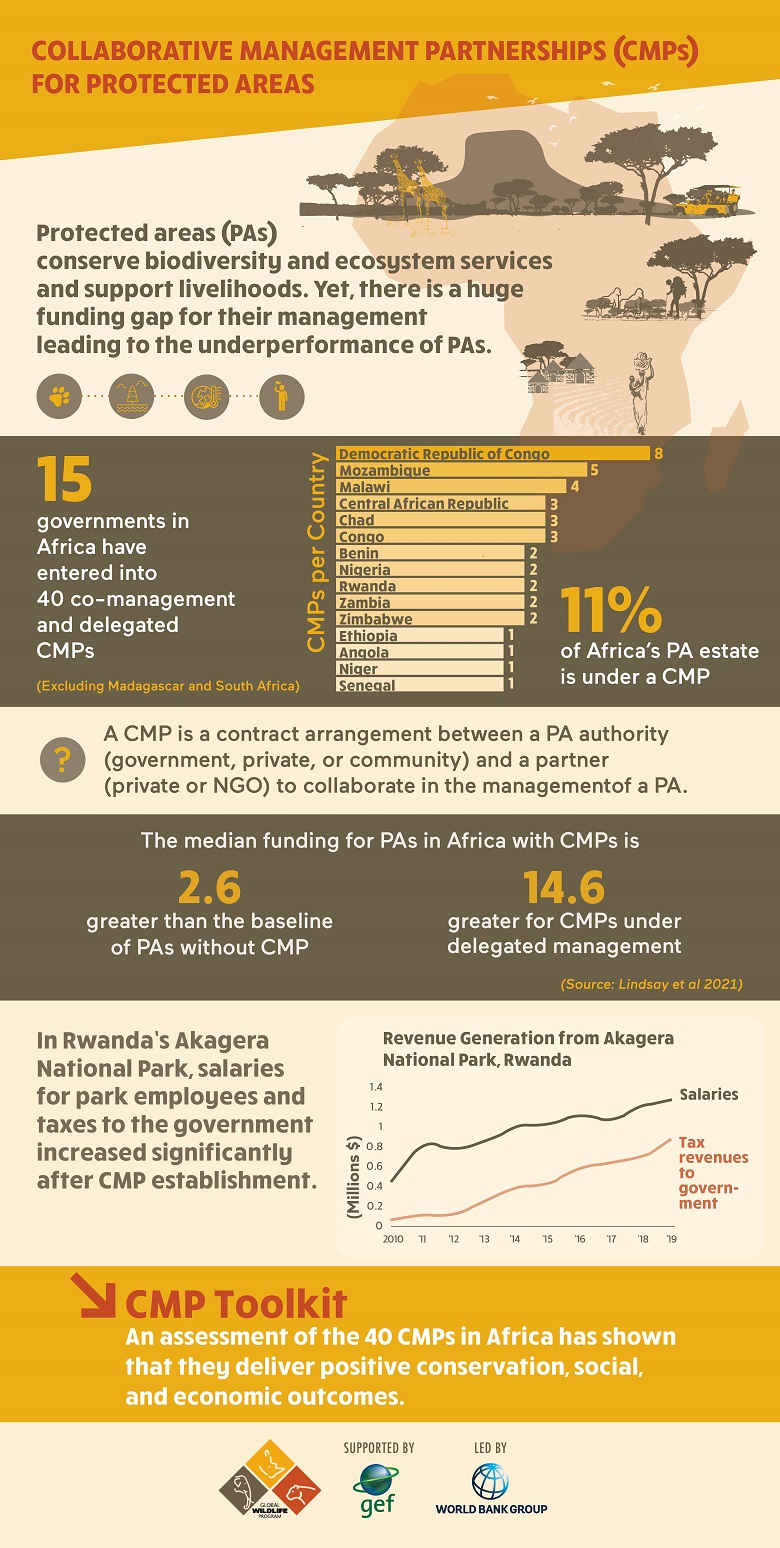
Public-private partnerships (PPP) are another way we collaborate with communities. Protected areas (PAs) play a valuable role in securing the world’s natural capital and ecosystem services, and in mitigating the impacts of climate change. However, a massive funding gap exists for their management. The World Bank has used a PPP model with 15 governments in Africa to establish Collaborative Management Partnerships (CMPs) across 40 protected areas. Protected area authorities (government, private or community) partnered with 13 organizations (private and NGO) to co-manage or delegate management of protected areas covering 11.5% of Africa’s protected area estate. A comprehensive review of these CMPs found that the median funding for PAs in Africa with CMPs is 2.6 times greater than the baseline of PAs without CMPs, and 14.6 times greater for delegated CMPs. This increase in funding strengthens the effectiveness of the PA model, making them more attractive for sustainable investment.
Protected areas and nature-based tourism are a significant source of economic growth. For each dollar invested, the rate of return is 6x.
https://delivery-p136806-e1377785.adobeaemcloud.com/adobe/assets/urn:aaid:aem:619a4e1a-52d3-4ef7-80c7-eff810ead606/as/CMP-Toolkit-Infographic.jpg
Photo credit: World Bank/The Global Wildlife Program (GWP), supported by the GEF.

Finance: The Catalyst for Biodiversity Solutions

Redirecting Financial Flows: Greening Finance and Financing Green

Finance is the catalyst for these transformational projects. The World Bank Group is uniquely positioned to mobilize financial instruments for nature-smart investments. That can mean ‘greening finance’ by influencing policymakers to steer existing investments away from activities that degrade our environment and ecosystems and into those that preserve them. It also means ‘financing green’ by creating entirely new, first-of-their-kind products specifically for biodiverse investments.

$700 billion in annual biodiversity conservation financing will be needed over the next decade to meet global biodiversity goals. The world currently spends $120-140 billion.

The drylands of Central Asia are one of the most rapidly degrading and climate-vulnerable areas in the world. Naturally arid conditions in Uzbekistan are worsened by pressure from human activity like intensified commercial agriculture and logging. The land is degraded, further worsening erosion and vegetation loss and increasing fragility throughout the region.

With a blend of concessional financing from the World Bank’s International Development Association, Korea-World Bank Partnership Facility and the Global Partnership for Sustainable and Resilient Landscapes, Uzbekistan accessed capital at below-market rates to implement and expand a program of sustainable landscape management. This is different from traditional financing models, which are too costly for low- and middle-income countries. Today, Uzbekistan has increased resilience to further desertification, landscape degradation and climate change.

Forward-thinking financial instruments are needed in the transition to an inclusive, sustainable and more adaptable economy.

About 96% of black rhinos were lost to poaching between 1970 and 1992. Formerly ranging across most of sub-Saharan Africa, 98% are now found in just four countries. This is not just a wildlife tragedy; it is a tragedy for entire ecosystems. Rhinos are an umbrella species – conserving them and the spaces they need to survive ensures the survival of thousands of other plants and animals that share their habitat.

To halt and reverse this tragedy, the World Bank launched the first wildlife conservation bond (WCB). The US$150 million bond channels financial flows to wildlife conservation and local communities. Conservation efforts at wildlife parks protect and grow critically endangered rhino populations. As a co-benefit, they strengthen ecosystem services like clean water and habitats for pollinators that serve the local citrus industry.

WCB is an outcome-based investment model; it creates local jobs related to conservation, and investors get a return if rhino growth targets are achieved. The initiative matches private capital with development needs. It can be replicated and scaled to channel more private capital for other conservation, climate actions, and development objectives around the world.

Solutions to the biodiversity crisis are only as limited as our imaginations. With equally imaginative financial instruments, we make new solutions possible.

videoType
embed-code
videoDmUrl
https://delivery-p136806-e1377785.adobeaemcloud.com/adobe/assets/urn:aaid:aem:2f288074-c55d-4501-b1e4-4f456a2e7b57/play?assetname=RHINO%20BOND%20VIDEO%20FINAL.mov
imageMimeType
image/jpeg
embedCode
<iframe src="https://worldbank.scene7.com/s7viewers/html5/VideoViewer.html?asset=worldbankprod/RHINO BOND VIDEO FINAL-AVS-10&config=/conf/global/settings/dam/dm/presets/viewer/WB-Player-with-Social-Sharing&serverUrl=https://worldbank.scene7.com/is/image/&contenturl=https://worldbank.scene7.com/is/content/&posterimage=worldbankprod/RHINO BOND VIDEO FINAL-AVS-10&videoserverurl=https://worldbank.scene7.com/is/content" width="100%" height="500" frameborder="0" allowfullscreen></iframe>
keyFrameImage
https://delivery-p136806-e1377785.adobeaemcloud.com/adobe/assets/urn:aaid:aem:ed981622-8b79-4f4f-9408-539c082d775e/as/RHINO%20BOND%20VIDEO%20FINAL-AVS.jpg
showAllTimestamps
no
showAllTranscripts
no
duration
131.08
scene7File
worldbankprod/RHINO BOND VIDEO FINAL
scene7Domain
https://worldbank.scene7.com/
scene7FileAvs
worldbankprod/RHINO BOND VIDEO FINAL-AVS-10
title
RHINO BOND VIDEO FINAL
showTimestampAndTranscript
no

Islands of the Eastern Caribbean have suffered significant financial setbacks from the drop in tourism due to COVID-19. As they work to rebuild their economies, the World Bank is right beside them. With $60 million in grants and concessional financing, the Bank has established Unleashing the Blue Economy of the Caribbean, a project to support several Eastern Caribbean countries in catalyzing the sustainable economic potential of their living marine and coastal assets.

Using a comprehensive, multi-sectoral approach, the islands of Grenada, Saint Lucia, and Saint Vincent and the Grenadines are banding together to make a strategic shift to Blue Tourism. Tourism is the economic centerpiece of the eastern Caribbean, accounting for 50% of the regional gross domestic product and 40% of employment.

The World Bank crafted a multi-partner financing package to support this shift, in the form of $38 million in loans across the three the countries, combined with a $1 million grant to each country from the PROBLUE Multidonor Trust Fund. Funding of $9 million ($8 million from the World Bank and $1 million from PROBLUE) was also granted to the Organisation of Eastern Caribbean States for integrated regional initiatives.

The financing will help these countries pivot toward a more sustainable, higher-value and resilient tourism model catering to culturally and environmentally aware visitors. The new focus will be activities that generate low environmental impacts, conserve natural resources, and support local communities. At the same time, these countries will improve prospects for economic development while strengthening their resilience to climate change.

The World Bank administers 70 multidonor umbrella trust funds. PROBLUE, PROGREEN and the Global Program on Sustainability fund transformative work for oceans, landscapes, and the integration of environmental and sustainability concerns into public and private decision making.

Protecting and nurturing our planet’s biodiversity is a cornerstone for economic development and an investment in our future prosperity. We have the tools to measure its value and understand tradeoffs with natural capital accounting. We also have the financial instruments to fund nature-based solutions that will result in a triple win: increasing biodiversity while cultivating local jobs that support environmental protection and climate resilience.

This year, the World Bank will be working for ambitious outcomes from COP-15. We understand that nature is the wealth of poor countries, so it should be placed at the core of development and climate efforts.

col-xs-12
col-sm-12
col-md-2
col-lg-2
lp-heading-top-medium
lp-heading-bottom-medium