The LAC Digital Unit

The Latin America and the Caribbean Digital Unit works to connect people, governments, enterprises, and civil society to expand access to digital services and harness safe and inclusive digital and AI innovation—creating more opportunities and better jobs.

Publications

In terms of knowledge creation, the LAC Digital Unit participates in the composition of regional studies and country diagnostics to inform digital transformation.

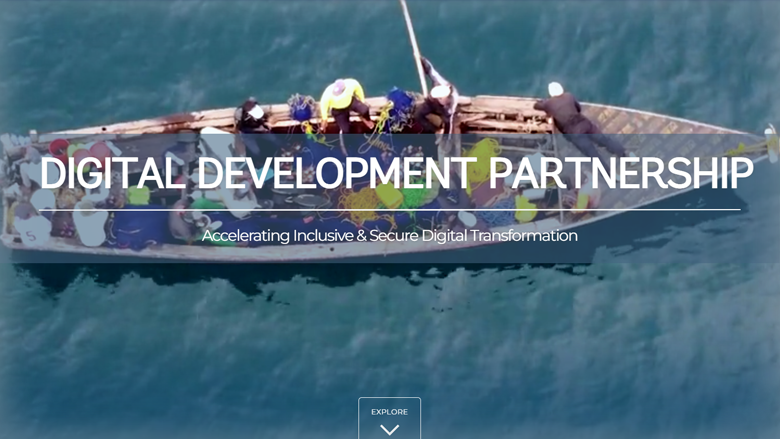
The Unit also contributes to publications produced under the auspices of the World Bank Group’s Identification for Development (ID4D) Initiative and the Digital Development Partnership (DDP) Initiative.


World Bank Latin America and the Caribbean Digital & AI Publications (2023 – present)

AI Revolution in Education

AI Revolution in Education

This brief examines nine AI-driven innovations across teaching, learning, and administration in Latin America and the Caribbean, including adaptive tutoring, automated lesson planning, and at-risk student identification. The publication cautions that realizing AI’s potential in education requires addressing the digital divide, ethical governance, and limited evidence of effectiveness at scale.

AI Revolution in Higher Education

AI Revolution in Higher Education

This brief examines the transformative potential of AI in higher education across Latin America and the Caribbean, highlighting key applications in student support, faculty research, and institutional management, supported by evidence of meaningful improvements in learning outcomes and operational efficiency. It also addresses the challenges hindering broader AI adoption in the region, including infrastructure gaps and faculty upskilling, and offers strategic recommendations for its ethical integration.

Buffet or Bottleneck

Buffer or Bottleneck?

This policy research working paper estimates Latin American labor market exposure to generative AI using harmonized household surveys, finding that urban, higher-educated, formal-sector, and higher-income workers face the greatest exposure, while the digital divide, particularly severe in poorer countries, blocks nearly half of jobs that could benefit from AI augmentation from realizing productivity gains.

LAC digital divide Amazon

Cierre de brecha digital en el departamento del Amazonas

This report analyzes the digital divide in Colombia’s Amazonas department and proposes solutions to improve digital connectivity.

Haiti

Constraints to Digital Financial Inclusion of Beneficiaries of PSARA Cash Transfer Program in Haiti

This report analyzes the financial inclusion landscape of Haiti’s World Bank-financed ASPIRE cash transfer program beneficiaries, finding limited access to formal financial services but greater uptake of mobile money and informal savings groups, and recommending targeted measures to expand digital financial services adoption, including promoting e-wallet use cases, improving digital ID access, easing KYC requirements, and building a sustainable cash-in and cash-out agent network.

Cybersecutirty Economic for Emerging Markets

Cybersecurity Economics for Emerging Markets

This book analyzes hundreds of scholarly works and thousands of cyber incidents across 190 countries over the past decade to examine the economic drivers and consequences of cyber threats in developing nations, offering evidence-based policy recommendations on strengthening critical sector resilience, building national cybersecurity industries, and addressing market failures to guide effective cybersecurity investment in vulnerable economies.

Digital Development Partnership screenshot

DE4LAC Country Diagnostics

The Digital Economy for Latin America and the Caribbean assessments, supported by the Digital Development Partnership, analyze the state of the digital economy of countries and provide detailed analysis and policy recommendations to inform national reform agendas.

Digital Report 2023

Digital Progress and Trends Report 2023

This report tracks global digital progress and the persistent digital divide, arguing that while digital technologies are transforming economies and lives, billions remain offline and unequal access risks deepening development gaps, making careful measurement of digitalization (across jobs, services, infrastructure, and AI) essential for guiding policymakers and the private sector in closing the divide, particularly in developing countries.

Digital Report 2025

Digital Progress and Trends Report 2025

This report examines AI’s transformative potential for global development, arguing that while AI can accelerate economic growth and expand access to knowledge, low- and middle-income countries face significant barriers to adoption, making it essential to strengthen the “four Cs” (connectivity, compute, context, and competency), alongside sound data governance, regulatory reform, and local innovation ecosystems to ensure AI’s benefits are inclusive, responsible, and broadly shared.

Digitalization and Inclusive Growth

Digitalization and Inclusive Growth

This paper finds that digitalization drives productivity growth, improves market access for rural households, small firms, and unbanked populations, and enhances government efficiency in developing economies. The publication cautions that AI and smart automation may yield smaller productivity gains than previous ICT waves and could heighten within-country inequality by requiring complementary skills.

Driving Digital Transformation and Inclusion

Driving Digital Transformation and Inclusion

This report analyzes transactional data and design characteristics from 11 Latin American and Caribbean countries’ fast payment systems to deliver evidence-based policy messages supporting the further development of fast payments in the region.

Effects of Covid on Student Learning

Effects of COVID-19 on Student Learning

This policy research working paper measures learning losses from COVID-19 among Dominican Republic ninth-grade students between 2020 and 2022 using adaptive learning software data, finding no evidence of losses but documenting concerningly low mastery levels, with students grasping only 45 percent of grade-prerequisite math topics on average.

Exporting and Technology Adoption in Brazil

Exporting and Technology Adoption in Brazil

This policy research working paper analyzes over 1,500 Brazilian firms using the Firm-level Adoption of Technology survey and a difference-in-differences approach, finding that entering export markets positively drives firms’ adoption of advanced technologies in business administration, production planning, supply chain management, and quality control.

Gender bias, citizen participation and AI

Gender Bias, Citizen Participation, and AI

This policy research working paper investigates gender bias in AI-driven civic participation analysis using 2023 Latinobarómetro Survey data. It finds through machine learning that societal machismo norms, political interest, education, and left-wing alignment shape civic engagement, with gender bias persisting even after corrective measures and men in egalitarian societies requiring especially low machismo levels to participate.

Global Trends on AI Governance

Global Trends in AI Governance

This report surveys the global AI governance landscape, examining key challenges and regulatory approaches while arguing that effective governance frameworks, supported by reliable digital infrastructure, sound policies, and local talent investment, are essential to ensure AI is developed ethically and transparently across sectors while mitigating risks such as bias, privacy violations, and lack of accountability.

Wired

Latin America and the Caribbean Economic Review, October 2023

This report finds that Latin America and the Caribbean faces mutually reinforcing challenges of low growth, limited fiscal space, and citizen dissatisfaction amid adverse global conditions, while arguing that expanding digital connectivity, paired with investments in skills, regulatory frameworks, and financial markets, offers a critical opportunity to boost growth and reduce spatial, gender, and racial inequalities, provided that coverage gaps are closed and existing infrastructure is used more productively.

Lessons on Implementation

Lessons on Implementation

This report explores the perceptions and experiences of students, parents, teachers, and other education stakeholders involved in Prográmate, a project that uses a digital personalized learning platform to develop secondary school students’ math skills and knowledge in the Dominican Republic.

Leveraging Digital Public Infrastructure ofr Payment Delivery and Inclusion

Leveraging Digital Public Infrastructure for Payment Delivery and Inclusion

This report assesses Brazil’s Rio Grande do Sul state Value Added Tax cashback program, Devolve ICMS, using the World Bank’s G2Px framework to draw lessons on digital tools, equity, compliance, and service delivery for national and global Value Added Tax reform efforts.

Pone tus habilidades a trabajar

Poné tus habilidades a trabajar

This report distills operational lessons from Argentina’s pilot of AI-enabled digital employment services tools, serving as a practical handbook for policymakers on designing and scaling such tools to better support local employment offices and disadvantaged jobseekers.

Impact of tech on migration from CA and RD

The Impact of Technology on Migration to the United States from Central America and the Dominican Republic

This policy research working paper examines how technological change affects Central American and Dominican Republic workers that migrate to the United States, finding that these migrants have increasingly filled lower-skilled manual roles that leave them more vulnerable to AI and robotics disruption.

LAC Unlocking Potential of Digital Public Infrastructure

Unlocking the Potential of Digital Public Infrastructure (DPI) in Latin America and the Caribbean (LAC)

This report produced by World Bank Group (WBG) and the Inter-American Development Bank (IADB) aims to help improve digital public infrastructure to drive stronger results for people living in LAC.

Regional Initiatives

Image
Website

Vincula LAC

Through Vincula LAC, an initiative established in collaboration with Coursera, the unit advances institutional capacity building by delivering digital skills programs across multiple countries.
Learn more Arrow
Women in GovTech Challenge 1
Website

Women in GovTech Challenge

The Women in GovTech Challenge aims to increase the number of women experts in Digital Public Infrastructure. The initiative offers training and international recognition for innovative digital services developed by women.
Learn more Arrow
LACaccelerator7
Website

LAC AI Accelerator

The LAC AI Accelerator is a challenge designed to validate AI use case pilots, to enhance public service delivery across the LAC region.
Learn more Arrow
LAC-digital-citizen
Website

LAC Digital Citizen

The LAC Digital Citizen initiative supports the creation of an open source eID broker, to facilitate the mutual recognition of electronic identities in the region.
Learn more Arrow
Verifiable Credentials for MSMEs in the Dominican Republic 1
Website

Verifiable Credentials for MSMEs in the Dominican Republic

The Verifiable Credentials for MSMEs in the Dominican Republic is a pilot project led to provide digital identity and verifiable credentials to small companies in the Caribbean country.
Learn more Arrow