Knowledge for Change Program
News & Updates


Building an Asia-Centered Platform for Evidence-Based Policymaking
The first year of the Japan Ministry of Finance–World Bank Development Economics Vice Presidency (DEC) collaboration under the Knowledge for Change Program (KCP) established a structured platform for connecting frontier economic research with policymaking institutions across Japan and Asia.

The World Bank Group, JICA, and ADB Advance Evidence-Based Operations through Tokyo LEADS
The World Bank Group, in collaboration with the Japan International Cooperation Agency (JICA) and the Asian Development Bank (ADB), held Tokyo LEADS (Learn. Adapt. Scale.) from January 26–29, 2026.

Growth Academy Tokyo: Clear Reform Priorities for Productivity-Led Growth in Asia
Co-led by the World Bank Group and the Becker Friedman Institute for Economics, the Growth Academy bridges economic research and real-world policymaking. In Tokyo, discussions were grounded in the 2024 World Development Report on the Middle-Income Trap, with participants examining how countries can avoid stagnation and advance toward high-income status.
2025 KCP Annual Report
The 2025 Annual Report of the Knowledge for Change Program (KCP) is organized into four sections covering 2025 achievements, progress and impacts of KCP IV projects, future research plans under KCP V, and the program’s funding allocations and financial outlook.
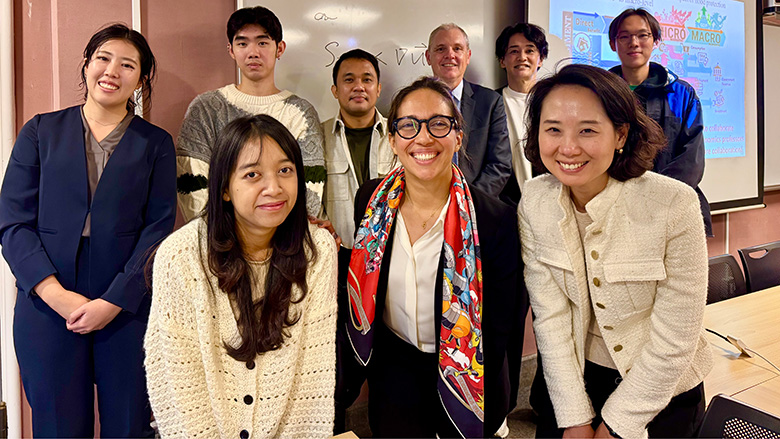
IED Tokyo Expands Partnerships for a More Resilient Asia
From November 4 -6, 2025, the IED’s Tokyo Center led a consultative visit that brought together a cross-section of Japanese stakeholders, building relationships and identifying opportunities for collaboration under the World Bank’s Resilience workstream.
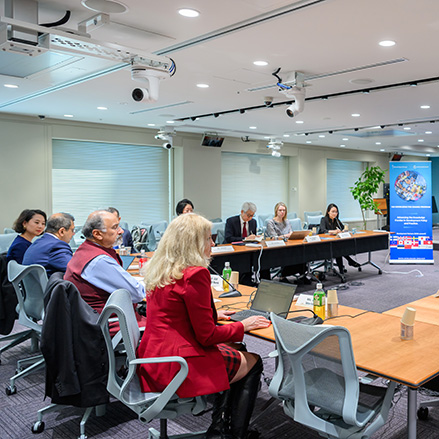
2025 KCP Partnership Council Meeting
The Knowledge for Change Program (KCP) convened its 2025 Partnership Council Meeting in Tokyo, Japan, gathering key development partners to reflect on the program’s achievements and align on strategic priorities for the year ahead.

Rethinking Resilience: How Policies Can Help People to Prepare, Recover, and Adapt
This seminar delved into the report’s findings and explore their application at the country level. Drawing on insights from partner countries, the event offered cutting-edge knowledge on disaster risk management and climate resilience. By combining the unique country experiences with the World Bank’s expertise, the seminar aimed to uncover actionable solutions and foster collaboration to enhance resilience.
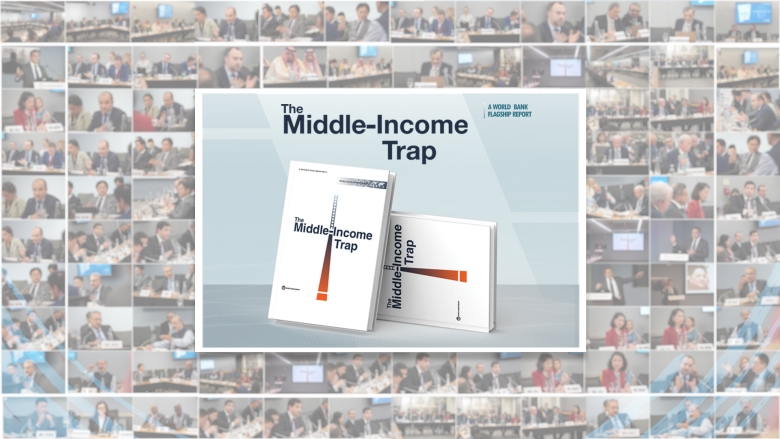
Navigating the Middle-Income Trap: Insights from a High-Level Policy Dialogue at the 2024 IMF-WBG Annual Meetings
In the bustling corridors of the World Bank's Annual Meetings this past October, a diverse group of finance ministers and policymakers from across the globe convened to tackle a pressing issue: the middle-income trap.
20 Years of Research and Knowledge on Trade and Private Sector Development
Final KCP20+ event focused on trade and international integration and private sector development, featuring presentations and a multi-stakeholder panel with Q&A.

20 Years of Research, Data, and Analytics on Poverty, Inequality and Human Capital
Part two of the KCP20+ series: a two-part session highlighting advances on poverty and inequality, with a deep dive on human capital and links to World Bank operations.
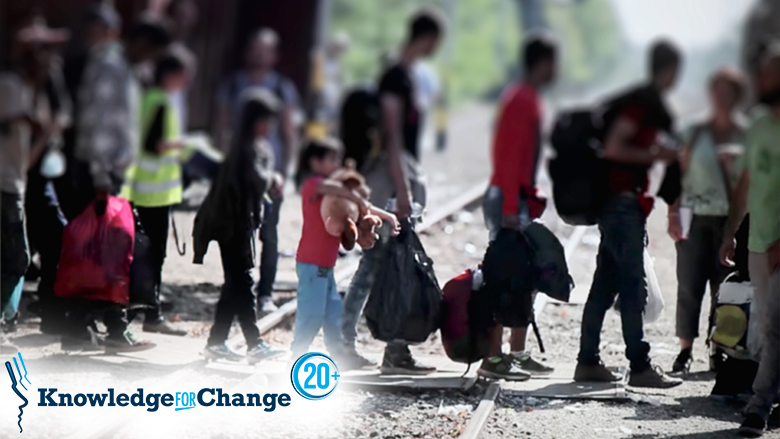
Shocks and Global Imbalances: Conflicts, Migration and Climate Change
A 3-hour hybrid seminar launching KCP20+, examining how conflicts, migration, and climate shocks interact, and how evidence can inform policies to protect vulnerable populations.