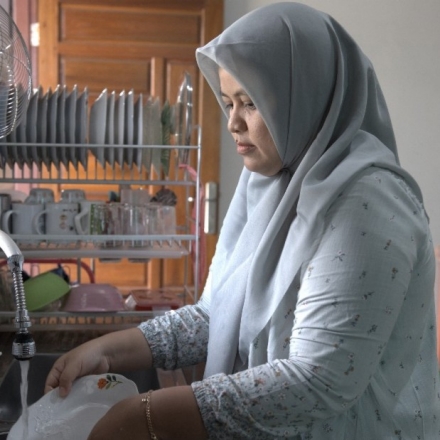
In the coastal city of Dumai, Indonesia, clean water was once a luxury. Residents like Dede Handayani, a mother of two toddlers, faced steep costs just to access clean water. She paid up to US$64 (Approximately IDR 1,000,000) a month, relying on a mix of well water for gardening and washing and local vendors for her family’s drinking and cooking needs. It was a daily struggle that consumed time, energy, and resources.
Local businesses struggled to maintain hygiene, and the municipal water utility, PDAM Dumai Berseri, faced mounting challenges. “We needed major investment to upgrade our filtration system,” said Agus Adnan, the utility’s manager. “But we also had to keep water affordable for our community.”
Dumai’s story is not unique. Across Indonesia, rapid urbanization and geography—17,000 islands and 90,000 kilometers of coastline—make water access a complex challenge. Despite abundant freshwater resources, nearly half of Indonesians lack safe water and more than 70% of the nation’s population rely on potentially contaminated sources. Only a third of urban residents have piped water services.

Without filtration water in Dumai. Photo: Matahati/World Bank
Recognizing the urgency, the Government of Indonesia launched the National Urban Water Supply Project (NUWSP) with support from the World Bank and other partners. The project aimed to improve water access and strengthen the capacity of urban water utilities.
“Since 2018, we’ve worked closely with the Ministry of Public Works and Housing and the World Bank,” said R. Satria Alamsyah, Head of Dumai’s Public Works Office. “By 2020, we had new water supply infrastructure in place.”
The results were transformative. Dumai’s utility expanded from serving 200 customers in 2019 to nearly 10,000 households and businesses by 2024, significantly increased their revenue and turned around their financial situation from a loss-making utility into a utility that can fully cover their operational costs. With this improved situation, the utility has been able to fully pay their staff salary and even recruited more staff to support the operation, creating jobs and opportunities for the local community. “Our operations are now more efficient, straightforward, and easy to monitor,” said Adnan.
For residents like Dede Handayani, the change was life-altering. “Before, we had to spend more than US$60 per month (Approximately IDR 1,000,000) to pay the truck to bring water which often not good quality. We now pay US$16 (Approximately IDR 250,000) a month for better quality water that’s safe for consumption,” she said. “I no longer spend hours searching for clean water, and can now spend more time with my children and help them study.”
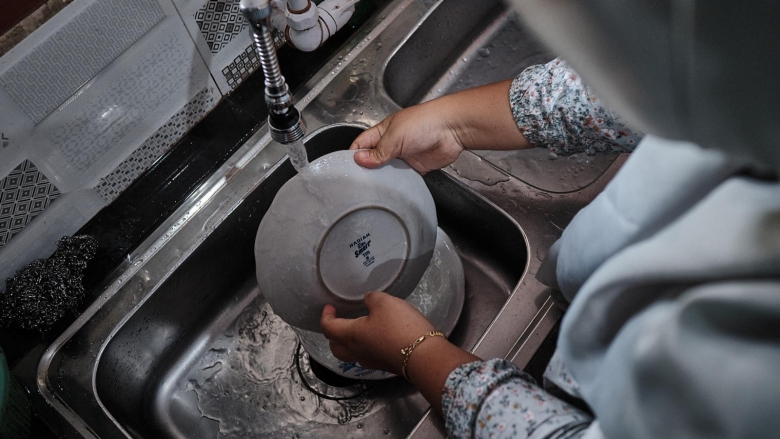
Now Dede Handayani can use the tap water for day-to-day washing and cleaning routines. Photo: Matahati/World Bank