col-xs-12
col-sm-12
col-md-1
col-lg-1
col-xs-12
col-sm-12
col-md-10
col-lg-10
col-xs-12
col-sm-12
col-md-1
col-lg-1
col-xs-12
col-sm-12
col-md-12
col-lg-12
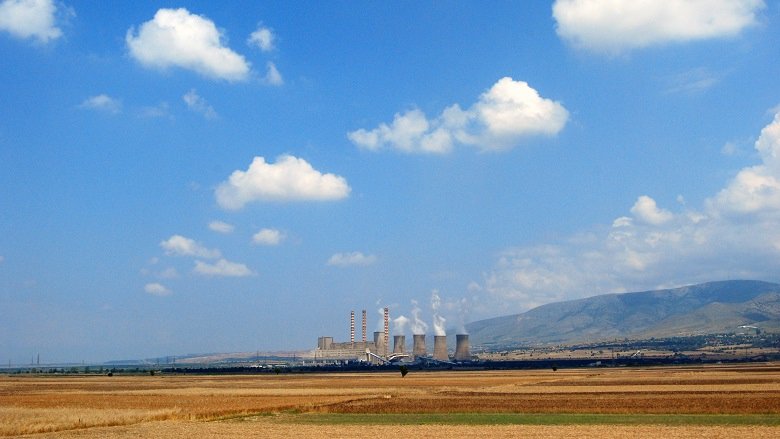
Electric power plant near Kozani in Western Macedonia
Electric power plant near Kozani in Western Macedonia.
Photo: Olga Maria Toli / Shutterstock
col-xs-12
col-sm-12
col-md-3
col-lg-3
col-xs-12
col-sm-12
col-md-7
col-lg-7
  • font-medium
  • bg_blue_05

STORY HIGHLIGHTS

  • Greece plans to end all energy production from coal by 2028.
  • Greece is set to invest billions of dollars in coal-dependent areas to help them build back better – and greener.
  • The Greek roadmap for a just transition from coal, supported by the World Bank, calls for the transformation of Western Macedonia into an alternative energy hub.
col-xs-12
col-sm-12
col-md-2
col-lg-2
col-xs-12
col-sm-12
col-md-3
col-lg-3
col-xs-12
col-sm-12
col-md-7
col-lg-7
  • lp-body-content
  • first-letter

[tweetquote:[tweetText=Greece is on the fast track to cut down its use of coal, which now makes up only 9% of its total energy supply, down from 25% six years ago.,tweetData=WBG_Climate,tweetHash=ClimateStories_WBG]] By 2028, the government plans to end all energy production from coal, and if it succeeds, the Greek roadmap to a just transition could help other countries move away from coal.

Accomplishing such an ambitious trajectory requires careful planning. Two years ago, the World Bank partnered with the European Commission (EC) to help Greece do just that. Greece became the first European Union (EU) member state to submit a detailed roadmap to the EC for a just transition away from coal that supports workers and communities.

The World Bank's work on the roadmap was supported by the EC through its Directorate-General for Structural Reform Support, which helps EU countries design and implement reforms to underpin job creation and sustainable growth. The work also supports the European Council's 2030 Framework on Climate and Energy, which calls for reducing coal-fueled energy for EU member states by 2030. The World Bank is engaged in several coal-dependent regions to help governments transition away from coal.

With its roadmap in place, Greece is set to invest billions of dollars in coal-dependent areas. The plan will spur economic development, helping absorb jobs lost in the coal sector while setting the stage for new clean energy industries. Lessons learned from Greece's experience — including the importance of early planning and stakeholder engagement and the need to understand the unique opportunities in the affected region — will be valuable to other countries where the World Bank and the EC support a just transition away from coal, such as Bulgaria, the Western Balkans and Ukraine.

"With its roadmap in place, Greece is set to invest billions of dollars in coal-dependent areas. The plan will spur economic development, helping absorb jobs lost in the coal sector while setting the stage for new clean energy industries."

For example, the World Bank, the EC, and other partners created a Platform in Support of Coal Regions in Transition in Western Balkans and Ukraine. It allows participants to share and compare experiences as they prepare transition roadmaps and early investment projects in coal regions. Coal-dependent countries outside of Europe are already benefiting, with knowledge transfer to South Africa, India and Indonesia.

[tweetquote:[tweetText=Greece’s transition is coming at a critical time: its economy shrank by nearly 10% during the COVID-19 pandemic, and unemployment hovers around 14% overall and almost 34% for younger workers.,tweetData=WBG_Climate,tweetHash=ClimateStories_WBG]] The roadmap provides an opportunity to build back better — and greener.
videoType
you-tube
videoUrl
Yy_j12w9S4c
title
Just Transition for All: The World Bank Group’s Support to Countries Transitioning Away From Coal
keyFrameImage
https://i.ytimg.com/vi/Yy_j12w9S4c/maxresdefault.jpg
description
Many countries continue to rely on coal for jobs and energy. But since coal is the leading driver of carbon emissions, phasing it out is critical to the fight against climate change. The transition to a lower-carbon future is urgent. How can it also support workers and communities? And how can we support transformative approaches for a more sustainable and equitable future? Learn more: https://www.worldbank.org/en/topic/extractiveindustries/justtransition?cid=ECR_YT_Worldbank_EN_EXT #ClimateStoriesWBG ABOUT THE WORLD BANK GROUP 🌐 The World Bank Group is one of the world’s largest sources of funding and knowledge for low-income countries. Its five institutions share a commitment to reducing poverty, increasing shared prosperity, and promoting sustainable development. http://www.worldbank.org FOLLOW US ► ► ► YouTube: http://wrld.bg/x4SB50x47Lu Facebook: http://www.facebook.com/worldbank Twitter: http://www.twitter.com/worldbank Instagram: http://www.instagram.com/worldbank LinkedIn: https://www.linkedin.com/company/the-world-bank/ Events: http://live.worldbank.org Immersive Stories: https://www.worldbank.org/en/who-we-are/news/biggerpicture Newsletter: https://www.worldbank.org/en/newsletter-subscription
showTimestampAndTranscript
no
duration
117
lastUploadedDate
2021-10-18T16:30:50Z

Energy Storage Hub Eyed for Western Macedonia

[tweetquote:[tweetText=The cornerstone of the Greek roadmap is the transformation of Western Macedonia, which currently produces 80% of Greece's coal, into an alternative energy hub.,tweetData=WBG_Climate,tweetHash=ClimateStories_WBG]]

World Bank analysis showed that Western Macedonia is home to generations of skilled coal workers and their families, energy infrastructure worth millions of dollars, and a system of transmission lines that reach every corner of Greece. Together with national and local stakeholders, the World Bank set out to help the region harness these assets to build a new economic future rooted in a clean energy identity.

"World Bank analysis showed that Western Macedonia is home to generations of skilled coal workers and their families, energy infrastructure worth millions of dollars, and a system of transmission lines that reach every corner of Greece."

Months of research and thorough engagement with stakeholders succeeded in building consensus that clean energy technologies could save the region's energy jobs and create new ones. Stakeholders began to realize the transformative powers of affordable clean energy and storage for the entire Greek economy.

Concentrating clean energy facilities in one region can attract additional energy investment both downstream and upstream, especially in an era of related technological breakthroughs. The World Bank proposed several solutions, including green hydrogen, pumped storage, and converting thermal power plants into renewable power plants with energy storage. [tweetquote:[tweetText=These solutions make it possible to produce energy entirely from renewables by storing electricity when the sun shines and the wind blows and deploying that excess energy when it's needed in the grid.,tweetData=WBG_Climate,tweetHash=ClimateStories_WBG]]

"At a time when those of us who were talking in Greece about green hydrogen and long-duration energy storage were very few, the World Bank study came along to put these issues at the center of the coal phaseout debate for Western Macedonia and the country. Many important steps have taken place since at the national and regional level that will contribute to the emergence of Western Macedonia as an Alternative Energy Hub of supranational importance," said George Kasapides, Governor of the Region of Western Macedonia. "We thank the World Bank and the European Commission for their work."

The World Bank's early planning and stakeholder engagement proved instrumental in helping Greece accelerate its just transition away from coal, highlighting the importance of leveraging each region's unique strengths when preparing for a post-coal economic future.

Greece is set to pass a wide-ranging policy framework that would make it faster and easier to implement projects like Western Macedonia's energy storage hub. The policies, expected to take effect in early 2022, will shorten approval time and provide hundreds of millions of euros in subsidies and tax credits for energy storage and other clean energy initiatives.

videoType
embed-code
videoDmUrl
https://delivery-p136806-e1377785.adobeaemcloud.com/adobe/assets/urn:aaid:aem:45e59a09-032e-4e4e-b80d-f0299d3b6c79/play?assetname=SD_Climate_Stories_animation_20210511.mp4
imageMimeType
image/jpeg
embedCode
<iframe src="https://worldbank.scene7.com/s7viewers/html5/VideoViewer.html?asset=worldbankprod/SD_Climate_Stories_animation_20210511-AVS&config=worldbankprod/WBG-Standard-Player&serverUrl=https://worldbank.scene7.com/is/image/&contenturl=https://worldbank.scene7.com/is/content/&posterimage=worldbankprod/SD_Climate_Stories_animation_20210511-AVS&videoserverurl=https://worldbank.scene7.com/is/content" width="100%" height="500" frameborder="0" allowfullscreen></iframe>
title
SD_Climate_Stories_animation_20210511
keyFrameImage
showTimestampAndTranscript
no
duration
30
scene7File
worldbankprod/SD_Climate_Stories_animation_20210511
scene7Domain
https://worldbank.scene7.com/
scene7FileAvs
worldbankprod/SD_Climate_Stories_animation_20210511-AVS-11
lp-heading-top-medium
lp-heading-bottom-medium
col-xs-12
col-sm-12
col-md-2
col-lg-2
  • lp-body-content
  • first-letter
