Ecuador

false
lp-heading-top-xxlarge
lp-heading-bottom-xlarge
Dayana Vargas, técnica de mantenimiento del Metro de Quito, Ecuador. ©Sidartha Films / World Bank
BLOG
Driving Change: How Women Are Transforming Public Transport in Quito
https://blogs.worldbank.org/en/latinamerica/women-transportation-advance-leads-change-quito

Their leadership is improving safety, service quality and inclusion across the city’s mobility system.

Watch the video

true
ECU

BY THE NUMBERS: ECUADOR

Explore More Data
https://data360.worldbank.org/en/economy/ECU
Ecuador
Source: Data 360 | WorldBank
Dataset
Go to Data 360
Compare with benchmark region data
WB_WDI_NY_GDP_MKTP_KD_ZG
GDP (annual % growth)
Percentage change per annum
line
WB_WDI_SI_POV_GINI
Gini Index (0-100 scale)
line
WB_WDI_SI_POV_UMIC
Poverty headcount ratio at $8.30 a day (2021 PPP)
% of population
pie
WB_WDI_SL_TLF_CACT_FE_ZS
Labor force participation rate / female
Percentage
pie
WB_PPI_TOT_INV
Private Participation in Infrastructure (Total, US$ million)
US$ million
line

OVERVIEW: ECUADOR

false
lp-heading-bottom-default
About
about
about
horizontal
About
col-xs-12
col-sm-12
col-md-12
col-lg-12
Ecuador is a country defined by striking geographical and cultural contrasts. The majestic Andes, the rich biodiversity of the Amazon, the Pacific coastline, and the Galapagos Islands converge with a deep indigenous heritage, colonial legacy, and aspirations for modern development.

The economy remains heavily reliant on oil, agricultural exports—such as bananas, cocoa, and shrimp—and tourism. This dependence makes Ecuador vulnerable to external shocks, including international price fluctuations and natural disasters. Since its adoption in 2000, dollarization has served as a key stabilizing mechanism against inflation.

Major challenges include widespread informal employment and pronounced regional inequalities, particularly between urban and rural areas. Climate vulnerability—manifested through droughts, extreme rainfall, and variability—poses increasing risks to agricultural productivity, water resources, and infrastructure.

Despite these challenges, Ecuador possesses notable strengths. It boasts extraordinary biodiversity, significant potential for renewable energy (hydroelectric, solar, and wind), internationally recognized agricultural sectors, and a young population characterized by resilience and adaptability.

Read More
Read Less
Economy
economy
economy
horizontal
Economy
col-xs-12
col-sm-12
col-md-10
col-lg-10
After a contraction of 2% in 2024, Ecuador’s economy rebounded with an estimated growth of 3.7% in 2025, driven by exports, investment, and private consumption.

The outlook for 2026–2028 points to stabilization around 2.5%, conditional on a reduction in political uncertainty and the consolidation of fiscal progress. In terms of poverty, it is estimated to have declined to 30.1% in 2025 (USD 8.30 per day line), with projections indicating a continued decrease to 28.1% by 2028.

A significant milestone was Ecuador’s return to international capital markets in January 2026, reflecting renewed investor confidence. This achievement is framed within the Government’s commitment to the IMF Extended Fund Facility (EFF) program.

On the fiscal front, the deficit stood at 2.9% of GDP in 2025, and public accounts are expected to approach balance in 2026, supported by higher oil prices.

Read More
Read Less
Development
development
development
horizontal
Development
col-xs-12
col-sm-12
col-md-10
col-lg-10
The World Bank’s current program with Ecuador comprises 12 projects, including investment and development policy financing operations, representing a total of US$3.92 billion.

In addition, the World Bank supports a broad technical assistance program in areas such as energy, macro-fiscal reforms, migration, financial inclusion, infrastructure, competitiveness, and sustainable transportation.

The International Finance Corporation (IFC) has a committed exposure of approximately US$617 million in Ecuador, distributed across 11 institutions and six sectors. Meanwhile, the Multilateral Investment Guarantee Agency (MIGA) maintains an exposure of US$19 million in the manufacturing sector.

Read More
Read Less
Country Partnership
country partnership
country partnership
horizontal
Country Partnership
col-xs-12
col-sm-12
col-md-10
col-lg-10
The current Country Partnership Framework with Ecuador 2019–2023 (extended to 2026) of the World Bank Group supports the country’s development through three focus areas: inclusive growth, human capital development, and institutional and environmental sustainability.

Developing human capital with skills aligned to labor market demands, alongside policies informed by timely, evidence-based data, will not only foster inclusive growth but also enhance the country’s resilience to disasters and macroeconomic shocks.

Moreover, more efficient public spending and the adoption of international transparency standards in public administration will contribute to the sustainability and protection of social services. Progress in the first two pillars will also help Ecuador improve access to financial markets and lay the groundwork for institutional strengthening as the country advances on its development path.

Read More
Read Less
Results
results
results
horizontal
Results
The CPF program provided quick and effective responses to complex emergencies, simultaneously addressing and meeting urgent recovery and resilience needs from the COVID-19 pandemic and climate shocks. In addition, the program demonstrated its value through subnational infrastructure operations, particularly through the megaproject Quito Metro Line one (PLMQ). This megaproject is transforming urban transport by linking with Bus Rapid Transport (BRT) systems while reducing harmful emissions.

The International Finance Corporation (IFC) and the World Bank assisted the GoE in improving the country’s capacity to implement public private partnerships (PPPs). MIGA reengaged with Ecuador and provided political risk insurance to facilitate access to foreign financing for a local manufacturing firm. In 2020, MIGA issued its first guarantee in over a decade.

Credit to MSMEs has also expanded, aided by the Bank’s support for restructuring the CFN and the development of credit lines for second tier lenders toward beneficiary MSMEs. The IFC and Bank supported interventions seeking to improve access to finance for Small and Medium-sized Enterprises (SMEs).

Through the Supporting Education Reform in Targeted Circuits project, the Bank assisted the GoE in increasing the access to and quality of education in some of Ecuador’s poorest areas In the end, early education enrollment of 4-year-old children in targeted parishes increased to 8,667 children in 2023.

Read More
Read Less
THE LATEST FROM ECUADOR

Discover the latest press releases, feature stories, blogs, research, and publications about Ecuador here:

See all Blogs

See all News

See all Feature Stories

See all Research & Publications

true

PROJECTS & RESULTS

Learn about the projects that are shaping the future of Ecuador and the results that demonstrate our commitment to the country's development

RESEARCH & PUBLICATIONS

false
lp-heading-bottom-xxlarge
More Research & Publications
https://openknowledge.worldbank.org/search?query=ecuador
single-card-view
Country Climate and Development Report (CCDR)
Cover of the Ecuador Country Climate and Development Report
Ecuador Country Climate and Development Report
Ecuador is rich in agricultural, oil, mineral, and hydropower resources—but faces growing climate and fiscal pressures. Discover how strategic reforms and climate action can unlock the country’s full potential.
https://openknowledge.worldbank.org/entities/publication/d4942f7a-8ae0-4383-9c9c-3bd1252c939f
Read Full Report
https://openknowledge.worldbank.org/entities/publication/d4942f7a-8ae0-4383-9c9c-3bd1252c939f
Laying the Foundations for a Sustainable Blue Economy in Ecuador
https://openknowledge.worldbank.org/entities/publication/d7e64750-0237-4780-9159-fe137bff7778
default alt
SUMMARY REPORT
mini-card, small-h-img
Digital Economy for Latin America and the Caribbean - Country Diagnostic: Ecuador
https://openknowledge.worldbank.org/entities/publication/522ef03f-7ccd-4f39-ac03-f6c85ba33102
Default alt 2
COUNTRY DIAGNOSTIC
mini-card, small-h-img
  • world-bank:content-type/publication
Financing Healthy Oceans: Options for Sustaining the Eastern Tropical Pacific Marine Conservation Corridor Oceans
https://openknowledge.worldbank.org/entities/publication/2be9e30f-3031-4472-8a9a-513f1da571ca
mini-card, small-h-img

Country Leadership

Issam Abousleiman
https://www.worldbank.org/en/about/people/i/issam-abousleiman
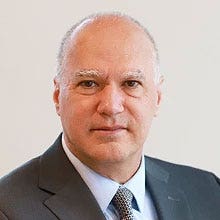
Issam Abousleiman
Regional Director for Bolivia, Chile, Ecuador and Peru
mini-card
Boris Weber
https://www.worldbank.org/en/about/people/b/boris-weber
Boris Weber
World Bank Resident Representative in Ecuador
mini-card

World Bank Group in Ecuador

6 de Diciembre Av. and Boussingault T6 Building, 13th Floor.

+5932 294-3600

Oficina_Ecuador@worldbank.org

For project-related issues and complaints contact Oficina_Ecuador@worldbank.org