Dive into a variety of engaging discussions from our latest events, covering diverse themes that shape women's economic empowerment in the region. To watch the recap of more event, click here.
South Asia Gender Innovation Lab
EVENTS
Upcoming Learning Event
More events are coming soon—stay tuned!
Past Events
From Silence to Disclosure: Rethinking the Measurement of Intimate Partner Violence
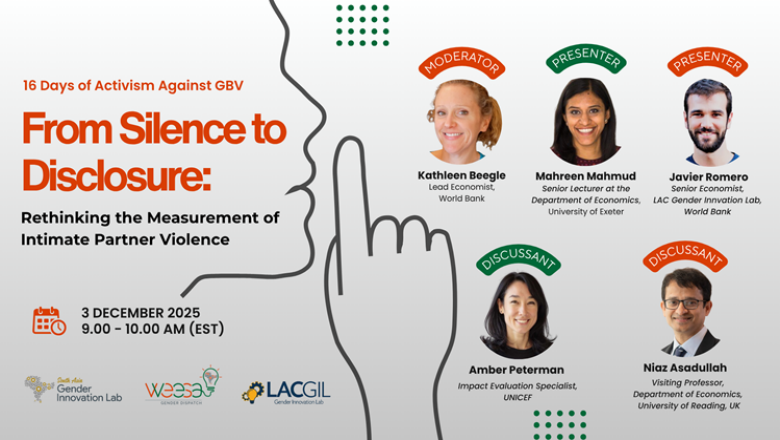
This learning event examines how the way we ask about violence shapes disclosure of intimate partner violence, highlighting innovative reporting methods tested in Pakistan and Peru that enhance safety, accuracy, and trust, even in low-literacy rural settings. Co-hosted by SAR GIL and the Latin America and Caribbean Gender Innovation Lab (LAC GIL), it is organized in commemoration of the 16 Days of Activism against Gender-Based Violence.
Making Job Platforms Work for Women — Report Launch
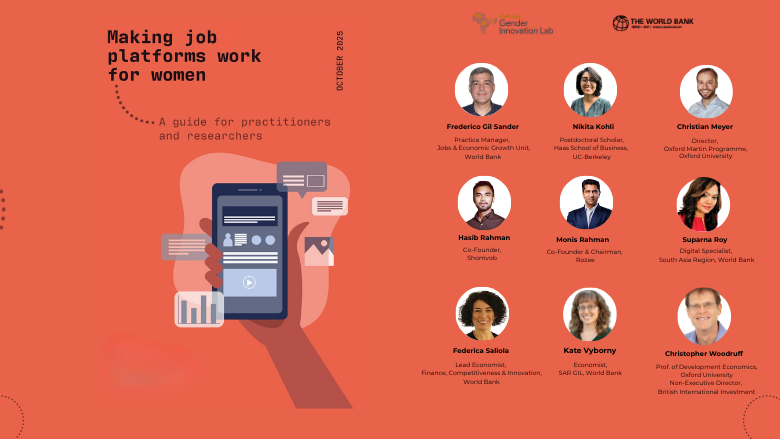
On October 22 at World Bank Headquarters in Washington, DC, SAR GIL launched the report “Making Job Platforms Work for Women: A Guide for Practitioners and Researchers.” Developed with input from job platform practitioners and researchers who contributed interviews and joined the 2024 Inclusive Jobs Platforms workshop—and with support from the Umbrella Facility for Gender Equality and the Gates Foundation—the report synthesizes evidence and case studies into nine actionable recommendations for more inclusive platforms.
Unlocking Potential: Key Findings from an Evidence-Based Toolkit for Women’s Economic Empowerment in Bangladesh
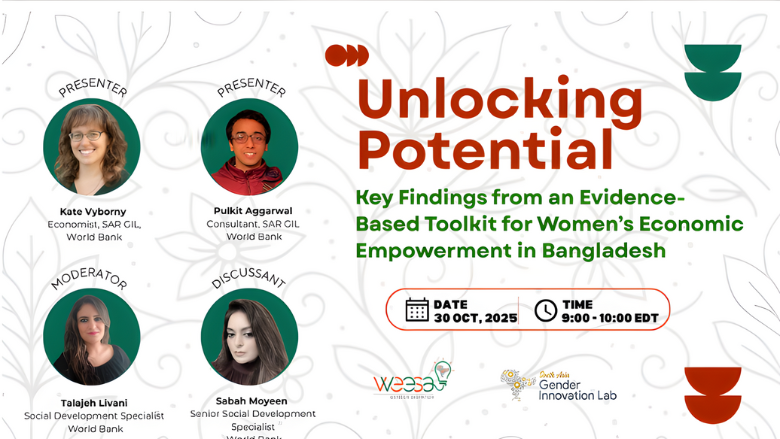
This learning event unpacks the factors shaping women’s economic participation, identifying key constraints, and presenting an evidence-based policy toolkit to guide decision-making and inform policies. The tools are prioritized for their potential to close gaps, boost women’s labor force participation and income, and enhance women’s economic empowerment.
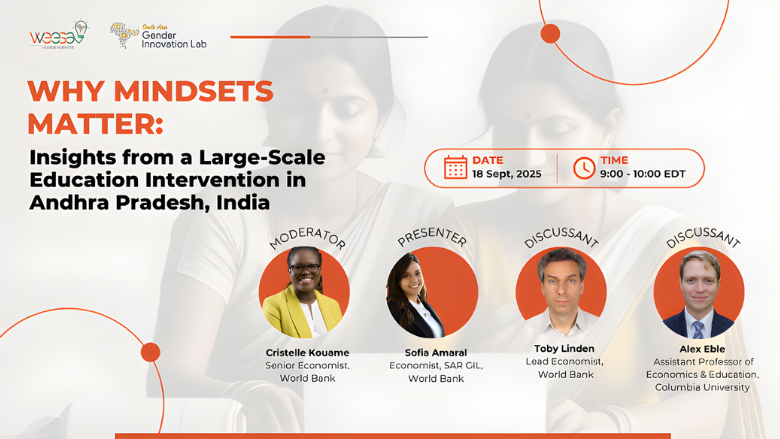
Why Mindsets Matter: Insight from a Large-Scale Education Intervention in Andhra Pradesh, India
The session spotlighted Andhra Pradesh’s Entrepreneurial Mindset Development Program (EMDP), which is helping grade 9 students—especially girls—gain the confidence, skills, and aspirations they need to succeed in school, work, and life. Speakers shared emerging evidence on how the program strengthens agency, financial literacy, and entrepreneurial thinking, and discussed why nurturing mindsets is key to preparing young people for today’s evolving labor market.

Women's Voices and Choices: Exploring Agency, Decision-making, and the Influence of Women’s Groups
WEESA’s final Spring learning event for 2025 explored decision-making, agency, and the impact of group models. Drawing on unique data from the rural Philippines and analyzing the causal mechanisms through which groups improve outcomes for women and girls in low- and middle-income countries, the speakers shared key findings and discussed implications for measurement, programming, and future research.
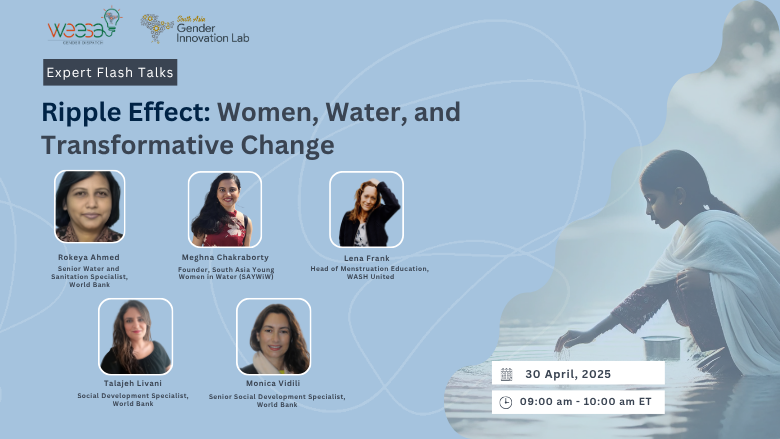
Ripple Effect: Women, Water, and Transformative Change
The event featured an engaging series of flash talks that explored the connections between water and women’s empowerment. It highlighted how women’s leadership, employment, and entrepreneurship are driving innovative solutions in the water sector—challenging gender inequalities and expanding access to clean water and sanitation for all.
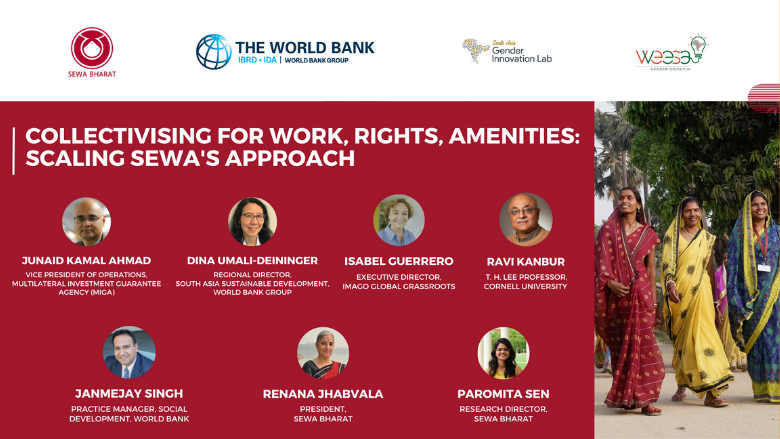
Collectivising For Work, Rights, Amenities: Scaling SEWA’s Approach
Speakers delve into the evolution of India's Self-Employed Women's Association (SEWA), a model of collectivization that has successfully empowered millions of women through building resilience and livelihood opportunities. They discuss the significant contributions of women workers in the informal sector and the potential to scale this approach, drawing on key insights from the recent research study, "Collectivizing for Work, Rights, Amenities: Scaling SEWA's Approach, which was supported by SAR GIL and the World Bank.