FEATURE STORYSeptember 4, 2025

Investing in Nutrition: Key to a More Productive Guatemala

In rural and indigenous communities in Guatemala, the Crecer Sano project seeks to reduce malnutrition. Investing in good nutrition from early childhood not only transforms children's lives, it also boosts the country's future.

In Guatemala, 46% of children under the age of two suffer from chronic malnutrition. This means that nearly half of Guatemalan children have their physical, cognitive, and economic futures compromised even before starting school. This reality places the country among those most affected by malnutrition worldwide.

Overcoming this situation requires comprehensive interventions starting from pregnancy and continuing through the first years of life. Adequate nutrition and access to safe water improve learning potential, school retention, and the likelihood of obtaining decent employment in adulthood. These are fundamental to building a healthy and productive human capital base that drives Guatemala’s development.

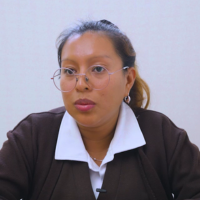
From the moment a woman is pregnant, we start monitoring to ensure her baby has adequate weight and height at birth. If we detect that the child is underweight, we guide the mother on how to feed herself at home.
Fatimetou Mint Mohamed
Sara Pacajoj
Nursing assistant in Semejá II Health Post
The World Bank

A Guatemalan baby is weighed at one of the health posts of the Crecer Sano project in the department of Quiché, Guatemala.

Photograph: Gerson Elizondo for The World Bank

The Power of the First Days

In the departments of Alta Verapaz, Chiquimula, Huehuetenango, Quiché, San Marcos, Sololá, and Totonicapán—all with high poverty levels—health personnel, midwives, social workers, educators, and nutritionists work daily with a focus on the first days of life, from conception to age two, which are critical for child development. Here, the Crecer Sano Project, an initiative of the Government of Guatemala with support from the World Bank, plays a key role in improving child nutrition indicators in the country.

“We start feeding the child from day one—with exclusive breastfeeding during the first six months. It is extremely important and is the only food the child needs during this period,” says Yoselin Mendoza, a nutritionist at the Potrero Viejo III Health Post in Quiché, who is aware of the importance of good nutrition from an early year of life.

She adds, “Breast milk is always available, it has no cost. It provides vitamins, minerals, and is the best for the child.” She notes, “Fortunately, in the communities we serve, I would dare say that most mothers breastfeed. We have first-time mothers and others with several children, and they have been able to breastfeed without difficulty.”

Signs of Change: More Exclusive Breastfeeding

Change is already being felt in the communities. A survey conducted in 2024 revealed that 70% of children in the seven program departments received exclusive breastfeeding during their first six months, surpassing the 65% target and marking clear progress compared to 59.4% recorded in 2022.

“They teach us to breastfeed, and as the nurses say, if we don’t give them breast milk, then they don’t grow up healthy and become weak,” says Laura Guarcas, a mother from the Semejá II community.

One of the pillars of the project is monitoring weight and height. “We monitor the growth of children under two years old on a monthly basis,” explains Yoselin Mendoza. “We focus on the first two years of life… if this child reaches their maximum development, their growth will be much more adequate… and they will be less affected by respiratory and diarrheal diseases that hinder their development and directly impact their nutrition.”

Sara Pacajoj, a nursing assistant, adds, “From the moment a woman is pregnant, we start monitoring to ensure her baby has adequate weight and height at birth. If we detect that the child is underweight, we guide the mother on how to feed herself at home.”

This monitoring enables early interventions, especially in areas where resources are scarce and access to medical care is limited. Verónica Orozco, Municipal Health District Coordinator of Zacualpa, adds, “Chronic malnutrition affects psychomotor development and the nervous system… leading to learning problems, school dropout, and limiting opportunities in adult life.”

The World Bank

Dominga Velásquez Mejía, a mother from the community of Potrero Viejo III, receives a nutrition counseling session for herself and her children with the assistance of a social worker, who acts as a translator.

Photograph: Gerson Elizondo for The World Bank

Well-Nourished Childhood, a Country with a Future

As part of one of its subcomponents, the project incorporates an educational communication and community participation strategy aimed at transforming household practices and improving child health.

Among the community participation actions, the “midwives as breastfeeding promoters” initiative stands out, reinforcing the role of local actors in promoting key practices from the earliest days of life. Both strategies drive sustainable changes in nutrition, hygiene, and childcare, through close and culturally relevant support to families, including personalized counseling, home visits, and other participatory community activities.

Currently, more than 2,000 primary health care workers have been trained in the seven departments covered by the project to guide families in adequate nutrition, hygiene, and early stimulation practices.

This is crucial, as Sara Pacajoj, Nursing Assistant in Semejá II, notes, “We still find mothers in the communities who give candy and soda as a first food, and we explain why they should not feed children this way.” This is confirmed by Laura Guarcas, who trusts that “they give us talks on how to feed… they tell us that if the child is well-nourished, they will perform better in school.”

Investing in good nutrition from early childhood not only transforms the child’s life but also drives the country’s future. A good start means more opportunities to learn, stay in school, and later access decent employment. As Yoselin Mendoza said, “They will be an adult who contributes to the country’s development and productivity.”

That is why it is so important to act in time: addressing chronic malnutrition is an investment in Guatemala’s economic development. The challenge is significant, but the work has already begun.

Blogs

    loader image

WHAT'S NEW

    loader image