- font-medium
- bg_blue_05
Highlights
- A new approach to forest management is helping Meghalaya’s tribal communities to reforest their degraded hillsides and revive their dwindling springs, while building a green economy and creating new nature-based livelihoods.
- The World Bank-supported Meghalaya Community Led Landscape Management Project adopted a holistic approach to landscape management, integrating traditional knowledge with scientific solutions.
- It empowered 400 village communities to revive their land, water, and forests, fostering a collective sense of ownership and responsibility.
- lp-body-content
- first-letter
Restoring the Environment and Helping Communities in Meghalaya
A new approach to forest management is helping Meghalaya’s tribal communities to reforest their degraded hillsides and revive their dwindling springs, while building a green economy and creating new nature-based livelihoods.
- lp-body-content
- first-letter
- lp-body-content
In India’s northeastern state of Meghalaya, Mrs. Balalupa Mawlong looks back nostalgically to a time when forests stretched across their rolling hillsides and springs cascaded down their valleys.
“When we were young, our forests were green and there were plenty of trees,” she recalled. “But now most of our trees have gone and water has become scarce.”
Although Meghalaya receives some of the heaviest rainfall in the country, the state has steadily lost much of its once-lush forest cover. More than half of its 55,000 documented springs have dried up or seen a drastic reduction in their flow.
Mrs. Mawlong acknowledges that human activities have contributed to this degradation. Many trees have been cut down for firewood or sold for timber to meet family expenses. The traditional practice of shifting cultivation – or jhumming - has also taken its toll.
The loss of forest cover has not only degraded the land and water sources, but also impacted Meghalaya’s people, most of whom depend on natural resources for their livelihood.
The loss is even more devastating as the area - one of the world’s 36 hotspots of biodiversity – is home to a unique species found nowhere else on the planet.
A holistic approach to landscape management
Since traditional methods of forest management have not been able to reverse this degradation, the Meghalaya government, in 2018, with support from the World Bank, undertook a holistic approach to landscape management through the Meghalaya Community Led Landscape Management Project.
“Meghalaya was facing severe environmental challenges - deforestation, depletion of water resources, and loss of biodiversity,” recalled Pyush Dogra, who led the project at the World Bank. “We struck a balance between the needs of the land and the people by creating a synergy between livelihoods and the environment.”
Six years after the project began, the impact is clearly visible. Mrs. Mawlong, now the chairperson of her village environment committee, points proudly to a pond brimming with water beside her. “This water body we have restored not only gives us drinkable water throughout the year but nourishes the vegetation and revives our dwindling medicinal plants.”
“Now,” she added confidently, “we have decided to take strict action against anyone who is destroying the environment.”
“The damage to mother nature was exceedingly high,” recalled Mr. Andy Wellborn Jyrwa from Ri Bhoi district, which borders neighboring Assam. “The project helped us restore our forests. After planting trees, we saw a rise in the water levels.”
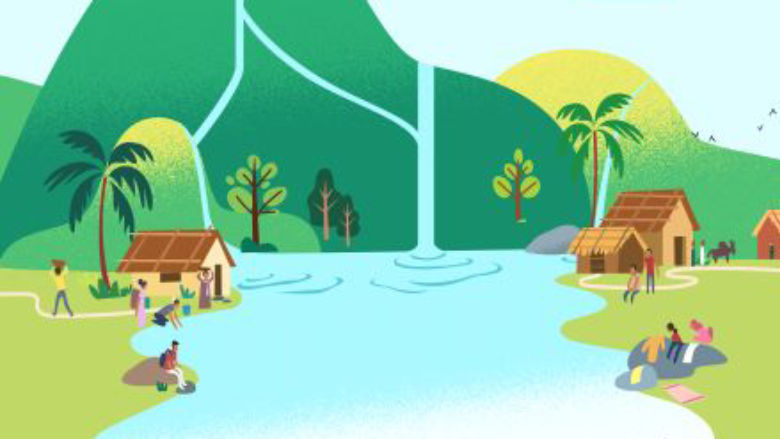
In the East Khasi Hills’ Mawteibah village, the community is now self-sufficient in water, thanks to the collective effort of its 141 households.
With water now easily available, residents feel a new sense of peace. “Earlier, our children had to fetch water before heading for class,” recalled Mrs. Mendoris Synrem from Umsarang village. “Now they go to school on time.”
Restoring the balance of nature
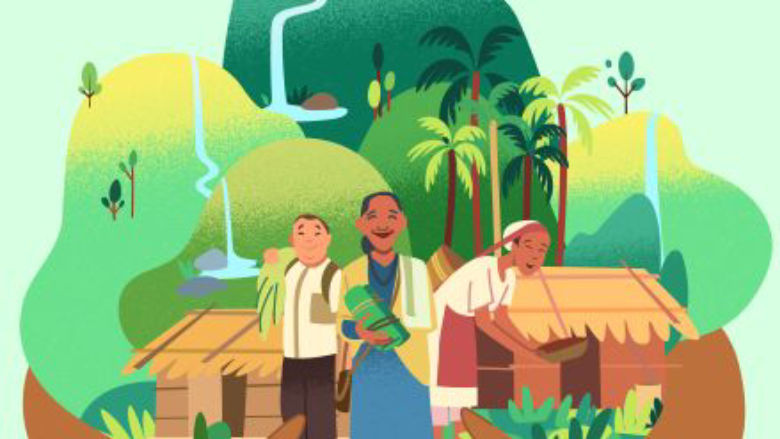
So, what did the project do? In keeping with Meghalaya’s long-held traditions, where tribal communities jointly own the natural resources, the project adopted a bottom-up approach. It equipped 400 village communities to revive their land, water and forests by marrying the traditional knowledge held by village elders with science and data-backed solutions.
Given the deep sense of unity and equality that prevails within Meghalaya’s tribal communities, everyone, young and old, worked together to restore their land, planting trees and building check dams, giving them a collective sense of ownership.
Importantly, women were given a key role in decision making. This marked a significant departure from the past. While Meghalaya’s communities have traditionally been matrilineal, women have seldom had a say in community affairs.
Creating new nature-based sources of income
But that was not all. To reduce the people’s dependence on the forests, the project helped create new nature-based livelihoods.
Standing proudly beside her fledgling flock of hens, Mrs. Bamutlangki Pariat, from the West Jaintia Hills’ Moodymmai village, explains that she now has a better source of income. “With Rs 25,000 from the project I have been able to buy chickens, together with the feed and materials to rear them. Now I don’t have to go out looking for work.”
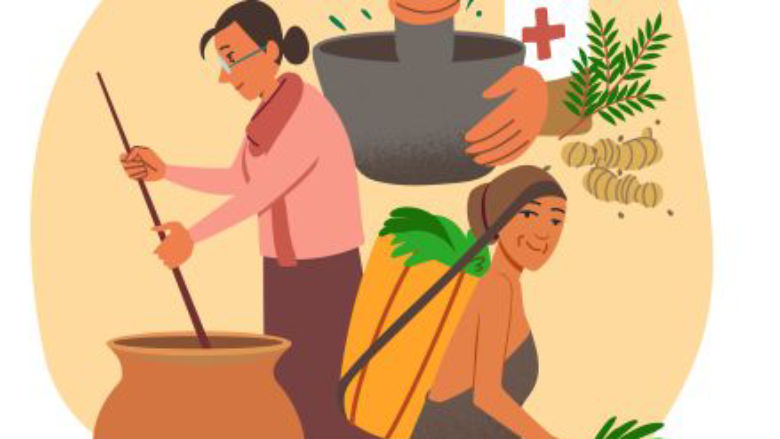
Others have started new enterprises too – from cow sheds to goat sheds and piggeries, to compost pits and nurseries for endangered species of medicinal plants.
Till date, agri-horticulture, nurseries and composting units have brought the residents of the 400 project villages an additional income of Rs. 1.30 crores.
Rejuvenating mine-spoiled lands
The project also helped restore Meghalaya’s mine-spoiled lands. The practice of ‘rat-hole’ coal mining, banned since 2014, had not only degraded the environment but created numerous health problems as well.
These areas were rehabilitated through the large-scale plantation of aromatic grasses such as citronella, which command a high market value, ensuring that both ecological and economic benefits continue over the long term.
In the East Jaintia Hills’ Mynthlu village, for instance, a once-barren coal depot is now a flourishing plantation of lemongrass and citronella. “I have witnessed how this initiative has not only restored the fertility of our soil but also rejuvenated our community,” said Mr. Samuel Latam, a resident. “This is more than just land recovery. It has given us economic opportunities and renewed our sense of hope for the future.”
Since 2021, the project has helped restore 672 hectares of Meghalaya’s mine-spoiled land into thriving plantations..
Ensuring the future
To ensure that communities can sustain their efforts over the long term, young people, both boys and girls, were trained to map and geo-tag their springs and other natural resources and develop landscape management plans that strike a balance between the needs of the people and the environment.
Altogether, 13,000 people - over a third of whom were women - were trained in GIS and other technologies, together with financial and procurement management.
“The project has given us valuable insights about caring for our environment,” said Mr. Banjop Jyrwa, from Ri-Bhoi district’s Umsarang village, who was trained in GIS technology.
Given the project’s success, the Government of Meghalaya is expanding this approach across the state through its pioneering ‘Green Meghalaya’ initiative. Neighboring states are following suit.
“The project is the first-of-its-kind in India’s natural resource management sector. It shows that adopting a landscape management approach can help conserve and protect valuable natural capital so that current and future generations can enjoy the benefits of a healthy ecosystem,” said Mr. P. Sampath Kumar, the project director.
As the world looks for ways to build resilience to climate change, Meghalaya has shown that addressing landscape challenges comprehensively and using the transformative power of communities can go a long way in restoring a degraded environment, while benefitting communities both socially and economically.
Living Root Bridges
For centuries, Meghalaya’s Khasi and Jaintia tribes have woven the roots of their indigenous Ficus elastica trees to create bridges over their rivers. These unique Living Root Bridges - known locally as Jingkieng Jri – can be 4.50 m to 40 meters long and take up to 40 years to be fully formed. Today, these bridges serve as a renowned example of the region's natural infrastructure that uses nature-based solutions to address local needs.
Since many of these bridges had been damaged by flash floods and landslides from the region's heavy rains, the project raised the communities’ awareness about the uniqueness of their cultural heritage, which dates back over 2,000 years. They were then helped to restore their bridges by tapping into the traditional knowledge held by village elders. Since then, the project has promoted research-based conservation, set up community nurseries as well as traditional nature homes (Ïing Mariang) and community learning spaces (Shlem Jingtip) where elders can pass on their knowledge to younger generations. The project is now conducting thorough site research and detailed analysis and compiling a dossier for the nomination of Living Bridges as a UNESCO World Heritage site, highlighting the intricate links between nature and culture for a global audience.
As of 2024, the project helped communities conserve 131 registered Jingkieng Jri (Living Root Bridges).
Payment for Ecosystem Services
Since paying for the conservation of existing forests is far more economical than regrowing a lost forest, the project launched the Payment for Ecosystem Services program that incentivizes communities to conserve their natural forests.
Meghalaya is India’s first state to implement this program. This is also the largest such initiative in the country.
Under the program, landholders who conserve their forests are eligible for an annual reward per hectare. Where the land includes sacred groves, living root bridges, eco-sensitive zones or elephant corridors, more funds are available.
The initiative was piloted in two critical catchments that feed Meghalaya’s largest towns - Shillong and Tura. Around 18,700 hectares of individually owned forest and around 23,500 hectares of community owned forests have been brought under this initiative.
RELATED
RELATED
- lp-body-content