col-xs-12
col-sm-12
col-md-1
col-lg-1
col-xs-12
col-sm-12
col-md-10
col-lg-10
col-xs-12
col-sm-12
col-md-1
col-lg-1
col-xs-12
col-sm-12
col-md-12
col-lg-12
videoType
you-tube
videoUrl
11WqcqGA2eM
title
What’s Happening in Zimbabwe One Year After Cyclone Idai?
keyFrameImage
https://i.ytimg.com/vi/11WqcqGA2eM/maxresdefault.jpg
description
About a year after Cyclone Idai hit South-Eastern Africa, the Idai Recovery Project is boosting recovery, resilience and social inclusion for over 270,000 people in Zimbabwe with environmental, COVID-19, health and livelihood support. When cyclone Idai hit South-Eastern Africa, it struck with torrential rains, violent winds, flash floods, and widespread destruction. The cyclone wrecked lives, livelihoods and districts, causing US $622 million of damages in Zimbabwe. To overcome the destruction, the World Bank, the UN and partners have been working with the people of Zimbabwe through the Idai Recovery Project (ZIRP). The project is boosting recovery, resilience and social inclusion for over 270,000 people affected in Zimbabwe with environmental, COVID-19, health and livelihood support for communities. Still haven’t subscribed to World Bank YouTube? ► ► ► http://wrld.bg/x4SB50x47Lu Get more stories on development with our newsletter. Choose from different categories and select your preferred language: https://www.worldbank.org/en/newsletter-subscription ABOUT THE WORLD BANK GROUP The World Bank Group is one of the world’s largest sources of funding and knowledge for low-income countries. Its five institutions share a commitment to reducing poverty, increasing shared prosperity, and promoting sustainable development. Website: http://www.worldbank.org Immersive Stories: https://www.worldbank.org/en/who-we-are/news/biggerpicture Events: http://live.worldbank.org Follow us on social media ► ► ► Facebook: http://www.facebook.com/worldbank Twitter: http://www.twitter.com/worldbank Instagram: http://www.instagram.com/worldbank LinkedIn: https://www.linkedin.com/company/the-world-bank
showTimestampAndTranscript
no
duration
160
lastUploadedDate
2020-09-28T13:12:10Z
col-xs-12
col-sm-12
col-md-3
col-lg-3
col-xs-12
col-sm-12
col-md-7
col-lg-7
  • font-medium
  • bg_blue_05

STORY HIGHLIGHTS

  • Over a year after Cyclone Idai hit South-Eastern Africa, the Zimbabwe Idai Recovery project continues to improve the livelihoods, food security, health, and education of more than 270,000 people
  • The $72 million project has provided immediate support, rebuilt community schools and roads, and rehabilitated communal water, irrigation and sanitation systems to uplift local economies—through partnerships with UNOPS, UN technical agencies, and local communities
  • The project is also helping to mitigate the impact of COVID-19, develop a country-wide aid tracking system, and facilitate agile decision making to tackle the impact of the pandemic
col-xs-12
col-sm-12
col-md-2
col-lg-2
col-xs-12
col-sm-12
col-md-3
col-lg-3
col-xs-12
col-sm-12
col-md-7
col-lg-7
  • lp-body-content
  • first-letter

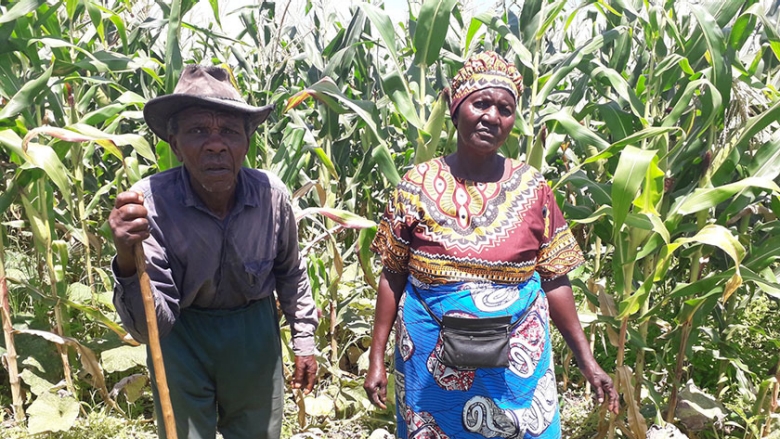
HARARE, November 10, 2020—When Cyclone Idai hit more than a year ago, Nancy and Dingane Sithole awoke to discover their house and property demolished. Their harvest and stored grains from the previous season, which would have sustained them through the next, were ruined. The cyclone had hit before they could reap the profits of their hard work.

“When the cyclone hit, it was the most devastating moment in my life,” said Nancy, standing outside of their farm in Chipinge, Eastern Zimbabwe. “We were caught unawares, and it was worsened by the fact that the rains pounded without ceasing during the night. Houses were flooded; some walls gave in, while roofs were blown off. It was very terrifying.”

The couple, ages 78 and 95 respectively, were two of thousands of Zimbabweans severely affected by the impact of Cyclone Idai, which caused catastrophic damage in Mozambique, Zimbabwe and Malawi in 2019. In Zimbabwe alone, the disaster displaced over 60,000 people, devastated over 50,000 households, and inflicted over $622 million in damages to property, land and the environment.
Working to respond to these needs through the $72 millionZimbabwe Idai Recovery Project (ZIRP), the Zimbabwe government galvanized global expertise from partners, including the World Bank, UNOPS, the Food and Agriculture Organization (FAO), UNICEF, the World Food Programme (WFP), the World Health Organization. The combined effort has contributed to restoring lives and livelihoods by boosting crop and livestock production, rehabilitating communal irrigation systems, and building disaster resilience through partnerships with local communities. Nearly 240,000 people received help through cash transfers for food. Farmers were offered seeds to support their trade, boost the local economy and bolster food security.

“There was swift response, as different organizations started assisting us. I have to be honest with you, I had never received food or clothing handouts in my life,” Nancy recalled. “I was not sure how I would have managed to plant for the current season as I was struggling to feed my grandchildren and would not have managed to buy seed and fertilizer.”

To stave off hunger from famine, over 7,400 households received agricultural inputs including maize, cowpea and basal fertilizer, with more than half led by women. Through partnerships with the FAO, nearly 6,000 people were trained in food production, and about seven million doses of vaccination were provided for cattle and livestock. Additionally, nearly 1,000 smallholder farmers received 1,000 tons of survival feed, which in turn supported more than a thousand families.
https://delivery-p136806-e1377785.adobeaemcloud.com/adobe/assets/urn:aaid:aem:2e197777-c35b-42ec-8c5f-23738e9a5e43/as/a-story-of-resilience-in-zimbabwe-cultivating-dreams-for-a-better-future-after-cyclone-idai-780x439.jpg
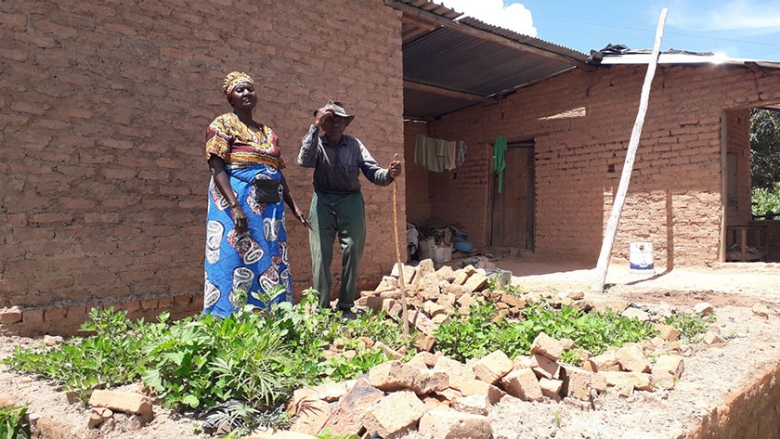
Dingane and Nancy Sithole hope to harvest food this year thanks to the seed input from FAO. Photo: Food and Agriculture Organization of the United Nations
Dingane and Nancy Sithole share a snapshot of their living conditions following Cyclone Idai in Chipinge.
Photo: Food and Agriculture Organization of the United Nations

In Chimanimani and Chipinge, the country’s worst affected districts, community-driven infrastructure restoration projects employed about 25 people per project. To limit the disproportionate impact of the disaster on women and girls, at least 45% of people employed are women, with higher percentages in some locations. At least 300 community workers and about 12,000 people will benefit from this restoration process in collaboration with UNOPS. Additionally, 13 community assets, including irrigation systems, roads, and gardens have been fully rehabilitated. Each community project is led by a female and male supervisor, to promote gender equality, social protection, and boost social inclusion in re-building communities through these partnerships with the WFP via a Food Assistance for Assets program.

Additionally, nearly 50,000 people are receiving healthcare through the combined efforts of the WHO and UNICEF. Nearly a million people in high-risk areas are receiving health information on COVID-19. Through UNICEF, approximately 20,000 children are receiving school supplies and education services.

As part of the World Bank’s strategic assistance to the government, a $3 million grant has been provided from the State and Peacebuilding Fund.

“The grant will promote risk-informed development, enhance post-disaster coordination and build stakeholder capacity for disaster risk management,” said R. Mukami Kariuki, World Bank Country Manager for Zimbabwe. “It will also strengthen monitoring and targeting mechanisms at all levels to enable prevention, early warning and timely response. Informed decision-making is the key to building resilience and ensuring disaster preparedness throughout the country.”

lp-heading-top-medium
lp-heading-bottom-medium
col-xs-12
col-sm-12
col-md-2
col-lg-2
  • lp-body-content
  • first-letter