col-xs-12
col-sm-12
col-md-1
col-lg-1
col-xs-12
col-sm-12
col-md-10
col-lg-10
col-xs-12
col-sm-12
col-md-1
col-lg-1
col-xs-12
col-sm-12
col-md-12
col-lg-12
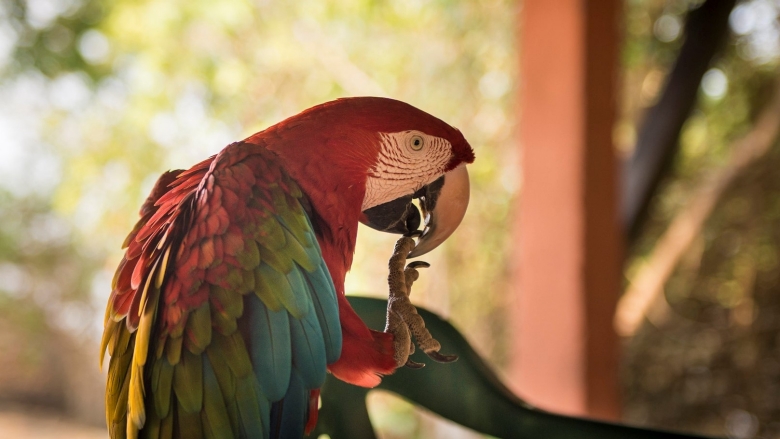
A Parrot cleaning his beek
Photo credit: Nadège Mazars/World Bank.
col-xs-12
col-sm-12
col-md-3
col-lg-3
col-xs-12
col-sm-12
col-md-7
col-lg-7
  • font-medium
  • bg_blue_05

STORY HIGHLIGHTS

  • For decades, illegal hunting and overfishing in Colombia’s Orinoquia region contributed to significant biodiversity loss.
  • But leveraging financing opportunities can support new economic options for local communities, while also helping to preserve the enormous biodiversity, carbon and ecosystem value of the region.
  • The World Bank’s BioCarbon Fund Initiative for Sustainable Forest Landscapes (ISFL) aims to support these efforts by building an enabling environment in Orinoquia for economic growth in harmony with environmental conservation.
col-xs-12
col-sm-12
col-md-2
col-lg-2
col-xs-12
col-sm-12
col-md-3
col-lg-3
col-xs-12
col-sm-12
col-md-7
col-lg-7
  • lp-body-content
  • first-letter

Jacinto Teheran was just a teenager when he started hunting wildlife in the biodiversity-rich forests and rivers of Colombia’s Orinoquia region.

“I've been everything -- a fisherman, a farmer, and a hunter, I hunted jaguars to sell the fur. Northern tiger cat skin was also worth a lot of money,” recalls the 60-year-old resident of Puerto Carreño, a small town on the northeastern border with Venezuela surrounded by a multitude of rivers, forests, and savannas.

The ecosystems in the area are home to thousands of species, which in recent years have suffered declining populations due to overfishing and hunting. Since 1981, it has been illegal in Colombia to hunt jaguars for international trade. Both the jaguar and northern tiger cat are on the Red List of Threatened Species kept by the International Union for Conservation of Nature.

It was only when Teheran started working for Colombia’s Omacha Foundation 16 years ago that he began to realize the impact his hunting was having on the area.

Omacha is a non-governmental organization that protects freshwater biodiversity in the Orinoquia and Amazonia regions. The Foundation owns a natural reserve called Bojonawi (‘otter’ in the Sikuani language), which protects river dolphins, howler monkeys, tapirs, foxes, and many other species.

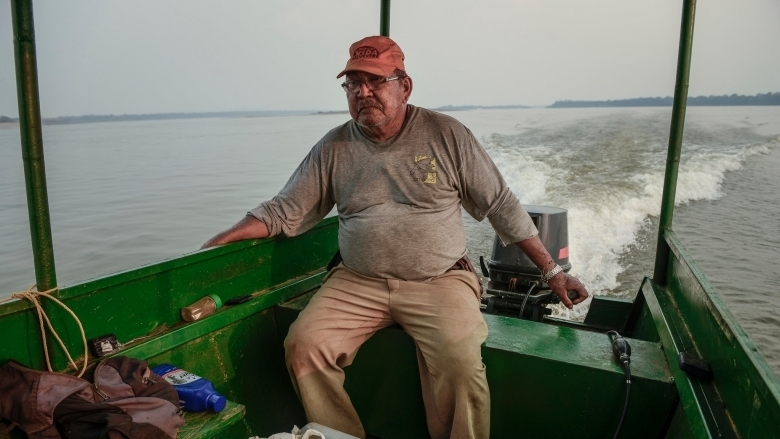
Now, instead of hunting, Teheran brings researchers and tourists by boat into Omacha’s reserve. He has also collaborated as a local researcher in several university-level research projects.
col-xs-12
col-sm-12
col-md-2
col-lg-2
  • lp-body-content
  • first-letter
col-xs-12
col-sm-12
col-md-1
col-lg-1
col-xs-12
col-sm-12
col-md-10
col-lg-10
expert-quote
I don't have a formal education in ecology, but with Omacha, I have acquired a lot of knowledge about frogs, turtles, dolphins, jaguars, alligators, and snakes that now inspires me to protect and conserve the region.
Jacinto Teheran
false
col-xs-12
col-sm-12
col-md-1
col-lg-1
col-xs-12
col-sm-12
col-md-3
col-lg-3
col-xs-12
col-sm-12
col-md-7
col-lg-7
  • lp-body-content
videoType
you-tube
videoUrl
AV8sSpDS28M
title
Conserving a Region Rich in Biodiversity
keyFrameImage
https://i.ytimg.com/vi/AV8sSpDS28M/sddefault.jpg
description
A non-profit organization in Colombia is helping to restore threatened biodiversity in the Orinoquia region by re-training hunters to assist in conservation efforts. The World Bank’s BioCarbon Fund Initiative for Sustainable Forest Landscapes aims to support these types of efforts by building an enabling environment in Orinoquia for economic growth in harmony with environmental conservation. For more: https://www.biocarbonfund-isfl.org/ https://www.worldbank.org/en/country/colombia Still haven’t subscribed to World Bank YouTube? ► ► ► http://wrld.bg/x4SB50x47Lu Get more stories on development with our newsletter. Choose from different categories and select your preferred language: https://www.worldbank.org/en/newsletter-subscription ABOUT THE WORLD BANK GROUP The World Bank Group is one of the world’s largest sources of funding and knowledge for low-income countries. Its five institutions share a commitment to reducing poverty, increasing shared prosperity, and promoting sustainable development. Website: http://www.worldbank.org Immersive Stories: https://www.worldbank.org/en/who-we-are/news/biggerpicture Events: http://live.worldbank.org Follow us on social media ► ► ► Facebook: http://www.facebook.com/worldbank Twitter: http://www.twitter.com/worldbank Instagram: http://www.instagram.com/worldbank LinkedIn: https://www.linkedin.com/company/the-world-bank
showTimestampAndTranscript
no
duration
90
lastUploadedDate
2020-03-20T15:16:18Z

Part of Omacha’s success has come from working with local people such as Teheran to protect the area’s rivers and forests. But there is still much work to be done.

The region’s biodiversity remains threatened by illegal practices, unsustainable land use, major agro-industrial initiatives, hunting, and pollution. These threats have been worsened by a lack of law enforcement, high poverty, and fragmented, unreliable information on the territory. Together, these realities pose a big obstacle for decision-makers to come up with sustainable land use plans and policies.

Two World Bank programs are seeking to contribute to the sustainable development and conservation of this region, which is considered one of the world's last agricultural frontiers.

In May 2019, Colombia launched its Sustainable Low-Carbon Development Project in the Orinoquia region, supported by the BioCarbon Fund Initiative for Sustainable Forest Landscapes (ISFL) managed by the World Bank and backed by donor governments – Germany’s Bundesministerium für Umwelt, Naturschutz und nukleare Sicherheit (BMU), Norway International Climate and Forest Initiative (NICFI), Swiss Agency for Development and Cooperation (SDC), United Kingdom’s Department for Business, Energy and Industrial Strategy (BEIS) and Department for Environment, Food and Rural Affairs (DEFRA), and the United States State Department (DOS).

“The link between healthy ecosystems and healthy forests is undeniable. That’s why a central piece of the ISFL program in Colombia is supporting the protection of critical ecological biodiversity within at-risk landscapes,” says ISFL Fund Manager Roy Parizat.

The ISFL program is helping to build an enabling environment that will support economic growth in harmony with environmental conservation in the region. It is led by Colombia’s Ministry of Agriculture and Rural Development in partnership with the Ministry of Environment, the National Planning Department and the National Hydrological and Meteorological Institute

The Orinoquia Integrated Sustainable Landscapes project, supported by the Global Environment Facility (GEF), is also working in the Orinoquia region to collect information on the Colombian region's critical biodiversity and ecosystem services. The project focuses on improving governance in existing and future protected areas, as well as supporting ecological restoration and the transition to more sustainable productive systems. This work is expected to have a positive impact on the important water regulation functions the region provides.

Both programs are seeking to create better conditions for biodiversity conservation in the region.

“There is a lot to teach people,” says Teheran. “Animals are very important, and we are running out of what we have. We don’t want to lose our biodiversity, and if we do not protect it, it will disappear.”

lp-heading-top-medium
lp-heading-bottom-medium
col-xs-12
col-sm-12
col-md-2
col-lg-2
  • lp-body-content