


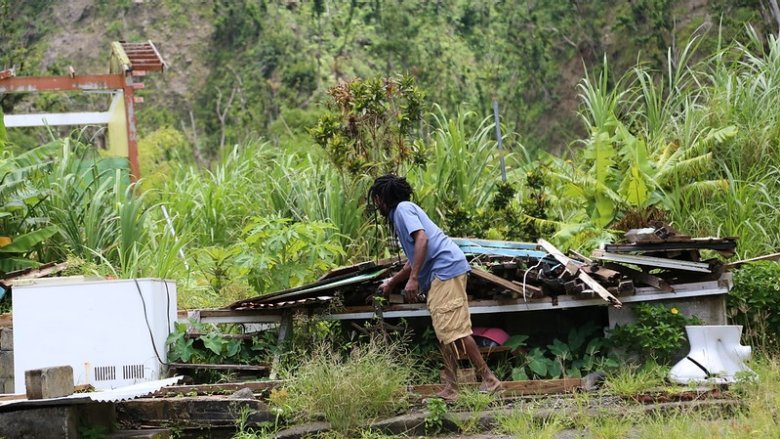
The World Bank Group’s new Crisis Preparedness and Response Toolkit introduces an innovative suite of tools to help developing countries better respond to crises and prepare for future shocks. This Crisis Toolkit aims to empower these countries in the face of crises, supporting impactful development and ultimately contributing to achieving a world free of poverty on a livable planet.
Through the Crisis toolkit, the Bank provides more flexibility to help countries put in place more contingent resources and be better prepared for future crises. It will also speed and scale up access to new financing for budget support when disasters hit, giving countries immediate access to money to manage the impact of a disaster and assist their citizens.
The new Crisis Toolkit fills knowledge gaps, drawing on lessons learned from earlier responses to crises. It also substantially expands the tools available to countries to ensure more comprehensive protection in times of crisis. Countries can leverage these new tools further by undertaking crisis preparedness reforms and other institution-strengthening measures. This will foster resilience in the long run.
What’s in the New Toolkit
Fast access to financing for emergency response: This includes the Rapid Response Option (RRO), which allows countries to quickly repurpose and use up to 10% of their undisbursed Bank financing across the portfolios of Investment Lending and Program for Results to address emergency needs during a crisis. This can be done through Contingent Emergency Response Project (CERP) and Development Policy Financing (DPF) Catastrophe Draw Down Option (Cat DDO).
Substantially scaled-up access to pre-arranged and quick new financing for emergency response: The World Bank Group now provides additional flexibility to help countries put in place more contingent resources to be better prepared for future crises through the DPF Cat DDO and Investment Policy Financing (IPF) DDO. It also expedites access to new financing for budget support when disasters hit through the scalable DPF, giving countries immediate access to financing to manage the impact of a disaster and support their citizens.
Expanded catastrophe insurance: The World Bank Group offers all countries the option of embedding catastrophe bonds, insurance, and other risk management products into their Bank financing operations. Governments could then be eligible for a payout from insurance mechanisms in a crisis without taking on more debt.
Pause in debt service: The World Bank Group has expanded the Climate Resilient Debt Clause (CRDC) to cover all existing loans in eligible countries, allowing borrowers to defer interest and fee payments with fees covered by concessional resources. We have expanded also CRDC coverage to a wider spectrum of perils such as droughts, floods, and health emergencies caused by a biological event. We have also simplified and made the process faster for clients to apply to delay repayments by eliminating certain parametric triggers. Now, once a country has declared a national emergency following a catastrophic event, a request can immediately be submitted to the World Bank to defer payment on a loan.
Status Update
We are rapidly rolling out the new Crisis Toolkit. As of March 3, 2025, a total of 57 countries have put in place at least one instrument of the Crisis Toolkit. This includes:
38 countries that have availed themselves of the Rapid Response Option;
31 countries with DPF Cat DDOs;
2 countries with a CERP;
6 countries with an IPF DDOs;
20 countries with CRDCs;
and 3 DRT transactions.
With those instruments, countries have pre-arranged contingent resources and Cat Bonds/Insurance, thereby allowing them to focus on disaster recovery.
Countries are already using the crisis toolkit instruments to respond to crises. In December 2024, Honduras, Romania, and Vanuatu activated the RRO to repurpose undisbursed balances for emergency response. When Hurricane Beryl struck the Caribbean in July 2024, St. Vincent and the Grenadines took advantage of the CRDC. Between July and December, 2024, Grenada, Panama, and Romania drew down their DPF Cat DDOs following natural disasters.
Last Updated: Mar 06, 2025