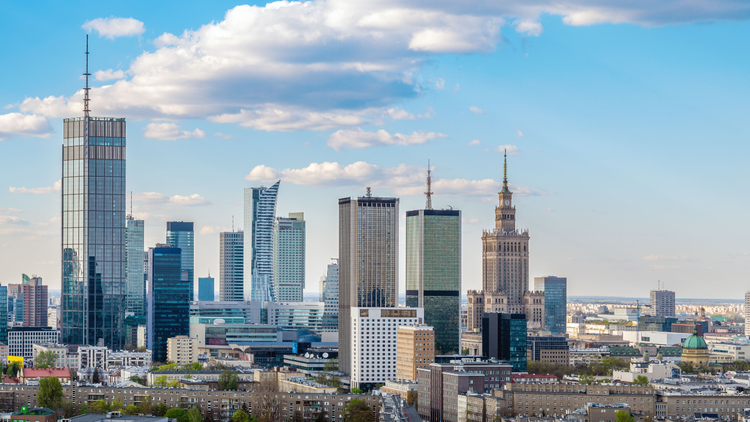
Poland is the largest economy in Central Europe, and GDP is expected to approach $1 trillion in 2025.
Since the return to the market economy in the 1990s, Poland has experienced remarkable economic success. Its accession to NATO in 1999 and the European Union (EU) in 2004 have firmly placed the country in the European and Trans-Atlantic community. Poland’s economy is characterized by its resilience (an over 30 30-year growth streak only briefly interrupted by a shallow COVID-19-induced recession), relatively strong diversification, and openness.
After more than three decades of development success, Poland is at a critical juncture. In order to ensure a sustainable and resilient future amid complex external and internal challenges and continue convergence to the EU’s top economies, Poland must rekindle its growth model and pursue next-generation reforms, engaging in a new virtuous cycle of investment, infusion, and innovation.
To be able to enter new global and regional value chains, boost labor productivity, and ensure high-quality jobs for citizens, Polish firms need to invest in research and development, human capital (including re-skilling and upskilling of employees, as well as promoting life-long learning), and technology adoption. Public sector reforms and accelerated private-sector investments are essential in this respect.
The ongoing transition to clean and affordable energy sources is key to ensure the competitiveness of Polish firms, as well as the health and the well-being of citizens. Building economic and environmental resilience in the face of strained water resources will also be key to long-term sustainability.