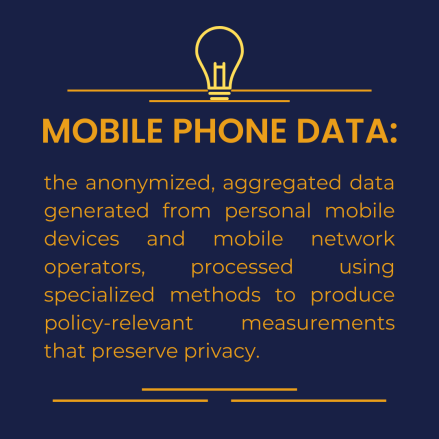
Countries such as The Gambia, Kazakhstan, Brazil and Haiti are demonstrating the power of mobile phone data (MPD) to address pressing policy challenges that demand timely insights. These examples show how anonymized MPD can be put to work toward statistical modernization, responsive policy making, and to improve the delivery of public services.
The World Bank’s Global Data Facility – Mobile Phone Data (GDF–MPD) Program is helping low- and middle-income countries integrate MPD into their national data systems. The GDF–MPD window, the largest global initiative of its kind, currently supports 24 country programs advancing responsive statistics and policy insights through Cohort 1 and Cohort 2, with a goal of reaching 30 countries by 2030.
In its first year of operation, the GDF–MPD Program has trained more than 1,000 country stakeholders, supported six initiatives in formalizing public–private data partnerships, and helped over a dozen country teams deliver MPD-based statistics and policy measurements in areas such as tourism, transport, social protection, the information society, public health, migration, dynamic population, and disaster response..
Working closely with initiatives such as the UN-CEBD Mobile Phone Task Team, the GDF–MPD promotes global standards, public goods, and best practices for the responsible use of mobile phone data.
Through a Country Cohort support model, the program provides training, technical assistance, and peer learning opportunities that build local capacity, strengthen governance, and accelerate the durable use of MPD for public good.