col-xs-12
col-sm-12
col-md-12
col-lg-12

col-xs-12
col-sm-12
col-md-12
col-lg-12
videoType
you-tube
videoUrl
lKPhfikc_XI
title
Gender Dimensions of Forced Displacement
keyFrameImage
description
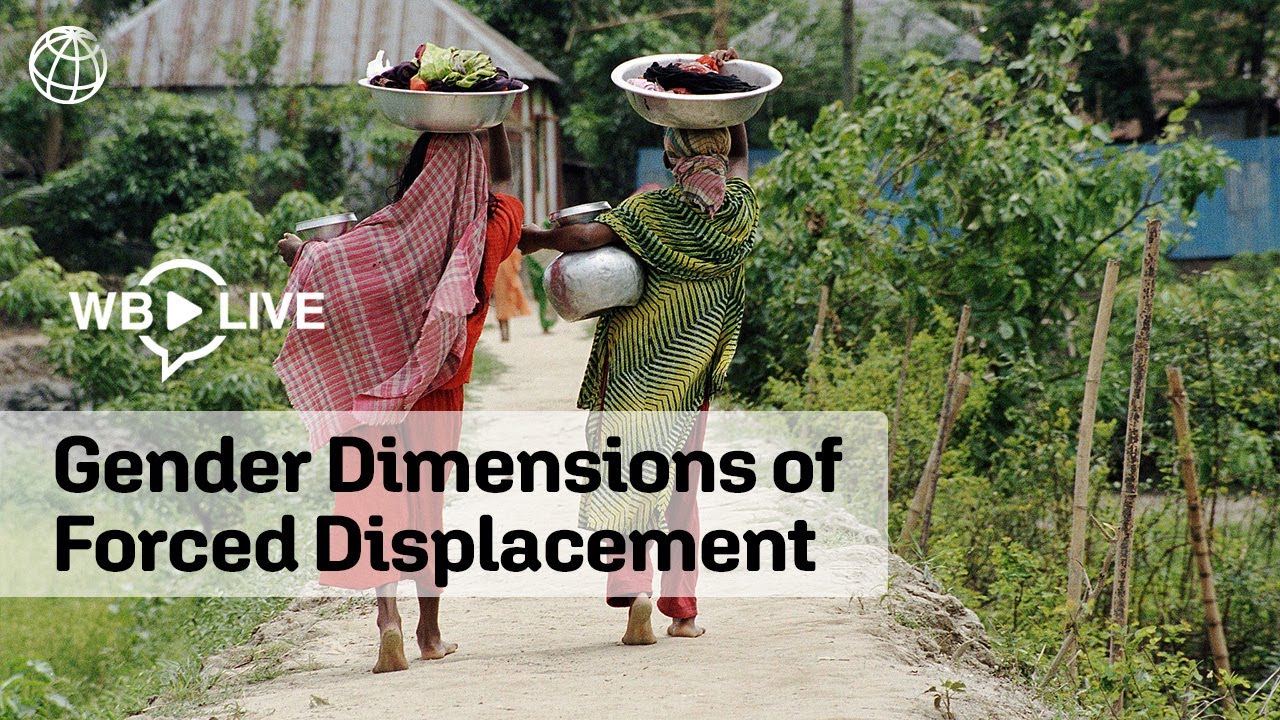
The work done by the Violent conflict and the rapid onset of climate change are sending rates of forced displacement to unprecedented levels. At the end of 2020, there were over 80 million forcibly displaced persons worldwide, doubling since 2010. Although commitments to addressing the crisis are growing, knowledge gaps surrounding the impacts of forced displacement persist, especially in terms of how men and women are affected differently. The World Bank’s Gender Dimensions of Forced Displacement (GDFD) program has sought to bridge some of these gaps by studying how gender inequality interacts with and compounds forced displacement, specifically in terms of poverty, livelihoods, gender-based violence, and social norms. Bringing together researchers, practitioners, civil society and leaders, this high-level launch event aims to share new results from the GDFD program, review implications for policy design, and shed light on the importance of embedding principles of gender equality within the development of durable solutions to forced displacement. Learn more: https://live.worldbank.org/gender-dimensions-forced-displacement?cid=ECR_YT_Worldbank_EN_EXT ️🗣️ Speakers - Managing Director, Development Policy and Partnerships, World Bank - David Miliband, President and Chief Executive of International Rescue Committee (IRC) - Paula Gaviria Betancur, Member of the United Nations Secretary-General’s High-Level Panel on Internal Displacement - Cecilia Jimenez Damary, Special Rapporteur on the human rights of internally displaced persons - Saroj Kumar Jha, World Bank Regional Director, Mashreq Department - Gillian Triggs, UN Assistant Secretary-General and Assistant High Commissioner for Protection with UNHCR - Mamta Murthi, Vice President, Human Development, World Bank Moderator - Hana Brixi, Global Director, Gender Group, World Bank 📑 Agenda 00:00 Welcome, opening remarks, and the work done by the World Bank 06:15 The work done by the International Rescue Committee 26:38 The work done by the United Nations High Commissioner for Refugees 36:39 Long-term consequences of displacement / Programmatic response 43:20 Differentiated impacts of displacement on men and women / Syrian refugee crisis 51:44 Involving civil society to better understand and prioritize the needs 59:34 Closing remarks ABOUT THE WORLD BANK GROUP The World Bank Group is one of the world’s largest sources of funding and knowledge for low-income countries. Its five institutions share a commitment to reducing poverty, increasing shared prosperity, and promoting sustainable development. http://www.worldbank.org
showTimestampAndTranscript
yes
duration
4058
lastUploadedDate
2022-01-27T16:19:25Z
col-xs-12
col-sm-12
col-md-3
col-lg-3
col-xs-12
col-sm-12
col-md-7
col-lg-7
- add-style
- lp-body-content
Our fifth seminar, Gender Dimensions of Forced Displacement, showcased the launch of the World Bank Group’s yearlong Gender Equality and Development +10: Accelerate Equality initiative, which explores the important progress made and lessons learned in reducing gender gaps and increasing women’s economic empowerment over the last 10 years, and takes stock of remaining challenges, while strengthening partnerships with a diverse group of stakeholders in the quest to #AccelerateEquality. This high-level event brought together researchers, practitioners, civil society and leaders, sharing new results from the GDFD program, reviewing implications for policy design, and shedding light on the importance of embedding principles of gender equality within the development of durable solutions to forced displacement.
col-xs-12
col-sm-12
col-md-2
col-lg-2
everything
true
{"facets":[],"orderby":"contentDate desc","select":"*","searchFields":"*","search":"*","filter":"contentType eq 'Video'","top":20,"skip":0}
4
See Rest of Series
yes
no
yes