


Health care is a fundamental investment, one that can unlock human capital and economic dividends for countries, but the challenge to bring care to everyone that needs it requires political will, financing and partnership.
This was the main theme at the World Bank Group Spring Meetings public event, “Transforming Challenge into Action: Expanding Health Coverage for All” where World Bank Group president Ajay Banga announced an ambitious plan to support countries in delivering quality, affordable health services to 1.5 billion people by 2030. Read the press release here.
“We’ve got to fix what is a fundamental requirement for human existence in the form of health care and we have to make it available at a price that’s affordable,” said Banga during a fireside chat with Dr. Tedros Adhanom Ghebreyesus, Director-General, World Health Organization (WHO) moderated by international broadcast journalist Shakuntala Santhiran.
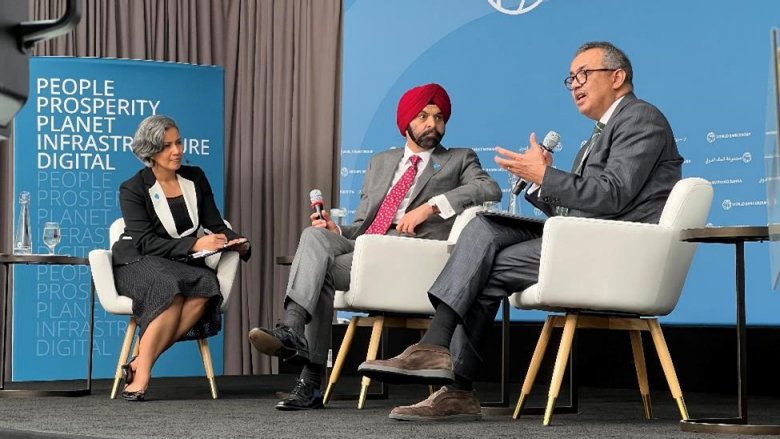
Dr. Tedros emphasized that 4.5 billion people lack access to health services and more than 2 billion face financial hardship when paying for services they need. This is compounded by a range of growing risks such as climate change, pandemics, fragility, and conflicts.
Calling service coverage and financing the biggest challenges, Dr. Tedros warned the world is off track for reaching the SDGs. Focusing on mothers and children, and strong primary health care, can cut mortality in many countries, he said. The investment in health is a political choice, Dr. Tedros said, and the WHO and other partners stand ready to help countries achieve their goals.
For decades, the World Bank Group has helped provide health services for women and children in more than 100 countries. This new target is part of a larger global effort to provide a basic standard of care through every stage of a person’s life—infancy, childhood, adolescence, and adulthood. The goal to deliver quality, affordable health services to 1.5 billion people by 2030 is an example of the commitment to become more impact-oriented and is the byproduct of a concerted effort to build a better bank amid the growing number of global challenges facing people and planet.
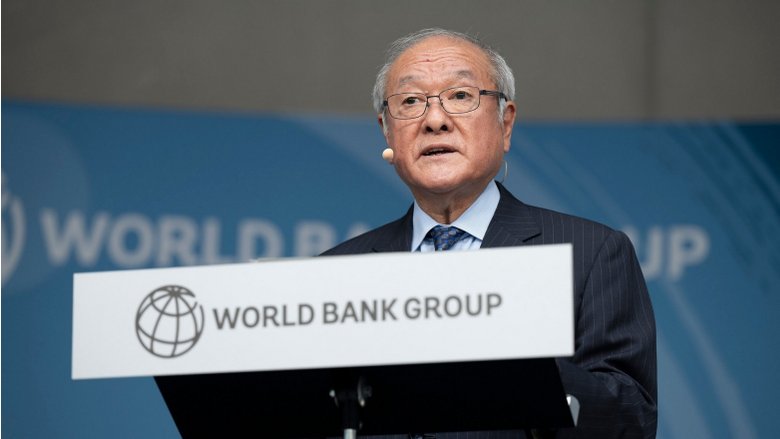
Following the fireside, Shun’ichi Suzuki, Minister of Finance, Japan announced his country’s establishment of a Universal Health Care (UHC) Knowledge Hub to enhance health and finance ministries’ capacity, an initiative also supported by the Bank and WHO.
Two separate panel discussions ensued with country and civil society leaders discussing what it will take to build resilient health systems, expand coverage and improve the health of people—especially the most vulnerable—so that countries can thrive.
Dr. Muhammad Pate, Minister of Health, Nigeria echoed the importance of political will and spoke about Nigeria’s reforms and the plan to expand quality basic health care to citizens in an affordable way, enabled by technology, a skilled workforce and geared toward improving concrete outcomes.
“On our path to UHC, these reforms are getting us closer to saving more lives, reducing physical and financial pain, producing health, and we do it for all Nigerians, so that we don’t leave anyone behind,” Dr. Pate said.
As finance minister of Indonesia, Sri Mulyani Indrawati said her country’s decision to invest in health is also an economic decision, since health is a cornerstone of human capital, in turn a cornerstone of inclusive economic growth.
“Universal health access is costly, but the rate of return is very high,” Indrawati said.
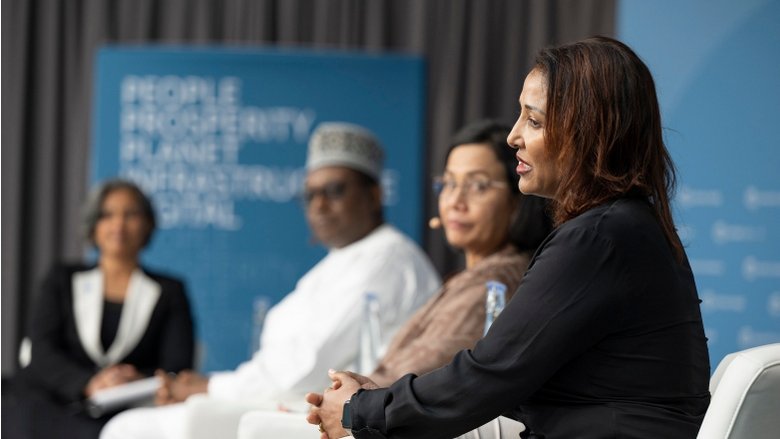
“We are living in fragile times; it’s easy to give up hope, but there’s a lot to be hopeful for,” said Senait Fisseha, Vice President of Global Programs, Susan Thompson Buffett Foundation. “We need to keep investing in a way that allows governments a country-led process, to achieve universal health coverage for all.”
Dr. Fisseha highlighted the importance of developing health systems with primary health care and integrated delivery as the focus instead of the disconnected “vertical programming” that exists in many developing countries. Investing in universal health coverage also serves to reach more women at scale, improving gender equity.
Mohamed Maait Minister of Finance, Egypt shared in detail how his country revamped the health system so that citizens can obtain health services where they prefer, thereby enabling competition between public and private providers that keeps service quality high. Lamia Tazi, CEO, Sothema, a pharmaceutical company in Morocco, spoke of the importance of creating a local R&D ecosystem and local manufacturing that assists in high quality and low costs.
On the challenge of financing, a theme that all panelists returned to multiple times, Joanne Carter, Executive Director of RESULTS, called on the international community and donors to support a strong IDA replenishment and more grant and concessional funding for poor countries, while also ensuring the financing reaches the most marginalized through strong primary care as the foundation.
Carter lauded the work of the Global Financing Facility for Women, Children and Adolescents (GFF), a global partnership housed at the World Bank for its focus on primary health care and said the fund could play a key role in crowding in more funding for health.
“We need donors to do their part,” Carter said. “Doubling our ambition and reaching the 1.5 billion people with services won’t be possible without the funding to match it.”
