col-xs-12
col-sm-12
col-md-1
col-lg-1
col-xs-12
col-sm-12
col-md-10
col-lg-10
col-xs-12
col-sm-12
col-md-1
col-lg-1
col-xs-12
col-sm-12
col-md-12
col-lg-12
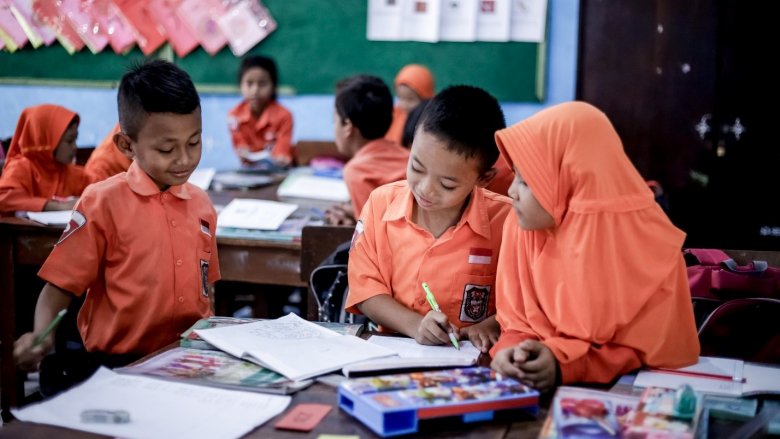
Students learning in school in Mojokerto, Indonesia
Copyright: Akhmad Dody/World Bank
col-xs-12
col-sm-12
col-md-3
col-lg-3
col-xs-12
col-sm-12
col-md-7
col-lg-7
  • font-medium
  • bg_blue_05

STORY HIGHLIGHTS

  • COVID-19 caused a hidden but massive collapse in the human capital of young people at critical moments in the life cycle.
  • The impact was much greater in low and middle income countries and poorer households, threatening to reduce lifetime earnings and increase inequality for decades to come.
  • A new World Bank report details the extent of COVID’s blow to human capital accumulation for people under the age of 25—the generation which will make up 90 percent of the prime-age workforce in 2050.
col-xs-12
col-sm-12
col-md-2
col-lg-2
col-xs-12
col-sm-12
col-md-3
col-lg-3
col-xs-12
col-sm-12
col-md-7
col-lg-7
  • lp-body-content
  • first-letter

A new World Bank report “Collapse and Recovery: How Covid-19 Eroded Human Capital and What to Do About It,” shows how the pandemic destroyed human capital at critical moments of the life cycle for an entire generation of young people in poorer countries.

It is the first comprehensive review of global data for young people in low- and middle- income countries who were under the age of 25 during the pandemic. It shows that the COVID-19 pandemic disrupted human capital accumulation at critical moments in the life cycle, derailing development for millions of children and young people in low- and middle-income countries.

“People under the age of 25 today—that is, those most affected by the erosion of human capital—will make up more than 90 percent of the prime-age workforce in 2050,” said Norbert Schady, Chief Economist for Human Development at the World Bank and a lead author of the report. “Reversing the pandemic’s impact on them and investing in their future should be a top priority for governments. Otherwise, these cohorts will represent not just a lost generation but rather multiple lost generations.”

With data and analysis for 2-3 countries per region, the report builds on dozens of studies and offers original research and new findings. It also provides clear policy options with a discussion on prioritization considering the importance of lifecycle transitions, different baselines and levels of pandemic-related damage, current and future fiscal tradeoffs, and other non-fiscal constraints.


col-xs-12
col-sm-12
col-md-2
col-lg-2
  • lp-body-content
  • first-letter
col-xs-12
col-sm-12
col-md-1
col-lg-1
col-xs-12
col-sm-12
col-md-10
col-lg-10
expert-quote
Today, a focus on human capital is more important than ever. Just as a swift and strong macroeconomic policy response helped many countries climb out of the pandemic recession, a similarly rapid and robust effort can help societies recover from the less visible collapse in human capital.
Mamta Murthi
Mamta Murthi
Human Development Vice President
false
col-xs-12
col-sm-12
col-md-1
col-lg-1
col-xs-12
col-sm-12
col-md-3
col-lg-3
col-xs-12
col-sm-12
col-md-7
col-lg-7
  • lp-body-content
In this video, report co-authors and Human Development Senior Economists Joana Silva and Alaka Holla give an overview of the findings. Watch them describe the scope of this hidden blow to human capital and what can be done to recover the losses.
videoType
you-tube
videoUrl
IsHmps4g5xo
title
COVID-19's Devastating Impact on Young People
keyFrameImage
https://i.ytimg.com/vi/IsHmps4g5xo/maxresdefault.jpg
description
The World Bank’s Human Development Flagship report, Collapse & Recovery: How COVID-19 Eroded Human Capital and What to Do About It, provides a comprehensive review of global data showing that the COVID-19 pandemic destroyed human capital at critical moments in the life cycle, scarring millions of children and young people in low- and middle-income countries. These human capital losses threaten to reduce lifetime earnings, increase inequality, and increase social unrest for decades to come. Countries must address these problems otherwise they face generations of scarred children and youth and a catastrophic blow to economic development. Learn more: http://wrld.bg/TLq750MTvRZ 💬 Subtitles (CC) available in English, Arabic, French, Portuguese, Spanish 0:00 Collapse & Recovery: Report overview 0:47 COVID-19 impact on early childhood 1:36 The impact of school closures 2:19 COVID-19 impact on youth 3:31 What can countries do? 5:21 Let's get started ABOUT THE WORLD BANK GROUP 🌐 The World Bank Group is one of the world’s largest sources of funding and knowledge for low-income countries. Its five institutions share a commitment to reducing poverty, increasing shared prosperity, and promoting sustainable development. http://www.worldbank.org - - - - - El impacto devastador de la COVID 19 en los jóvenes. En el Informe emblemático del Banco Mundial sobre desarrollo humano Colapso y recuperación: Cómo la COVID-19 socavó el capital humano y qué hacer al respecto, se presenta un examen exhaustivo de datos mundiales que muestran que la pandemia de COVID-19 destruyó el capital humano en momentos críticos del ciclo de la vida, afectando a millones de niños y jóvenes en los países de ingreso bajo y mediano. Estas pérdidas de capital humano amenazan con reducir los ingresos a lo largo de la vida, aumentar la desigualdad y el malestar social en las próximas décadas. Los países deben abordar estos problemas, porque de lo contrario tendrán que enfrentar generaciones de niños y jóvenes con secuelas producto de la pandemia y un duro golpe al desarrollo económico. Sepa más: http://wrld.bg/TLq750MTvRZ - - - - - O impacto devastador da Covid-19 nos jovens. O relatório emblemático do Banco Mundial sobre desenvolvimento humano, Queda e Recuperação: Como a Covid-19 deteriorou o capital humano e o que fazer a respeito, apresenta uma análise abrangente de dados globais que demonstram que a pandemia de Covid-19 destruiu o capital humano em momentos críticos do ciclo de vida, afetando milhões de crianças e jovens em países de renda baixa e média. Estas perdas de capital humano ameaçam reduzir os ganhos ao longo da vida e aumentar a desigualdade e a desordem social nas próximas décadas. Os países devem abordar esses problemas, caso contrário terão que enfrentar gerações de crianças e jovens com sequelas da pandemia e um duro golpe no desenvolvimento econômico. Saiba mais em http://wrld.bg/TLq750MTvRZ - - - - - Les effets dévastateurs de la COVID-19 sur les jeunes générations. La Banque mondiale vient de consacrer un rapport phare aux enjeux du développement humain, intitulé en anglais Effondrement et Relèvement : les effets de la COVID-19 sur l’érosion du capital humain et comment y remédier. Cet inventaire complet de la situation dans le monde révèle l’ampleur des destructions infligées au capital humain par la pandémie et ses effets dévastateurs sur des millions d’enfants et de jeunes dans les pays à revenu faible et intermédiaire, touchés de plein fouet à des moments cruciaux de leur formation. Les conséquences de ces pertes de capital humain risquent de se faire sentir pendant plusieurs décennies, en réduisant les revenus tout au long de la vie, en creusant les inégalités et en intensifiant les troubles sociaux. Les pays doivent agir pour y remédier, faute de quoi ils verront leurs jeunes générations pénalisées à vie, et leur développement économique gravement compromis. Pour en savoir plus : http://wrld.bg/TLq750MTvRZ - - - - - الأثر المدمر لجائحة كورونا على الشباب. تقرير البنك الدولي الرئيسي عن التنمية البشرية بعنوان "الانهيار والتعافي: كيف قلصت جائحة كورونا رأس المال البشري وما العلاج الذي ينبغي القيام به" يقدم مراجعة شاملة للبيانات العالمية التي تكشف أن جائحة كورونا أدت إلى تآكل رأس المال البشري في اللحظات الحرجة من دورة الحياة، مما ألحق أشد الضرر بمستقبل الملايين من الأطفال والشباب في البلدان منخفضة ومتوسطة الدخل. وتهدد هذه الخسائر في رأس المال البشري بتقليص الدخل المتحقق على مدار العمر، وزيادة مساحة عدم المساواة، فضلاً عن زيادة الاضطرابات الاجتماعية لعقود قادمة. وهذا الأمر يفرض على البلدان أن تعالج مثل هذه المشكلات، وإلا فإنها ستواجه أجيالاً من الأطفال والشباب ممن يعانون أشد الأضرار، ناهيك عن انتكاسة كارثية لجهودها نحو تحقيق التنمية الاقتصادية. لمعرفة المزيد: http://wrld.bg/TLq750MTvRZ
showTimestampAndTranscript
no
duration
353
lastUploadedDate
2023-02-16T15:00:35Z
lp-heading-top-medium
lp-heading-bottom-medium
col-xs-12
col-sm-12
col-md-2
col-lg-2
  • lp-body-content