00:00 We're at a very critical juncture in history and
00:03 so I think we need to really double down,
00:05 make a much stronger effort
00:08 to make sure that
00:09 that women are included and benefit
00:12 and are drivers of change and agents of change in what is to come.
00:17 So let's not forget that that broad context.
00:20 Now within that broad context,
00:22 I think we heard some really very promising things.
00:25 I'm an economist and somebody who works on policy,
00:29 so for me policy frameworks are very important,
00:32 and we heard from the Mozambican
00:35 minister how there is progress on policy frames.
00:39 Frameworks that are supporting women
00:41 whether it's
00:42 you know putting into law
00:45 a prohibition against child marriage,
00:46 whether it's equality under the law
00:50 in terms of owning property and so on,
00:52 so that's very heartening and that's something that
00:56 we all need to support and advocate for.
00:58 I was also very heartened to hear from Minister Schulzer
01:02 how Germany is thinking about
01:04 their foreign policy and their international development policy
01:08 and making that more feminist,
01:10 so I think
01:12 the financial flows that come from donors can also make a big contribution.
01:17 But I think the thing that really inspired me the most was
01:21 the voices of civil society.
01:23 I have to say,
01:23 um,
01:24 I think you play a very important role in in asking for accountability.
01:30 Uh,
01:30 you,
01:31 you play a very important role in
01:33 in pointing to some of the structural issues.
01:36 That get in the way of policy being effective.
01:40 Everybody made the point about needing data
01:42 and needing evidence,
01:44 and I think,
01:45 I think that's something
01:46 that much more,
01:48 much more can be done on.
01:50 And here I feel the World Bank
01:52 with all our partners has a very important role to play.
01:55 And now let me come to the private sector,
01:57 and I was just so,
01:58 uh,
01:59 I was just blown away both by the examples,
02:02 the,
02:02 the two,
02:04 Wi Fi entrepreneurs,
02:05 if I can call you Wi Fi entrepreneurs that we heard from earlier.
02:09 Um,
02:10 uh,
02:10 I,
02:10 uh,
02:10 I think it opened my eyes to,
02:13 to the potential of WiFi.
02:15 We know it's smart economics because investing in
02:17 a woman is investing in her family,
02:19 in her community,
02:20 in her nation,
02:21 so it's smart in that sense.
02:22 But you also told us that it was smart
02:24 from a moneymaking point of view because actually women are a great credit risk.
02:29 You said,
02:30 uh,
02:30 we're an underpriced.
02:32 Asset class
02:34 and actually data and evidence helped you as a as a banker
02:39 in in in in making the case within your own organization to support women.
02:45 What I heard the most is that
02:46 there can be a real partnership here,
02:48 a partnership with
02:50 government,
02:51 with civil society,
02:52 with the private sector,
02:54 everybody.
02:55 Lending their weight
02:56 because
02:57 it's not enough to have a policy framework and to talk
03:00 about addressing the structural issues we have to change mindsets and
03:04 we have to change norms and that comes from the action
03:08 that each and every one of us can engage in.
03:11 We need a massive partnership
03:13 in which everybody plays their role and by the way,
03:15 we can have contradictory positions,
03:17 but I.
03:17 Uh,
03:18 but I think that leads to a better conversation and that gets us to the right place.
03:22 I think we can all play a role in,
03:24 in,
03:24 in changing mindsets and,
03:26 and I hope we,
03:27 this is really the start of a conversation and we can turn the tide
03:31 and make a gender equality
03:33 more central and essential
03:35 a part of the DNA of the work that we uh we do in development.
03:39 Thank you very much.
03:45 Thank you very
- lp-body-content
- first-letter
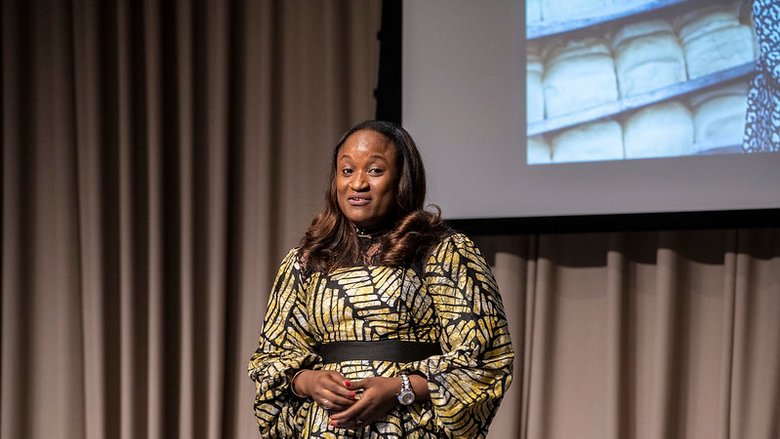
When Nigerian entrepreneur Yetunde Adeyemi opened Active Foods, a commercial bakery in 2015, success to her was to produce 1,000 loaves per day.
Seven years later, Yetunde stood on the stage at the World Bank, proudly announcing to policymakers, development workers, and civil society leaders that her bakery now employs over 300 staff—and produces over 25,000 loaves each day. These accomplishments have been transformative for Yetunde’s family and community—with benefits to societies and economies.
On October 13, along with Yetunde, government ministers, CEOs, bankers and civil society activists spoke to the power of investing in gender equality and the empowerment of women and girls during the 2022 IMF and World Bank Group Annual Meetings event “Empowering women to unleash green, resilient, and inclusive development: Should development policy be feminist?”
The speakers answered the event title question with a resounding, “Yes.”
- lp-body-content
- first-letter
- lp-body-content
In his opening remarks, World Bank Group President David Malpass highlighted that societies prosper when women participate as policymakers, entrepreneurs, workers and community leaders. Two dynamic women entrepreneurs embodied this and shared their inspiring stories.
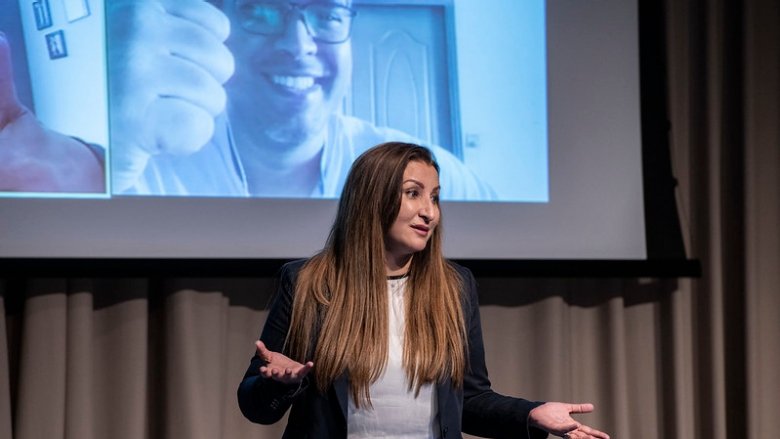
Yetunde, together with Dr. Saira Siddique, Founder of medIQ Smart Healthcare in Pakistan, told their stories of overcoming adversity as they founded and grew their businesses leveraging financing and mentoring from the Women Entrepreneurs Finance Initiative (We-Fi). Since 2018, We-Fi has worked with hundreds of partners in over 60 countries to support women entrepreneurs by catalyzing billions in funding to provide finance and training, while addressing systemic data and policy gaps.
Policies that advance gender equality can help achieve development goals
Indeed, feminist policies and policies that advance gender equality have intrinsic value and can accelerate progress towards other development goals, including addressing food insecurity, climate change, and conflict and fragility. A ministerial panel chaired by World Bank Managing Director Mari Pangestu demonstrated how policymakers can create an enabling environment for gender equality.
H.E. Ernesto Max Elias Tonela, Minister of Economy and Finance of Mozambique shared how Mozambique is investing in empowerment throughout women’s lives by strengthening foundational learning for both boys and girls, increasing the availability of distance learning, targeting out-of-school girls and girls at risk of dropping out and expanding access to sexual and reproductive health education.
H.E. Svenja Schulze, Germany’s Minister for Economic Cooperation and Development, shared that Germany is currently launching its Feminist Development Policy, signaling an ambitious level of commitment to the idea of equality and the empowerment of all people.
- lp-body-content
- lp-body-content
A dynamic discussion among private sector and civil society leaders revealed the complementary roles played by each in ensuring that societies and economies benefit from the contributions and leadership of women.
Afsane Jetha, Managing Partner and CEO of Alta Semper Capital, explained that investing in women is good for business: gender balanced teams are more likely to invest in women entrepreneurs and see better returns. Yet, she continued, “The market is underpricing women,” and suggested that intervention from the public sector may even be needed to address “deeply rooted unconscious bias steeped in cultural norms.”
Parwati Surjaudaja, CEO of Bank OCBC NISP, which recently launched a gender bond with We-Fi and IFC support, further leveraged data to highlight that 60 percent of the economy are supported by SMEs, many run by women who need critical support beyond just investment, including through digital and technological solutions.
Memory Kachambwa, Executive Director of The African Women’s Development and Communication Network (FEMNET), expanded on the role of civil society in ensuring that feminist policies are adopted and implemented, reminding the audience that these efforts have spanned decades. The importance of gender data once again featured in how civil society can make the case for investment across areas that are not always typically seen to have gender dimensions, such as illicit financial flows, trade and subsidies.
Mercedes d’Alessandro, Feminist Economist and Writer, former Director of Economy, Equality and Gender of the Ministry of Economy of Argentina, shared insights from feminist movements in Latin America which have been instrumental in pushing forward the agenda on the triple challenges for women in the region: unpaid care work, the disproportionate impacts of the COVID-19 pandemic on women and girls and economic crisis. She challenged governments to ensure that gender equality and the empowerment of women and girls are central to ministries of finance and economy.
All panelists highlighted the necessity of more and better gender data to make the case for prioritizing gender equality, for more effective evidence-informed policies and actions, and for ensuring accountability and learning. The broad array of voices speaking to the same priorities cemented the need for diverse partnerships across sectors to meet development challenges by fostering the potential of women and girls as agents of positive change.
Closing the event, Mamta Murthi, World Bank Vice President for Human Development, noted that policy frameworks and financial flows need to advance women’s empowerment. Civil society, she said, is a key partner to push for investments in and accountability for policies aimed at empowering women and girls and fostering a more equal future. The private sector can demonstrate how gender equality is smart economics.
“Empowering women empowers families, societies, and countries,” said Murthi. “Partnerships across government, civil society, and the private sector are more crucial than ever, with everyone lending their weight to change mindsets and norms.”
RELATED
- lp-body-content