col-xs-12
col-sm-12
col-md-1
col-lg-1
col-xs-12
col-sm-12
col-md-10
col-lg-10
col-xs-12
col-sm-12
col-md-1
col-lg-1
col-xs-12
col-sm-12
col-md-12
col-lg-12
videoType
embed-code
videoDmUrl
https://delivery-p136806-e1377785.adobeaemcloud.com/adobe/assets/urn:aaid:aem:530d474a-d2b8-43ba-a595-07bc6d22f14c/play?assetname=Central%20Asia%20Children%20on%20Pay%20Inequality%20RUS.mp4
imageMimeType
image/jpeg
embedCode
<iframe src="https://worldbank.scene7.com/s7viewers/html5/VideoViewer.html?asset=worldbankprod/20220901-Gabon-Vert-EN-AVS&config=worldbankprod/WBG-Standard-Player&serverUrl=https://worldbank.scene7.com/is/image/&contenturl=https://worldbank.scene7.com/is/content/&posterimage=worldbankprod/20220901-Gabon-Vert-EN-AVS&videoserverurl=https://worldbank.scene7.com/is/content" width="100%" height="500" frameborder="0" allowfullscreen></iframe>
title
A journey into green Gabon
keyFrameImage
showTimestampAndTranscript
no
duration
PT3M
scene7File
worldbankprod/Central Asia Children on Pay Inequality RUS
scene7Domain
https://worldbank.scene7.com/
scene7FileAvs
worldbankprod/Central Asia Children on Pay Inequality RUS-AVS-2
col-xs-12
col-sm-12
col-md-3
col-lg-3
col-xs-12
col-sm-12
col-md-7
col-lg-7
  • font-medium
  • bg_blue_05

STORY HIGHLIGHTS

  • Gabon is one of the few nations around the world that already have a carbon-negative economy. It is hosting this week the 2022 Africa Climate week.
  • For the people of Gabon, a sustainable green economy is about improving people’s livelihoods and preserving the biodiversity and the ecosystem services generated by the Congo Basin.
  • The protection of wetlands of international importance has become a priority together with the creation of 13 national parks which have helped maintain the country’s forest cover and is a significant contribution to global public goods.
col-xs-12
col-sm-12
col-md-2
col-lg-2
col-xs-12
col-sm-12
col-md-3
col-lg-3
col-xs-12
col-sm-12
col-md-7
col-lg-7
  • lp-body-content
  • first-letter
videoType
you-tube
videoUrl
NcFNT7Pm4y8
title
Sustainable Management of Critical Wetlands: Journey to Green Gabon
keyFrameImage
https://i.ytimg.com/vi/NcFNT7Pm4y8/maxresdefault.jpg
description
A Journey into Green Gabon. Gabon is endowed with exceptional biodiversity, hosting part of the Congo Basin rainforest, known as the lungs of Africa. Its rich forests and wetlands provide livelihood opportunities for thousands of Gabonese, and fishing is Gabon's main subsistence activity. Through the Sustainable Management of Critical Wetlands Ecosystems Project (PAZH), communities in the region of Lambaréné now understand the importance of preserving the ecosystem services generated by the Congo Basin. Meet fisherwomen Marilou Ossawa, Eco-guard manager Guy Philips Sounguet, and many other local champions. They live at the heart of the lake Bas-Ogooué, a Ramsar protected site placed on the World Heritage List of wetlands of international importance. These testimonies exemplify how the country is working to make its vision of a Green and Blue Gabon a reality. 00:00 The steady decline in fishes catches 00:53 Fishing as a flagship activity in the Lambaréné region, Gabon 01:20 Adjusting fishing nets and techniques 01:58 Awareness-raising activities 02:28 Creation of protected breeding areas 02:43 Fishing: from the catch to the market 03:01 Introducing innovative practices in environmental protection 💬 Closed captions available in English, French ABOUT THE WORLD BANK GROUP 🌐 The World Bank Group is one of the world’s largest sources of funding and knowledge for low-income countries. Its five institutions share a commitment to reducing poverty, increasing shared prosperity, and promoting sustainable development. http://www.worldbank.org - - - - - Le Gabon est riche d’une biodiversité exceptionnelle. Il abrite notamment une partie de la forêt équatoriale du bassin du Congo, connue pour être le poumon de l’Afrique. Ses forêts luxuriantes et ses marais garantissent la subsistance de milliers de Gabonais, tandis que la pêche constitue la principale activité de subsistance du pays. À travers le Projet d’appui à la gestion durable des zones humides critiques du Gabon (PAZH), les communautés de la région de Lambaréné ont désormais compris l’importance de la préservation des services écosystémiques générés par le bassin du Congo. Suivez-nous à la rencontre de Marilou Ossawa, présidente de la coopérative de pêche Inongouna, de Guy Philips Sounguet, conservateur à l’Agence Nationale des Parcs Nationaux , ainsi que bien d’autres acteurs locaux. Tous vivent au cœur du lac de Bas-Ogooué, qui fait partie du site protégé de Ramsar, inscrit au patrimoine mondial des zones humides d'importance internationale. Leurs témoignages illustrent les efforts du pays pour faire de la vision Gabon vert et bleu une réalité. http://wrld.bg/ogHk50KuA7N 💬 Sous-titres disponibles en anglais, français À PROPOS DU GROUPE DE LA BANQUE MONDIALE 🌐 Le Groupe de la Banque mondiale est l'une des plus importantes sources mondiales de financement et de connaissances pour les pays à faible revenu. Ses cinq institutions partagent un engagement commun à réduire la pauvreté, à accroître la prospérité partagée et à promouvoir le développement durable. http://wrld.bg/XlCk50DJkhZ​​
showTimestampAndTranscript
no
duration
230
lastUploadedDate
2022-08-29T21:32:25Z

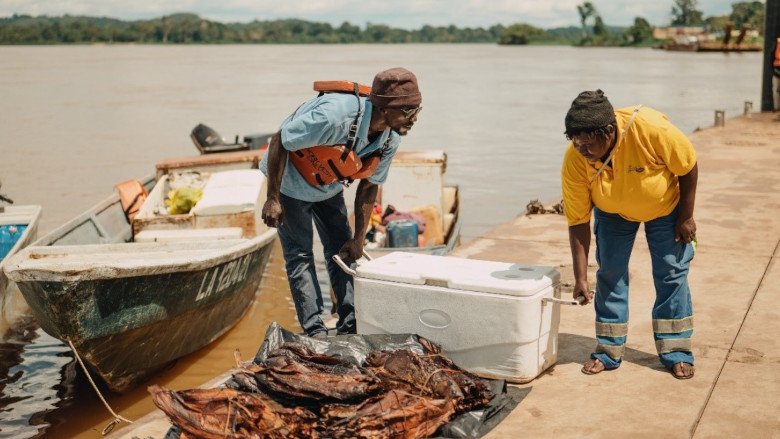
Libreville, GABON, September 1, 2022 - A young woman unloads cases of freshly caught fish from her boat onto the dock of the banks of the Ogooué river near the fish market of Lambaréné in Gabon. Marilou Ossawa is the President of a cooperative of smoked fish vendors, and one of the local champions who are helping raise awareness on eco-friendly fishing practices and the importance of preserving the country’s natural capital – from fisheries to forest - to secure the livelihood of its people.

“From the time I was young, I always loved nature. This is why I am engaged in sensitizing people about conservation and good fishing practices,” she says proudly. “Everyone either goes fishing or logging, and we are destroying our forests and killing our fish. The message I would like to share is that it is critical to help people better understand the need to protect our environment. Because every day, people are struggling to make a living. It is our best defense to fight climate change”.

In recent years, Gabon has become a champion in protecting the environment, raising climate issues awareness and setting a vision for a Green and Blue Gabon. For the people of Gabon, a sustainable green economy is about improving people’s livelihoods and preserving the biodiversity and the ecosystem services generated by the Congo Basin.
https://delivery-p136806-e1377785.adobeaemcloud.com/adobe/assets/urn:aaid:aem:427e8f22-b858-4d87-b10f-dd574f6ffef8/as/gabon-ollivier-girard-01-780x439.jpg
Fishers on the banks of the Ogooué river @Ollivier Girard/World Bank
Fisherwoman Marilou Ossawa unloads a case of freshly caught fish from her boat onto the dock of the banks of the Ogooué river. @Ollivier Girard/World Bank
videoType
you-tube
videoUrl
NcFNT7Pm4y8
title
Sustainable Management of Critical Wetlands: Journey to Green Gabon
keyFrameImage
https://i.ytimg.com/vi/NcFNT7Pm4y8/maxresdefault.jpg
description
A Journey into Green Gabon. Gabon is endowed with exceptional biodiversity, hosting part of the Congo Basin rainforest, known as the lungs of Africa. Its rich forests and wetlands provide livelihood opportunities for thousands of Gabonese, and fishing is Gabon's main subsistence activity. Through the Sustainable Management of Critical Wetlands Ecosystems Project (PAZH), communities in the region of Lambaréné now understand the importance of preserving the ecosystem services generated by the Congo Basin. Meet fisherwomen Marilou Ossawa, Eco-guard manager Guy Philips Sounguet, and many other local champions. They live at the heart of the lake Bas-Ogooué, a Ramsar protected site placed on the World Heritage List of wetlands of international importance. These testimonies exemplify how the country is working to make its vision of a Green and Blue Gabon a reality. 00:00 The steady decline in fishes catches 00:53 Fishing as a flagship activity in the Lambaréné region, Gabon 01:20 Adjusting fishing nets and techniques 01:58 Awareness-raising activities 02:28 Creation of protected breeding areas 02:43 Fishing: from the catch to the market 03:01 Introducing innovative practices in environmental protection 💬 Closed captions available in English, French ABOUT THE WORLD BANK GROUP 🌐 The World Bank Group is one of the world’s largest sources of funding and knowledge for low-income countries. Its five institutions share a commitment to reducing poverty, increasing shared prosperity, and promoting sustainable development. http://www.worldbank.org - - - - - Le Gabon est riche d’une biodiversité exceptionnelle. Il abrite notamment une partie de la forêt équatoriale du bassin du Congo, connue pour être le poumon de l’Afrique. Ses forêts luxuriantes et ses marais garantissent la subsistance de milliers de Gabonais, tandis que la pêche constitue la principale activité de subsistance du pays. À travers le Projet d’appui à la gestion durable des zones humides critiques du Gabon (PAZH), les communautés de la région de Lambaréné ont désormais compris l’importance de la préservation des services écosystémiques générés par le bassin du Congo. Suivez-nous à la rencontre de Marilou Ossawa, présidente de la coopérative de pêche Inongouna, de Guy Philips Sounguet, conservateur à l’Agence Nationale des Parcs Nationaux , ainsi que bien d’autres acteurs locaux. Tous vivent au cœur du lac de Bas-Ogooué, qui fait partie du site protégé de Ramsar, inscrit au patrimoine mondial des zones humides d'importance internationale. Leurs témoignages illustrent les efforts du pays pour faire de la vision Gabon vert et bleu une réalité. http://wrld.bg/ogHk50KuA7N 💬 Sous-titres disponibles en anglais, français À PROPOS DU GROUPE DE LA BANQUE MONDIALE 🌐 Le Groupe de la Banque mondiale est l'une des plus importantes sources mondiales de financement et de connaissances pour les pays à faible revenu. Ses cinq institutions partagent un engagement commun à réduire la pauvreté, à accroître la prospérité partagée et à promouvoir le développement durable. http://wrld.bg/XlCk50DJkhZ​​
showTimestampAndTranscript
no
duration
230
lastUploadedDate
2022-08-29T21:32:25Z

For Marilou and many community members, adopting sustainable fishing practices and ramping up conservation efforts have had a big impact in the community and transformed the lives of the people in the area. Through the World Bank financed Sustainable Management of Critical Wetlands Ecosystems Project (PAZH) and other initiatives, communities in the region of Lambaréné now understand the importance of preserving the ecosystem services and how it affects their livelihoods and their future.

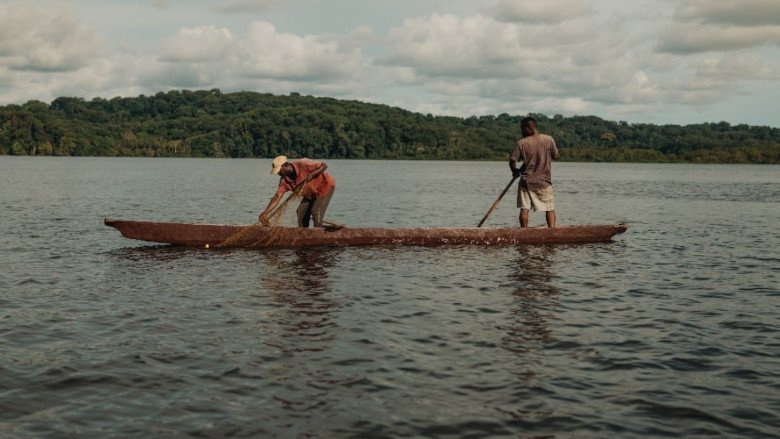
Fisherfolks can no longer use monofilament nets or other unsustainable techniques to fish. Some areas are restricted to fishing. This has helped improve the fish stock. As a result, people like Marilou and other members of her cooperative have been able to catch bigger fish and increase their income.

“Many people living there are involved in unsustainable fishing activities, and this naturally plays a role in the strong decline in catches. Therefore, every effort had to be made to promote sustainable fishing,” asserts Marilou Ossawa with a large smile.

Thinking Blue and Green to generate wealth for the country

Gabon is endowed with exceptional biodiversity, hosting part of the Congo Basin rainforest, known as the lungs of Africa. Its rich forests and wetlands provide livelihood opportunities for thousands of Gabonese, and fishing is Gabon's main subsistence activity. It is one of the few nations around the world that already have a carbon-negative economy.

The central African country has 88% forest cover which annually absorbs carbon emissions equivalent to a third of France’s annual emissions. The creation of 13 national parks - covering almost 11 % of the territory - has helped maintain the country’s forest cover. Gabon has become a strong advocate and leader in the fight against climate change and is hosting this week the Africa Climate week.

In these efforts, the World Bank is committed to supporting the government develop its blue and green economy by helping them identify new pathways for sustainable and resilient growth through a series of studies.

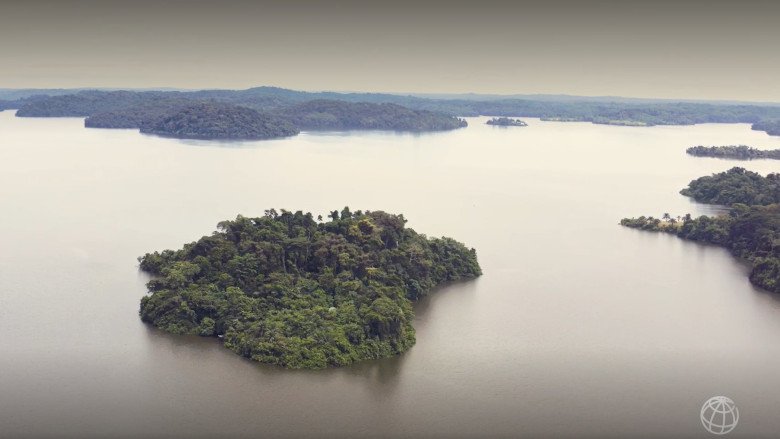
As people navigate the Ogooué river, the intricate mangrove cover, the sparkle of the papyrus, the depth of the swamp forest boarded by large majestic fromager trees present a breathtaking scenery for the travelers. The rich ecosystem of the region of Bas-Ogooué was placed on the World Heritage List of wetlands of international importance in 2009 as a Ramsar protected site.

For the eco-guard manager Guy Philips Sounguet who manages the Ramsar site, “It is critical to preserve the wetlands, its waters and rich biodiversity including papyrus, that play an important role in carbon sequestration. The change is visible since we’ve started monitoring and we raised awareness. We realized that many practices involved lots of game fish and even fishing methods and techniques that were prohibited”.

This fight against climate change will require continued support from government and private sector to community champions such as Marilou and Guy Philips. This week’s Africa climate week is an opportunity to discuss how the vast blue and green resources of the country can be further leveraged to generate wealth for Gabon.

col-xs-12
col-sm-12
col-md-2
col-lg-2
  • lp-body-content
  • first-letter