- font-medium
- bg_blue_05
Story Highlights
- Launched in 2021, Nepal Urban Governance and Infrastructure Project (NUGIP) fully aligns with federalism principles enshrined in the 2015 Constitution of Nepal.
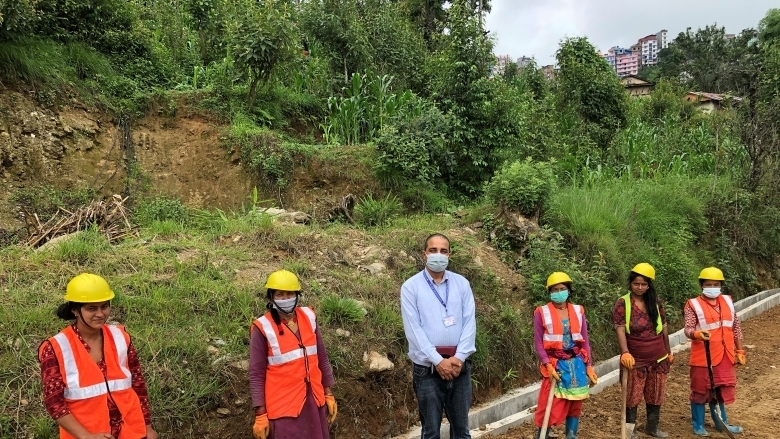
- NUGIP supports Nepal's post-COVID-19 economic recovery through labor intensive public works, delivering small scale community infrastructure maintenance and rehabilitation projects in roads, sanitation, water, environment, and parks through cash-for-work schemes.
- Amid the pandemic, the NUGIP aims to provide up to 50 days of temporary employment in labor intensive public works to at least 20,000 poor and vulnerable individuals (of which at least 35% are women) from households that are most affected.
- lp-body-content
- first-letter
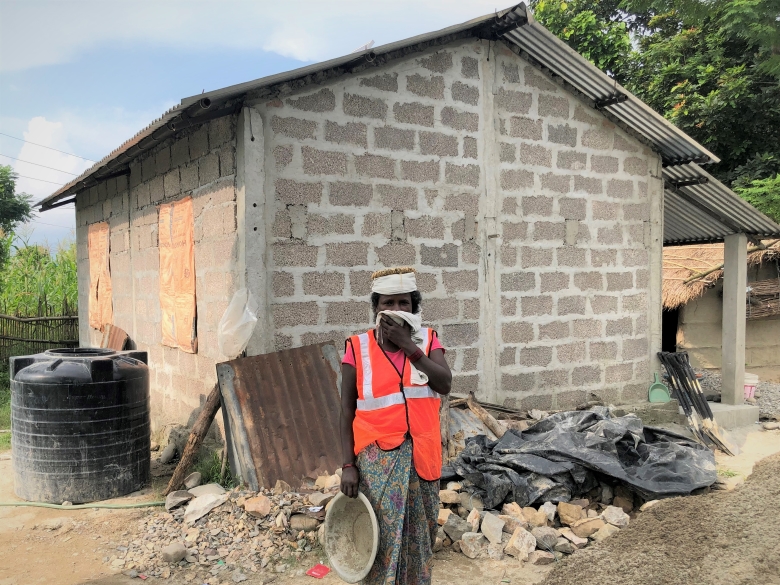
Meghiya Musahar, 45, from Kawasoti Municipality in Nepal’s Gandaki Province used to work as a daily wage earner at different temporary jobs, including construction work. Soon after the COVID-19 pandemic hit Nepal in March 2020, she lost her livelihood, along with hundreds of thousands of other people in the country.
Meghiya lives with her husband, 58, who has physical disability. She is the only primary provider for her family. She belongs to the Musahar community, which is among the most disadvantaged and marginalized groups in Nepal.
[tweetquote:[tweetText=Musahar women in particular endure extreme forms of poverty. But a new initiative in her area that started in May has offered Meghiya a beacon of hope,,tweetData=WorldBank,tweetHash=NUGIP]] providing her employment as an unskilled worker working on a drainage rehabilitation project for 29 days and receiving a payment of Rs 19,430 (approximately $165).
Kawasoti is one among twelve municipalities across Nepal’s seven provinces that are providing COVID-19 recovery support for vulnerable groups through Labor Intensive Public Works (LIPW) under the $150 million Nepal Urban Governance and Infrastructure Project (NUGIP).
[tweetquote:[tweetText=NUGIP was launched on January 27, 2021 and supports the implementation of federalism as enshrined in Nepal’s 2015 Constitution,,tweetData=WorldBank,tweetHash=NUGIP]] which transformed Nepal to a federal state.
This change empowered local and provincial governments, and substantially increased responsibilities and financing for service delivery.
- lp-body-content
- first-letter
- lp-body-content
[tweetquote:[tweetText=The NUGIP is being implemented through 2021-2025 with a focus on strengthening urban service delivery, including roads and drainages, and improving urban management in strategic secondary cities,,tweetData=WorldBank,tweetHash=NUGIP]] such as financial management, procurement, revenue collection, and asset management.
The project also supports the post-COVID-19 economic recovery through labor intensive public works, delivering small scale community infrastructure maintenance and rehabilitation projects in roads, sanitation, water, environment, and parks through cash-for-work schemes.
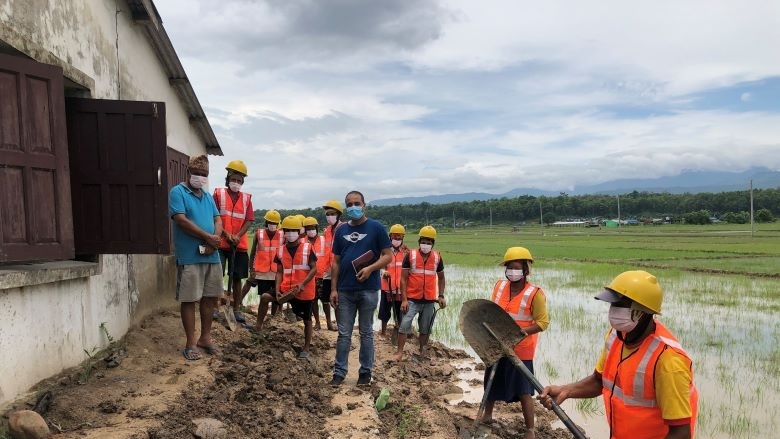
[tweetquote:[tweetText=The NUGIP aims to provide up to 50 days of temporary employment in labor intensive public works to a total of at least 20,000 poor and vulnerable individuals (of which at least 35% are women),tweetData=WorldBank,tweetHash=NUGIP]] from households that are most affected by the pandemic in these municipalities.
Through the implementation of sub-projects, municipalities have provided much needed cash benefits to support targeted beneficiaries. An unskilled wage worker could receive Rs 33,500 (approximately $285) for 50 days of work, while skilled wage workers could receive Rs. 47,500 (approximately $404).
From April to July 2021, the municipalities were able to move swiftly, completing more than 200 sub-projects in small-scale infrastructure works, despite intermittent COVID-19 related lockdowns during this time.
The small-scale infrastructure maintained through the project include road and drainage rehabilitation, water and sanitation works, health and education infrastructure, environment protection, and rehabilitation of public spaces. This work contributes to improving the quality of and access to services in the municipalities.
[tweetquote:[tweetText=Meghiya was one among more than 7,000 targeted beneficiaries across the twelve municipalities who received cash benefits during the last six months.,tweetData=WorldBank,tweetHash=NUGIP]]
Meghiya took on several roles as part of the sub project, including chairing the Project Implementation Committee that worked to protect houses of the Musahar community against soil erosion.
The support provided to Meghiya has been critical for her family: “With the additional funds, our family has been able to purchase food and other necessary items. This type of support from our local municipality helps us cope better with the crisis”, said Meghiya.
Going forward, an additional $18 million will be delivered through the NUGIP project in the next 18 months across all twelve municipalities, reaching an additional 13,000 beneficiaries.
[tweetquote:[tweetText=The level of ownership and commitment of local levels in delivering results of the NUGIP project amidst the pandemic has been commendable.,tweetData=WorldBank,tweetHash=NUGIP]] The full integration of the project design with Nepal’s federal principles is seen as a key factor for this success. The strategic collaboration with development partners on the broader federalism agenda in Nepal is also an important element that has enabled the progress made.
[tweetquote:[tweetText=“This project is helping our municipality support the most vulnerable in our community and address priority small-scale maintenance activities in an inclusive manner ,tweetData=WorldBank,tweetHash=NUGIP]]– all in a way that is fully integrated with our existing planning and budgeting processes.” said Chandra Kumari Pun, Mayor of Kawasoti Municipality. “This is a welcome step forward to help us realize our vision for inclusive local development in Kawasoti. We look forward to continuing effective implementation, reaching more people, and delivering results on the ground in our municipality.”
RELATED
- lp-body-content