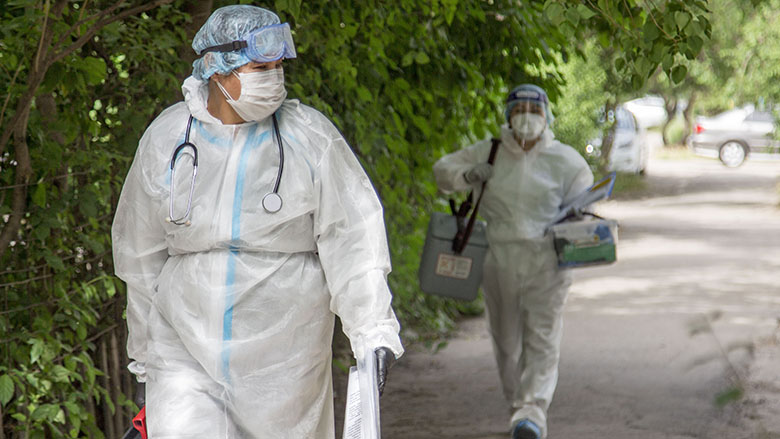
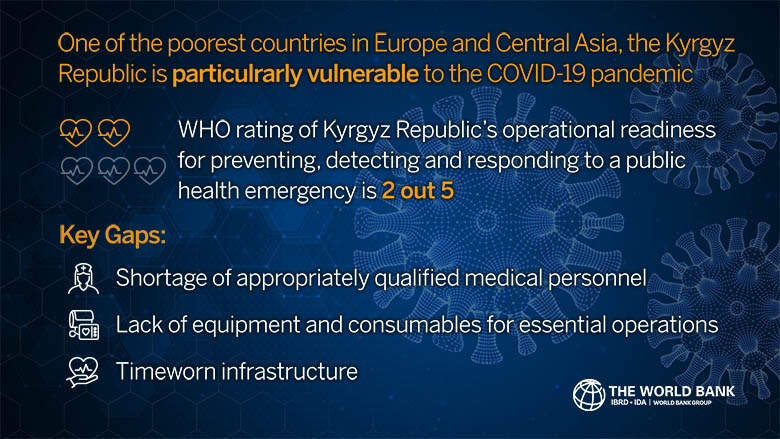
In early summer 2020, when the number of people infected with the coronavirus started to climb, following the lifting of the 47-day lockdown in Bishkek, the government enlisted senior medical students and interns to address the lack of personnel. After their regular shifts, many doctors provided online consultations through popular messenger services, channels which cumulatively gained about 100,000 subscribers.
Despite the unprecedented challenges, the country has witnessed an enormous surge of comradery and volunteerism. In July, the peak month of the pandemic, a dozen privately supported “pop-up” hospitals opened in Bishkek’s gyms, hotels, and restaurants.
According to Bishkek city officials, daytime hospitals provided medical services to 88,668 people, and night-time temporary hospitals received 9,203 patients. Roughly 2,000 youth delivered food to the most-needy, as well as hot meals and personal protective equipment (PPE) to hospitals, and brought medicine and oxygen concentrators to the sick. They were funded by private donations from within the country and from the Kyrgyz diaspora around the globe.
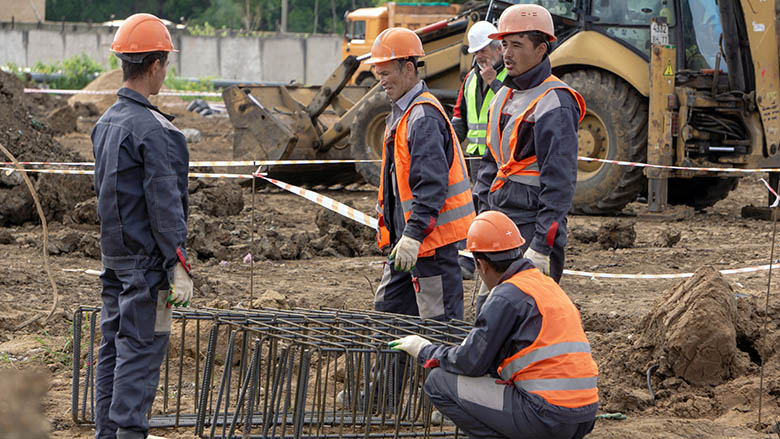
Between 15% and 20% of labor migrants have lost their jobs in their host country. Photo credit: Petr Makeev, Shutterstock.
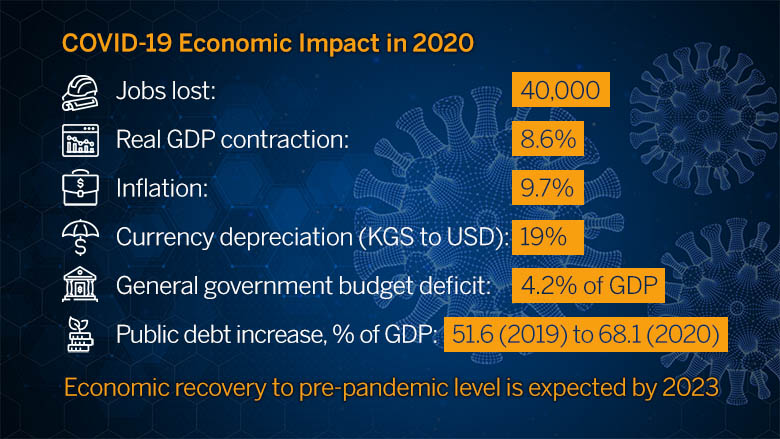
The devastating ramifications of the coronavirus go beyond the health sector. The COVID-19 crisis has had adverse effects on labor income, the biggest factor in poverty reduction. Combined with the fall in the purchasing power of a substantial share of the population due to inflation, this leaves many people highly exposed to the economic consequences of the pandemic. The poverty rate in the Kyrgyz Republic in 2020 is estimated to have increased by 11 percentage points, from 20.1% in 2019 (national estimate), pushing an additional 700,000 people into poverty – a massive number for a population of 6.6 million.
Saving Lives
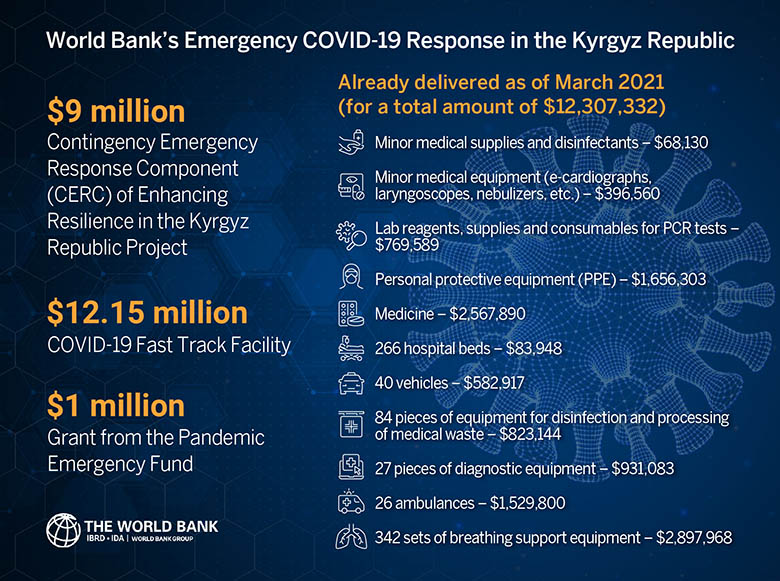
Given the rapid onset of this crisis, the World Bank activated a Contingency Emergency Response Component in one of its ongoing projects, used its Fast Track approach to expedite its credit and grant processes, and provided a grant from the Pandemic Emergency Fund, which was funded by the World Bank and implemented by UNICEF.
This emergency support in the amount of $22.15 million has helped the Kyrgyz Republic’s response to the pandemic - through enhancement of disease detection capacities, laboratory equipment, procurement of essential medical goods, rapid conditioning of designated health facilities, and financing of surge staffing.
Resilient Recovery
As of early April, 2021, the World Bank has allocated a total of $88 million to aid poor and vulnerable families in the Kyrgyz Republic, and to shield businesses from the economic impacts of the pandemic.* The Bank has also restructured four ongoing projects – the Integrated Forestry Ecosystem Management Project, the Agriculture Productivity and Nutrition Improvement Project, the Sustainable Rural Water Supply and Sanitation Project, and the Urban Development Project – all to support livelihoods, ensure food security, and provide disinfectants and personal protection equipment.
Additional financing of $21 million for the CASA-1000 Community Support Project, along with other projects, is helping to mitigate the economic and social impacts of COVID-19 on rural communities, including vulnerable households in all 453 Ayil Aimaks (sub-districts) of the country. This support will directly improve economic opportunities and enhance access to primary health care and hygiene in villages currently without services.
Investments in social infrastructure will support health-related needs, including the rehabilitation and reconstruction of first aid points (FAPs), family medical centers, and water supply and sanitation related needs. Communities will also be able to prioritize services such as child-care facilities, enabling women to go to work. In addition to empowering vulnerable women, the projects will also empower thousands of youth, migrants, elderly, and people with disabilities, through activities that will help them develop the necessary skills to run their own micro-businesses or to work in these enterprises.
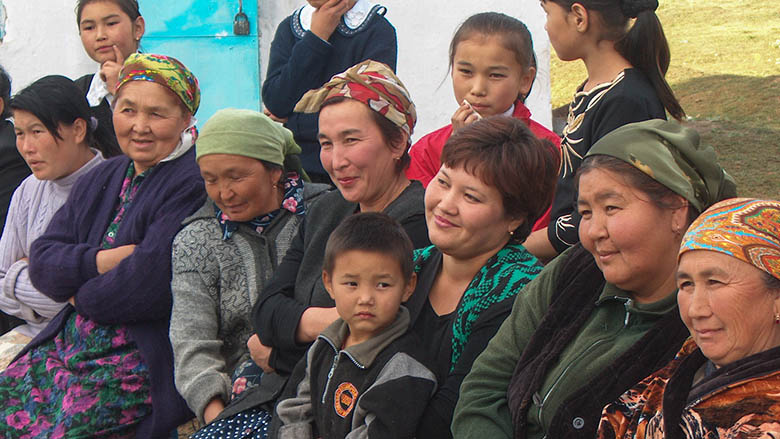
Women and youth from rural communities will receive support to help develop their skills in order to be able to eventually run their own micro-businesses. Photo credit: Community Development and Investment Agency.
Vaccination
Vaccination of the population against COVID-19 provides hope to change the dynamic of the health emergency and to spur economic recovery. In response to a request from the Kyrgyz authorities, the World Bank will allocate $20 million in 2021 to help purchase additional vaccines against the coronavirus and to support the roll-out of vaccines to priority groups, such as health care workers, the elderly, and persons with chronic health conditions.
As the Kyrgyz Republic continues to battle COVID-19, doctors across the country are witnessing a renewed respect and appreciation for their vocation. Dr. Kasymalieva says that, sooner or later, when the COVID-19 pandemic is over, the world will return to a more familiar “normal” state. When this happens, she hopes that the country will strive to achieve a more efficient and resilient health care system, one which will lead to real improvements in people’s health and lives.
--------------------------------------------
* Updated 7 April, 2021