
The conflict in the Middle East is imposing major costs on the economies of the region. How has the conflict in the Middle East reshaped the economic outlook for the region? Which economies have borne the largest costs, and what are the prospects for recovery?  How can governments protect livelihoods and support recovery?

And what role can artificial intelligence play in creating jobs, boosting productivity, and unlocking new sources of growth?

Join us for a deep dive into these issues as we launch the latest Economic Update titled "From Divide to Opportunity: AI, Jobs, and Growth" for the Middle East, North Africa, Afghanistan, and Pakistan. This livestreamed event will feature a presentation of new findings from the report by regional Chief Economist Roberta Gatti, remarks from regional Vice President Ousmane Dione, and a moderated discussion with regional experts.
Learn more and download the full report here.

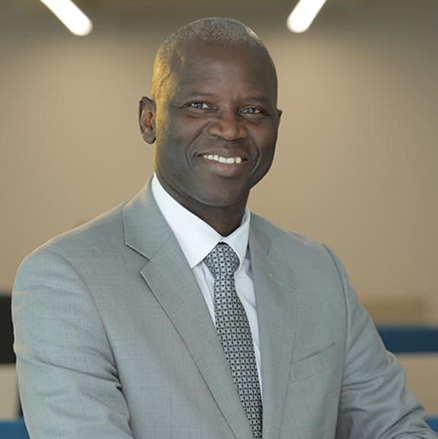
Ousmane Dione

Ousmane Dione Remarks

Vice President for MENA, Afghanistan, and Pakistan, World Bank Group

Ousmane Dione is currently the World Bank Vice President for the Middle East and North Africa where he leads the Bank's work to provide critical support to region's countries in the face of complex, multifaceted challenges. Before this, he was Country Director for Eritrea, Ethiopia, South Sudan, and Sudan and he led a major expansion of the Bank’s engagement, overseeing a portfolio of $17.5 billion. Under his leadership, Ethiopia became the Bank’s largest IDA client with a wide-ranging program to drive transformative impact for people, including by expanding access to water, electricity, and health services. Dione joined the World Bank in 2000 and has worked on development issues with countries spanning income groups across Africa, East Asia, Latin America and South Asia. 

Roberta Gatti

Roberta Gatti Presenter

Chief Economist for MENA, Afghanistan, & Pakistan, World Bank Group

Roberta Gatti serves as the Chief Economist for the Middle East, North Africa, Afghanistan & Pakistan (MENAAP) region at the World Bank. In this capacity, she is responsible for the regional macroeconomic outlook and the semi-annual publication of the Economic Updates. She directs analytical work to support the Bank’s operations and economic surveillance across countries in the region, and leads the regional Gender Innovation Lab. Previously, as Chief Economist for the Human Development practice group, Roberta co-led the conceptualization and launch of the World Bank Human Capital Index and shaped the Service Delivery Indicators data initiative. 

Sevin Yeltekin

Şevin Yeltekin Discussant

Dean & Professor of Finance, George Washington University

Şevin Yeltekin is the dean of the George Washington University School of Business and a professor of finance. A respected scholar and higher education leader, she brings a bold vision for business education rooted in innovation, interdisciplinary collaboration, and student success. Prior to joining GW, she served as dean of the Simon Business School at the University of Rochester and held senior academic roles at Carnegie Mellon’s Tepper School of Business and Northwestern’s Kellogg School of Management. Her research focuses on fiscal policy design, social insurance, and macroeconomic policy. Yeltekin holds a Ph.D. and M.A. in Economics from Stanford 

Ufuk Akcigit

Ufuk Akcigit Discussant

Deputy Chief Economist & Director of Private Markets, Development Economics, World Bank

Ufuk Akcigit served as the Academic Lead for the World Development Report 2024. He is also the Arnold C. Harberger Professor in Economics at the University of Chicago. Prior to that, he served as Assistant Professor of Economics at the University of Pennsylvania. His research focuses on macroeconomics, economic growth, firm dynamics, innovation, and entrepreneurship. He is also widely published in the top economic journals. He holds a Ph.D. in economics from the Massachusetts Institute of Technology.

Chaker El Mostafa

Chaker El Mostafa Discussant

Senior Policy Advisor, Kuwait Chamber of Commerce and Industry

Chaker El Mostafa is a senior economist and policy advisor at the Kuwait Chamber of Commerce and Industry, where he focuses on private-sector development and the business policy environment.

His background spans banking and advisory work across the GCC and wider MENA region. Much of his research examines how these economies can diversify and raise productivity, with particular attention to labor markets, innovation and the adoption of new technologies.

Sophie Naudeau

Sophie Naudeau Moderator

Manager for Development Effectiveness, Middle East, North Africa, Afghanistan and Pakistan, World Bank

Sophie Naudeau is the World Bank’s Manager for Development Effectiveness in the Middle East, North Africa, Afghanistan, and Pakistan (MENAAP) region. Prior to this role, she served as Operations Manager for Brazil, overseeing the World Bank’s portfolio and strategic engagement at the federal, state, and municipal levels. Since joining the World Bank in 2005, Naudeau has held several leadership positions, including Program Leader for Human Development, Global Lead for Early Childhood Development, and Senior Education Specialist. Her work has focused on education, human development, and improving opportunities for children, youth, and families across low- and middle-income countries through operations, research, and impact evaluations.

Date: October 08, 2026

Time: 08:00 AM - 08:45 AM ET