- Overview
- Agenda
- Key Takeaways
From Conservation to Local Development: Strengthening the Impact of Protected and Conserved Areas
Global Knowledge Exchange Workshop
When well-managed, protected and conserved areas (PCAs) can conserve biodiversity, strengthen ecological connectivity, and serve as engines of local development and job creation. In doing so, they play a central role in advancing the Kunming–Montreal Global Biodiversity Framework (GBF) and broader development goals.
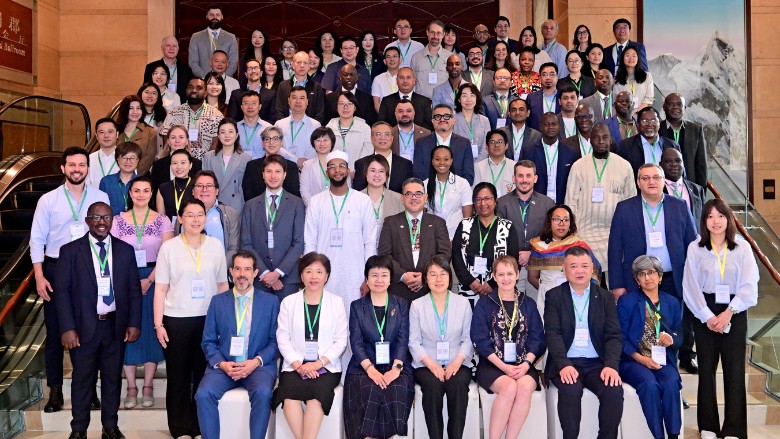
Recognizing the value of peer learning, the GEF-financed, World Bank Group-led Global Wildlife Program (GWP), in collaboration with the China–World Bank Group Global Center on Ecological Systems and Transitions (CWGC), convened an international workshop on strengthening PCA effectiveness and impact in Chengdu, China, from 18–22 May 2026. Co-organized with the Sichuan Provincial Forest and Grassland Administration (SFGA) and other partners, the workshop brought together over 100 participants from 29 countries, including representatives from the GWP, CWGC, the GEF Amazon Sustainable Landscapes (ASL) and Ecological Restoration Integrated Programs (ERIP), IUCN World Commission on Protected Areas, international organizations, non-government organizations, and academia.
The workshop aimed to provide a platform for countries to exchange experiences, identify good practices, and strengthen collaboration. Discussions covered key topics including PCA governance, Other Effective Area-based Conservation Measures (OECMs), sustainable financing, the contribution of PCAs to local economies and livelihoods, ranger professionalism and safeguards, and adaptive management approaches to enhance conservation effectiveness.
Countries ranked four areas requiring greater attention: inclusive governance, scaling sustainable finance, diversifying local economic benefits (including through nature-based tourism), and expanding the use of Other Effective Area–based Conservation Measures (OECMs). Key discussions are summarized below.
PCA Governance:
- A key focus of Day 1 was the growing diversity of PCA governance models, including government-managed, co-managed, privately managed, and Indigenous Peoples’ and Local Communities (IPLC)-led approaches.
- Countries shared experiences showing that governance arrangements must be context-specific and can strengthen stewardship, equity, and conservation outcomes.
- Discussions highlighted the need for technical support on governance models and cross-sector coordination, as well as clearer guidance on monitoring OECMs.
PCA Sustainable Finance and Local Economies:
- Sustainable finance emerged as a major priority, with participants exploring a range of mechanisms including conservation trust funds, nature-based tourism, PES, biodiversity credits, debt-for-nature swaps, PFP, blended finance, and outcome-based financing.
- While these instruments offer strong potential, discussions highlighted their complexity and the need for stronger engagement of Ministries of Finance, improved financial expertise, and practical tools to assess PCA economic benefits and support evidence-based decision-making.
- Long-term sustainability was seen to depend on maintaining social license through inclusive governance, trusted partnerships, and equitable benefit-sharing with local communities.
- Participants emphasized expanding private sector engagement—particularly in tourism and sustainable value chains—alongside continued peer learning and technical support.
PCA Adaptive Management:
- Participants emphasized that PCA effectiveness should be assessed based on conservation outcomes—particularly biodiversity status improvements—rather than area coverage or management inputs alone.
- Discussions highlighted the need to integrate effectiveness assessments into routine management cycles, strengthen links between actions and ecological and social outcomes, and support adaptive responses through robust monitoring systems and emerging technologies.
- Participants also called for greater harmonization of PCA assessment tools, wider dissemination of updated IUCN WCPA guidance, and further development of guidance on OECMs and outcome-oriented monitoring.
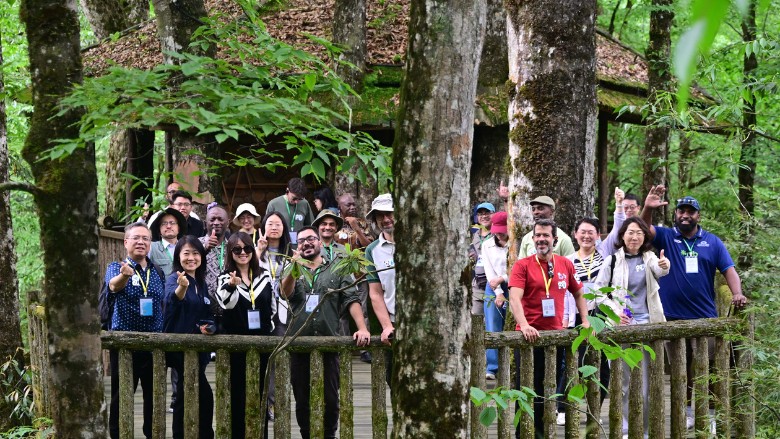
A field visit to Giant Panda National Park provided participants with first-hand insights into landscape-scale restoration, wildlife monitoring systems, and community engagement. Participants emphasized the need to improve access to and uptake of existing tools, guidance, and case studies, many of which remain underutilized in implementation. These efforts will also support preparations for the CBD COP17, and 2027 World Protected and Conserved Areas Congress.
Protected Areas Aren't Just Nature's Safekeepers — They Are Economic Lifelines for Rural Communities
Key Takeaways from the Global Knowledge Exchange Workshop on Strengthening Protected and Conserved Areas
Protected and conserved areas (PCAs) are assets for growth. Parks, reserves, and other types of PCAs are creating jobs, sustaining livelihoods, and channeling income into communities, often in places with few other economic options. For every dollar invested in protected areas and nature-based tourism, the economic return is at least sixfold.
The evidence is compelling. In Zambia, tourism around Lower Zambezi and South Luangwa National Parks supports between 14 and 30 percent of the working-age population in neighboring regions. In Nepal's Chitwan National Park, every dollar invested in a ranger yielded about $2.67 in local household income. In Rwanda, nature-based tourism generates an estimated 80 percent of the country's total tourism foreign exchange earnings and creates 1,328 new jobs for every US$1 million it injects into the economy. And in Fiji's Mamanuca Islands, protected-area tourism created more than 8,000 jobs, about 13 percent of local employment.
Tourism and Small Business: Engines of Local Growth
Nature-based tourism is the most direct pathway from conservation to income. When PCAs are well managed, visitors create demand for guides, transport, lodging, crafts, and food — often in remote gateway communities with few alternatives. But tourism delivers only when the right foundations are in place: infrastructure, regulations, skills training, and fair benefit-sharing schemes. Without these, revenues can leak away, and local communities may see little of the gain. Well-managed PCAs draw visitors who spend on guides, transport, lodging, crafts, and food — injecting income into remote communities.
Creating Jobs: Restoration and Beyond
Restoring degraded ecosystems both within and around PCAs creates jobs across the value chain — tree nurseries, planting, monitoring, and eco-rehabilitation. Brazil's restoration work in Chapada dos Veadeiros and the Atlantic Forest (Mata Atlântica) shows how landscape recovery can simultaneously boost tourism, protect watersheds, and generate green employment.
Protected areas are already significant employers — but the potential is far greater than what has been realized. Scaling up ranger staffing, expanding restoration programs, and growing bioeconomy enterprises could generate many more rural jobs, while simultaneously reinforcing nature's capacity to deliver clean water, climate regulation, and food security.
Sustainable Finance: Key to Long-Term Impact
Public budgets alone cannot sustain PCAs at the required scale. Innovative finance mechanisms — blended finance instruments, public-private partnerships, nature-based tourism revenues, biodiversity credits, and carbon markets — are essential to closing the gap. South Africa's $150 million Wildlife Conservation Bond, which supports black rhino recovery while delivering measurable outcomes for investors, is a high-profile example of what blended finance can achieve.
China’s national park experiment: scale, jobs and spillovers
China's consolidation of fragmented protected lands into a unified national park system offers a working model for aligning conservation with community development. The Giant Panda National Park — one of five established national parks — demonstrates the social and economic benefits of that shift.
Investments of about $486 million in recent years have expanded protection infrastructure — 82 protection stations built or renovated; more than 2,000 patrol routes and 3,646 boundary markers installed. The park has created over 3,100 ecological public welfare jobs, prioritizing local hires, and helped cultivate more than 400 new business entities tied to nature-based tourism and ecological products. Annual visitor flows tied to the park and related sites exceed 4.4 million, and sales of original ecological products topped about $4.3 million. Ecological compensation and livelihood measures have generated roughly $21.4 million for resident households. Beyond direct jobs, the park acts as a water tower and carbon sink — services that underpin downstream agriculture and climate resilience.
China's governance approach — unified management, standardized zoning, and community co-management — points to practical steps for countries looking to scale conservation without sidelining residents: prioritize local hiring, formalize benefit-sharing, invest in monitoring, and align restoration with small business development.
What Works: Clear Principles
During the workshop, experience from around the world points to a few consistent principles:
- Invest in people. Rangers, guides, restoration crews, and community enterprises are immediate job creators.
- Diversify funding sources. Combine public funding, tourism income, and nature finance to reduce risk and build resilience.
- Share benefits. Structured, transparent benefit-sharing mechanisms build trust and local buy-in.
- Measure results. Clear metrics demonstrate impact and attract investments.
- Focus on inclusivity. Prioritizing vulnerable groups and local residents secures the social license that conservation depends on. PCAs are often surrounded by vulnerable, poor communities including ethnic minorities whose livelihoods need to be prioritized.
The Way Forward
Participants at the workshop left with shared lessons, priority actions, and new collaboration opportunities. The discussions and exchanges helped build momentum toward two critical global milestones: CBD COP17 in Armenia in October 2026, and the IUCN WCPA World Protected and Conserved Areas Congress in Panama in September 2027 — both key checkpoints on the road to 2030.With the right governance, finance, and community partnerships, protected areas can be engines of sustainable growth — conserving biodiversity while delivering livelihoods that keep people and nature thriving together.
Date: May 18 - 22, 2026 ET